

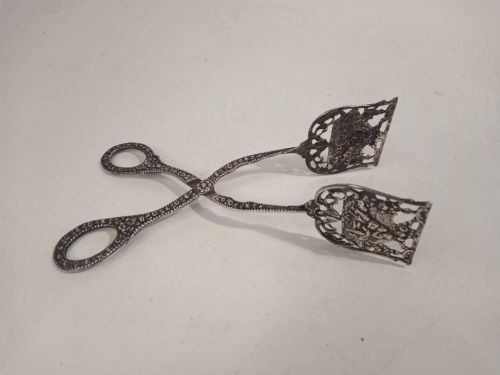


German Hanau Silver
German Hanau silver unites intricate historical revivalism with master silversmithing, offering collectors delightful decorative boxes, table ornaments, and miniature figures.
German Hanau Silver
German Hanau silver encompasses an array of decorative boxes, table ornaments, miniatures, and serving items produced by silversmiths working in the German town of Hanau. Pieces span the late nineteenth century through to the early twentieth century, capturing Victorian, Edwardian, and later periods.
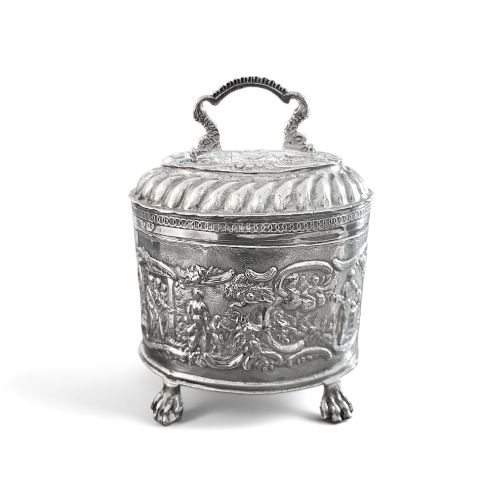
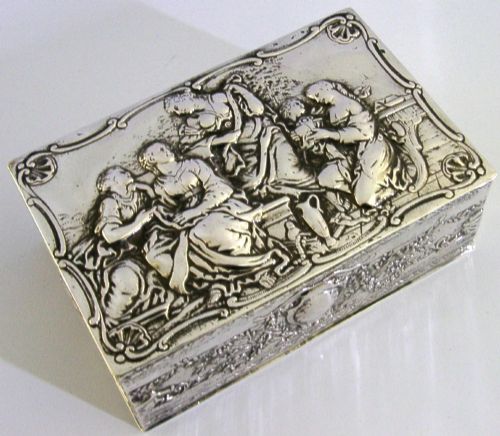
Collectors encounter numerous novelty items, including animal figurines, miniature furniture, figural boxes depicting cherubs or historical scenes, and functional objects such as sugar boxes and spoons. The output frequently draws inspiration from earlier historical epochs.
The aesthetic leans heavily into revivalist movements, showcasing historicism, rococo revival, and renaissance motifs. This creates items that echo seventeenth- and eighteenth-century styles while retaining the distinct manufacturing hallmarks of the period.
Materials and Construction
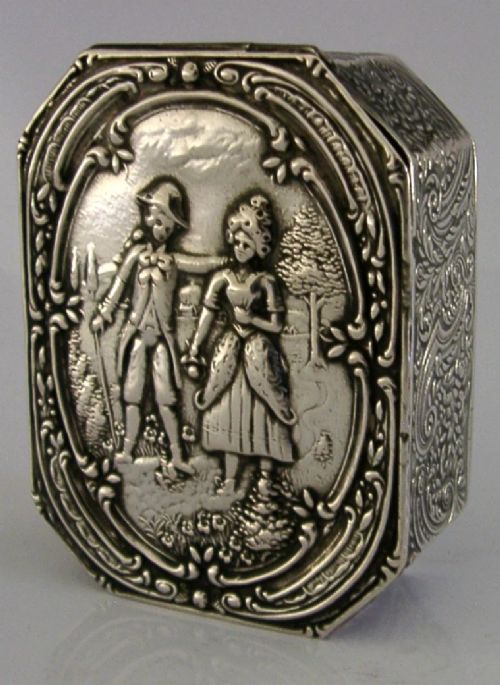
Makers utilised solid silver, sterling silver, and silver gilt, frequently applying traditional casting and repoussé techniques to shape the metal. Repoussé work allows artisans to push the silver from the reverse side, creating deep, highly detailed relief ornamentation across boxes and vessels.
Cast silver elements appear in heavier table ornaments, figures, and salt cellars, providing structural rigidity and fine sculptural detail. Silversmiths combined these methods to produce elaborate surfaces populated by figures, animals, and scrollwork.
German Hanau Silver Retail Price Guide 2026
Typical asking prices for german hanau silver among the pieces listed under this phrase on Sellingantiques today, from the lower quarter to the upper quarter. They describe what is for sale here now, not the wider market.
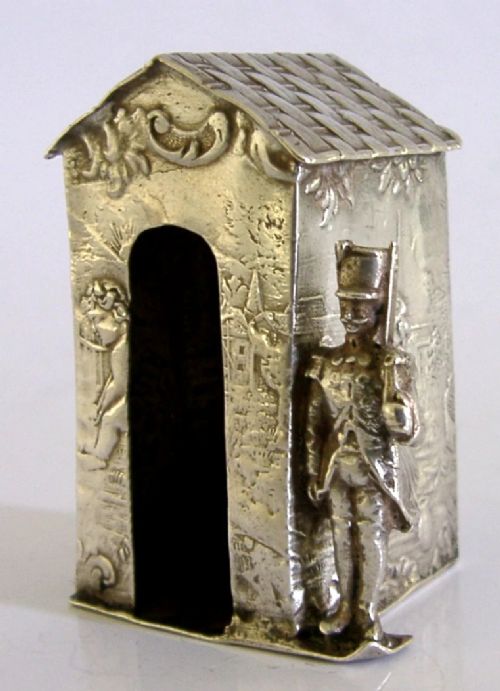
Some boxes depict mischievous cherubs, sentry guards, and unfortunate boys receiving spankings.
Judging Quality and Execution
The weight and gauge of the silver distinguish substantial table boxes and ornaments from lighter, more fragile novelties. Heavier castings and thicker sheet silver provide greater durability and a more tactile presence in the hand.
Berthold Herman Muller·Berthold Muller·Simon Rosenau
The German Hanau Silver Glossary
- Repoussé
- A metalworking technique where the artisan hammers the silver from the reverse side to form raised decorative designs in relief. This method gives Hanau boxes and vessels their characteristic textured surfaces.
- Historicism
- An artistic approach that draws inspiration from the styles and forms of earlier historical periods. German silversmiths frequently employed this movement to emulate Renaissance and Rococo aesthetics.
- Silver Gilt
- Silver objects that have been coated with a thin layer of gold on the interior or exterior surfaces. This treatment provides a rich golden lustre while maintaining a solid silver base.
- Table Ornament
- A decorative object designed for display on dining or living room furniture rather than for practical utility. These pieces often take the form of animals, figures, or architectural models.
German Hanau Silver: Frequently Asked Questions
What is German Hanau silver?
German Hanau silver refers to decorative metalwork produced in the town of Hanau, Germany, which became famous for creating revivalist silver objects. These items often emulate older styles from the Renaissance and Rococo periods.
Craftsmen produced everything from small pill boxes and novelties to large table ornaments and miniature figures. Much of this work was exported to international markets during the late nineteenth and early twentieth centuries.
How were Hanau boxes used?
These boxes served various domestic purposes, functioning as containers for snuff, trinkets, cigarettes, stamps, or sugar. Wealthy households displayed them on tabletops and desks as conversation pieces.
Many examples feature elaborate figural scenes or novelty shapes that amused guests. Their decorative nature meant they were as much ornaments as they were functional storage containers.
How do I care for silver miniatures?
Silver miniatures require gentle handling to preserve delicate repoussé details and moving parts on novelty items. Cleaning should involve minimal polishing with a soft cloth to avoid wearing down the raised surface relief.
Keeping pieces away from high humidity and sulphur sources helps prevent excessive tarnishing. Proper placement in stable display cabinets protects them from accidental knocks and dust accumulation.
Are these pieces marked?
Many Hanau pieces feature pseudo-marks or pseudo-hallmarks that imitate older German or English silver standards rather than standard official town marks. Some items also bear import marks from countries where the silver was eventually sold.
Recognising specific silversmith names helps identify the origin of particular boxes and figures. These stamps provide clues to the production timeline within the late nineteenth and early twentieth centuries.