




German Ceramic Couple
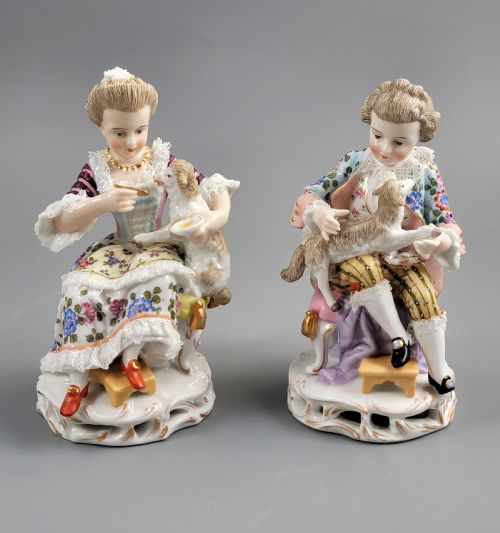
These german ceramic couple pieces bring romance, pastoral charm and exquisite modelling into any room.
German Ceramic Couple
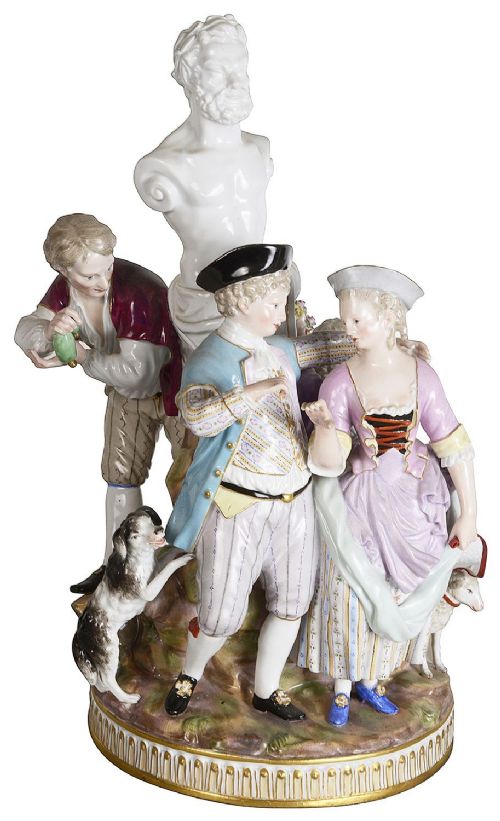
A german ceramic couple typically takes the form of porcelain figurines, groups, trinket boxes or vanity boxes depicting two figures together in romantic, pastoral or courtly scenes. These pieces frequently emerge from historical centres of production such as Meissen, Dresden, Volkstedt, Sitzendorf and Plaue, capturing social ideals across successive European eras.
Buyers meeting this search phrase encounter work spanning from the eighteenth century through the Victorian period up to the nineteen-thirties. The selection ranges from eighteenth century Ludwigsburg groups and nineteenth century Rococo Revival pairs to Art Deco figural powder boxes in glazed and bisque porcelain.
The most common formats on this page are pairs of figures and unified sculptural groups depicting harvesters, children, shepherds, shepherdesses and courting couples. These objects often incorporate detailed bases, classical architectural elements and applied porcelain flowers typical of traditional German manufactories.
Materials and Manufacture
Many nineteenth century and earlier examples combine glazed surfaces with unglazed bisque or Parian portions to create textural contrast across the figures and drapery. Factories like Volkstedt and Meissen relied on precise kiln firing followed by meticulous hand-painting to achieve the final polychrome finishes.
German Ceramic Couple Retail Price Guide 2026
Typical asking prices for german ceramic couple among the pieces listed under this phrase on Sellingantiques today, from the lower quarter to the upper quarter. They describe what is for sale here now, not the wider market.
Object forms range from large paired harvesters and courting couples to Art Deco figural powder boxes.
Factors Determining Quality
The sophistication of the composition also separates standard production from exceptional work, particularly in larger or multi-figure groups where balance and spatial arrangement matter significantly. Early eighteenth and nineteenth century manufactories maintained strict standards for porcelain purity and sculptural depth, whereas later or derivative pieces sometimes display simplified forms.
Volkstedt Porcelain·C G Schierholz·Sitzendorf Porcelain·Meissen·Carl Thieme Potschappel·Triebner Ens And Co·Ludwigsburg
The German Ceramic Couple Glossary
- Bisque porcelain
- Unglazed white porcelain fired once to produce a matte, marble-like surface resembling fine statuary marble. This finish highlights sculptural modelling without the distraction of surface gloss.
- Hard-paste porcelain
- A durable ceramic composition fired at high temperatures using kaolin and petuntse. It creates a dense, translucent body capable of holding sharp sculptural details.
- Parian ware
- A fine-grained type of bisque porcelain developed in the nineteenth century to imitate carved marble. It takes its name from the famous Greek island marble of Paros.
- Rococo Revival
- A nineteenth century design style echoing the ornate, asymmetrical curves, scrollwork and floral motifs of the eighteenth century French Rococo movement. It heavily influenced Victorian German porcelain design.
- Enamel
- Vitrified glass powder fused to the porcelain surface in a kiln to provide permanent polychrome decoration. Artists apply these colours over or under the glaze depending on the desired effect.
German Ceramic Couple: Frequently Asked Questions
How do I identify a german ceramic couple?
Look for factory marks, crossed swords, or impressed numbers on the unglazed base of the porcelain figures. Stylistic clues such as Rococo scrollwork or Victorian costume details also help determine the era of manufacture.
Examination of the painting style and whether the piece uses glazed or bisque porcelain provides further context regarding its origin and workshop.
What periods do these pieces date from?
The listings encompass items ranging from the eighteenth century up through the Victorian era and into the nineteen-thirties. Eighteenth century examples tend to feature classical or courtly pastoral subjects, while nineteenth century pieces often embrace Rococo Revival aesthetics.
Later twentieth century works include Art Deco figural boxes that adapt traditional ceramic techniques to modernist forms.
How were these porcelain figures originally displayed?
Historically, couples and figurative groups served as decorative centrepieces on mantelpieces, dining tables or within glazed display cabinets in affluent homes. Smaller items like trinket and vanity boxes functioned as functional tabletop accessories in boudoirs.
Their intricate hand-painted details were intended for close inspection by guests in formal reception rooms.
How should I care for antique porcelain figures?
Dust these delicate ceramic items gently with a soft, dry brush to prevent accumulation without risking fragile applied elements like lace or flowers. Avoid using water, harsh cleaning agents or abrasive cloths on decorated or gilded surfaces.
Display them away from direct sunlight and areas prone to temperature fluctuations to preserve the enamel colours.