

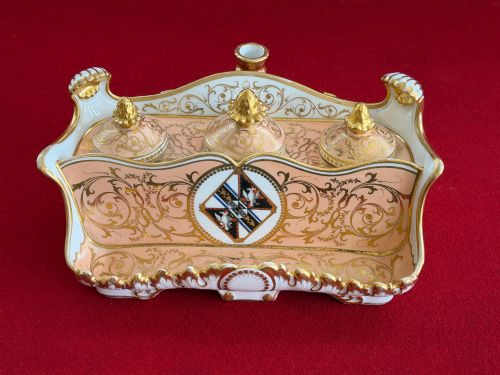
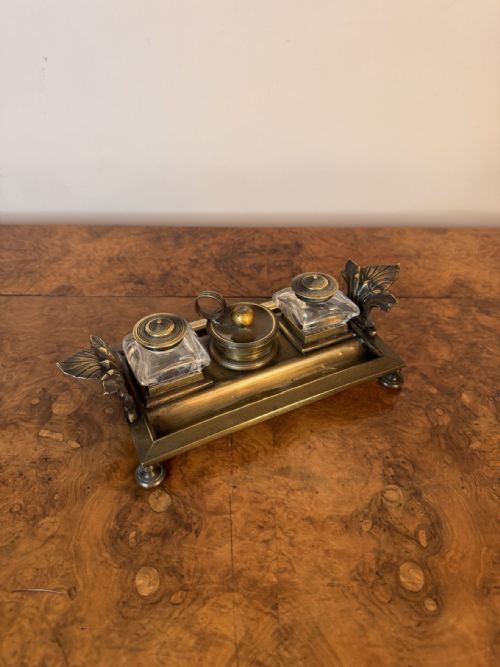
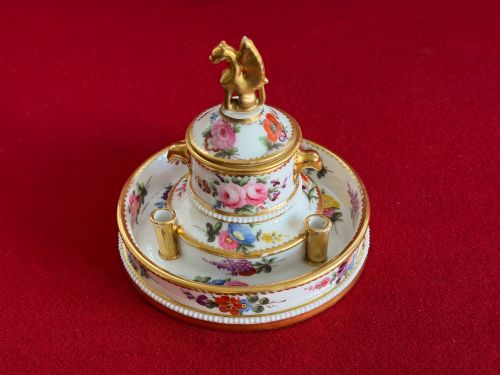
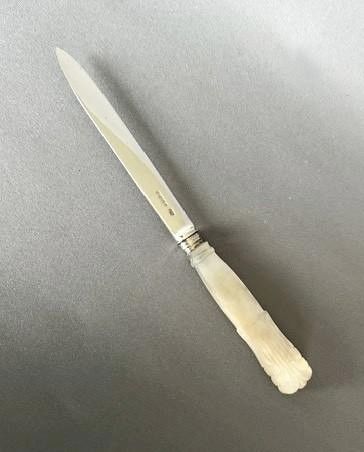




Georgian Writing Accessory
These georgian writing accessory pieces are the portable desk equipment and desk sets that kept a household or office supplied for correspondence.
Georgian Writing Accessory
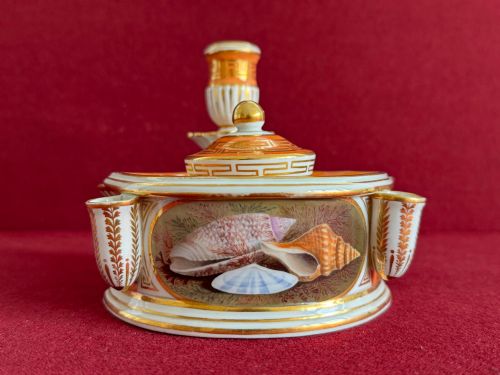
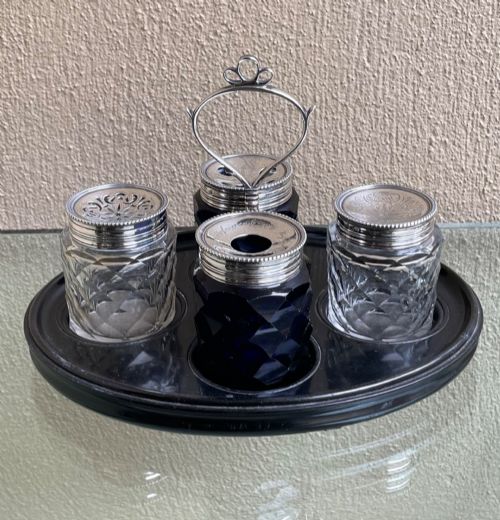
A georgian writing accessory encompasses a range of desk equipment designed for correspondence, including inkstands, pounce pots, inkwells, desk sets, and folding tapersticks. These items served practical daily functions in writing rooms, libraries, and offices during the eighteenth and nineteenth centuries.
The objects appearing here span from the George I period through the Regency era and into the nineteenth century, reflecting changing domestic habits. Forms range from compact travel inkwells to large desk ink stands and fitted rosewood boxes.
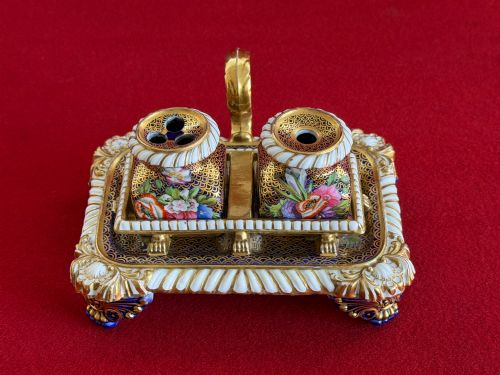
Buyers frequently encounter porcelain inkstands from factories such as Flight & Barr and Spode, alongside silver pieces and turned fruitwood pounce pots. Desk sets often incorporate multiple elements like glass inkwells, seals, and wax holders within a single ensemble.
How they were made
Silversmiths shaped sterling silver and silver gilt into inkstands, tapersticks, and pounce pots, frequently marking them with hallmarks that record their origin. Sheffield plate provided an alternative metal technique for large desk stands.
Potteries such as Worcester, Spode, and makers of Delftware formed porcelain and earthenware into inkstands and inkwells, applying painted decoration and gilding. Cabinetmakers constructed writing boxes and desk sets from rosewood, incorporating brass inlay and fruitwood.
Glassmakers produced cut glass liners and inkwells to fit within silver and metal frames, while enamel and gold leaf added decorative surface detail to specific items.
Georgian Writing Accessory Retail Price Guide 2026
Typical asking prices for georgian writing accessory among the pieces listed under this phrase on Sellingantiques today, from the lower quarter to the upper quarter. They describe what is for sale here now, not the wider market.
Desk sets occasionally include ten coloured-glass seals, ensuring you had plenty of options for stamping your wax.
What varies in quality
Quality in a georgian writing accessory depends upon the reputation of the maker or pottery, such as Flight & Barr or identified silversmiths, and the refinement of the materials utilised. Fine porcelain bodies, crisp casting in silver, and precise brass inlay distinguish superior examples.
The presence of complete, original components, such as matching glass liners in pewter ships inkwells or full sets of intaglio coloured-glass seals within a boxed desk set, elevates an object. Finer pieces demonstrate careful attention to decorative detail, whether in painted botanical motifs or engraved heraldry.
John Reilly·Flight & Barr·Spode·James Goodwin·Marson & Jones·Flight Barr & Barr·Daniel Holy
The Georgian Writing Accessory Glossary
- Inkstand
- A tray or stand holding inkwells, pounce pots, and sometimes a taperstick or pen holder. It formed the central apparatus of a writing desk.
- Pounce pot
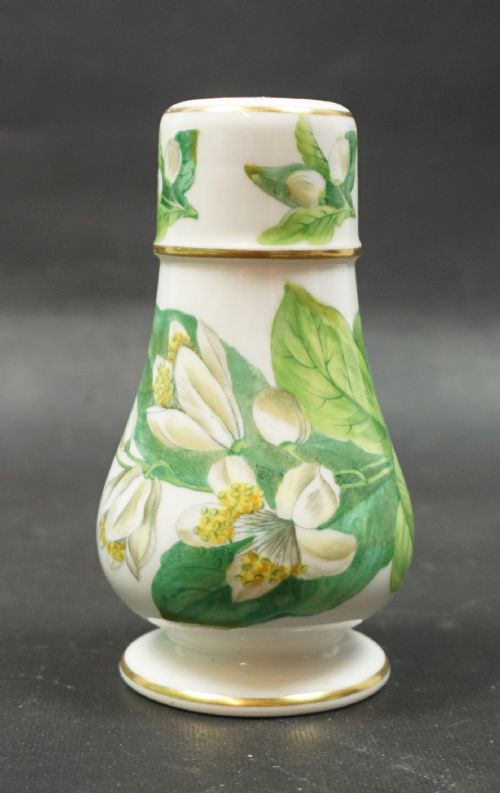
- A small shaker container used to sprinkle powdered resin or cuttlefish bone onto freshly written ink to dry the surface and prevent blotting. They appear in porcelain, silver, and wood.
- Taperstick
- A small candlestick designed to hold a thin wax taper for melting sealing wax. Folding versions allowed for travel.
- Standish
- An alternative term for a desk ink stand or inkstand, often housing multiple writing implements in one fitted tray.
- Sheffield plate
- A fused composite material made by heating a sheet of silver to a copper base, utilised for desk sets before modern electroplating.
Georgian Writing Accessory: Frequently Asked Questions
What is a pounce pot used for?
A pounce pot held powdered sand, resin, or cuttlefish bone that writers sprinkled over wet ink to absorb excess moisture before blotting paper became common. This prepared the paper surface to receive ink without spreading.
These small containers match inkstands and desk sets, appearing in materials ranging from silver and porcelain to fruitwood.
How do I use a taperstick?
A taperstick holds a thin wax taper which is lit to melt sealing wax for correspondence. The small flame provided a direct source of heat at the desk without requiring a larger candle.
Folding versions were portable, allowing users to pack the taperstick inside travel writing accessories.
What is the difference between an inkwell and an inkstand?
An inkwell is a single vessel designed specifically to hold liquid ink for writing with a quill or pen. Ships inkwells, for example, used dome lids to prevent spills at sea.
An inkstand is a larger tray or stand that brings together multiple accessories, typically combining inkwells, a pounce pot, and sometimes a taperstick into one desk piece.
How do I date a Georgian writing box?
Dating relies on the materials, cabinetwork techniques, and hardware styles found on the piece, such as brass inlay, rosewood veneers, and fitted interior compartments. Maker marks on silver mounts or porcelain inkwells provide specific production years.
Comparing construction details with known examples from the Georgian and Regency periods helps establish the likely decade of manufacture.