



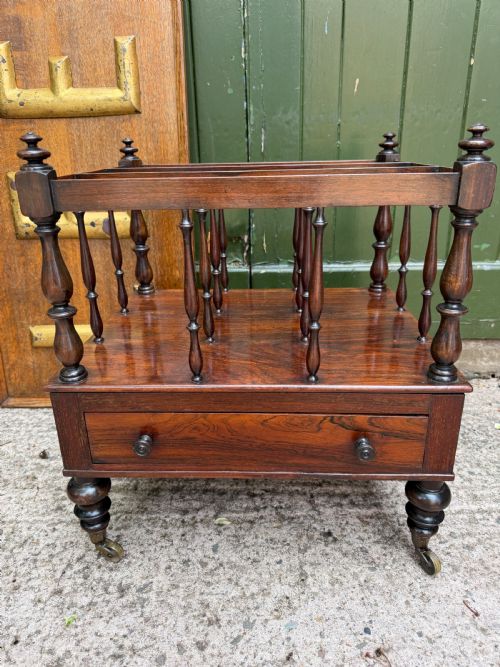

Georgian Wood Canterbury
A georgian wood canterbury is a practical freestanding rack designed for holding sheet music, folios or newspapers, combining utility with fine cabinetmaking.
Georgian Wood Canterbury
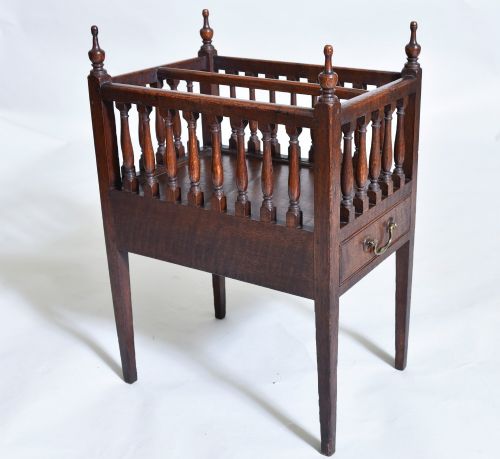
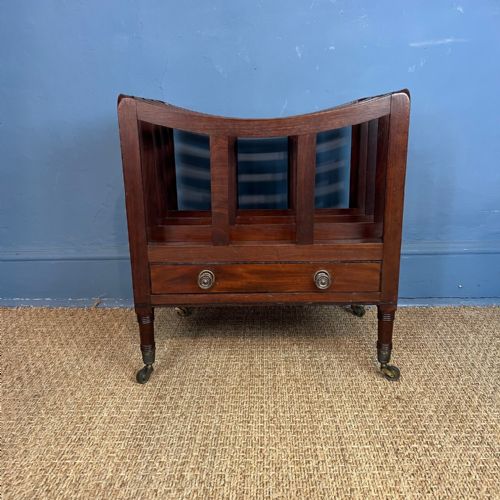
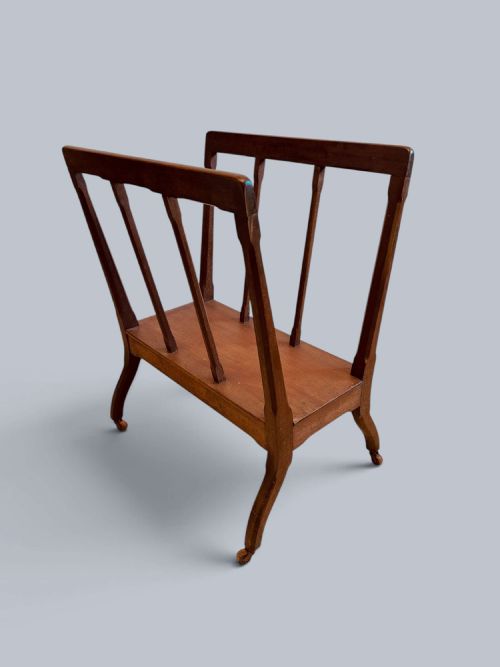
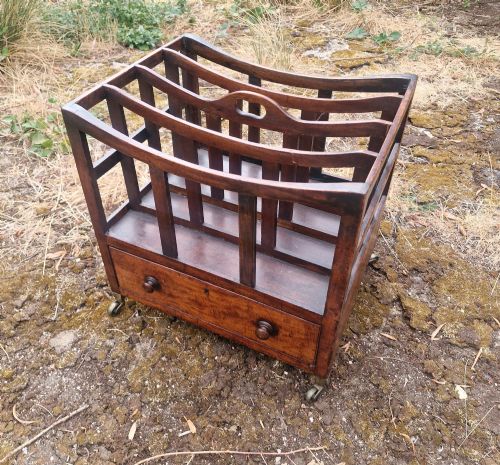
A georgian wood canterbury stands as a dedicated piece of furniture originating in the late eighteenth and early nineteenth centuries for holding papers and music. Buyers searching this phrase meet pieces primarily from the Regency and George III periods, executed in timber.
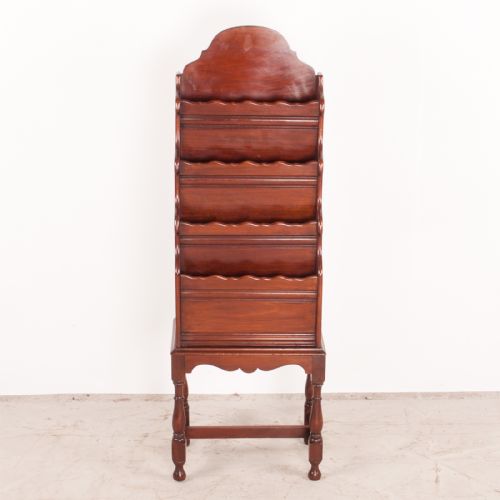
Variations range from compact music stands to large country house folio racks. Most examples serve to organise reading material within a sitting room or study.
Materials and construction
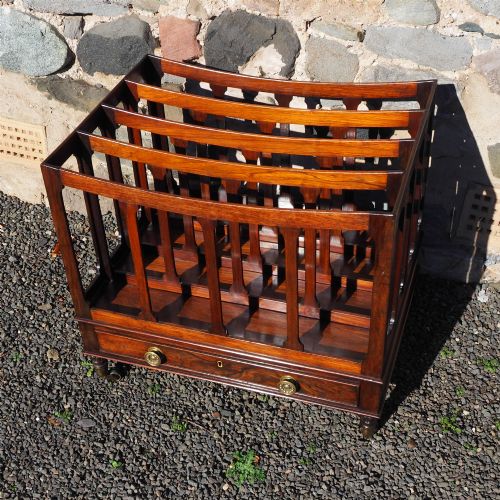
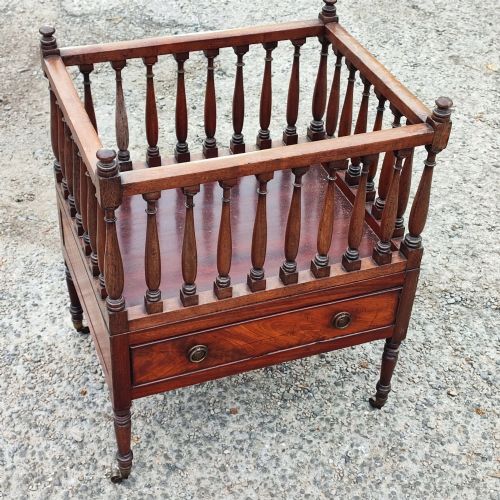
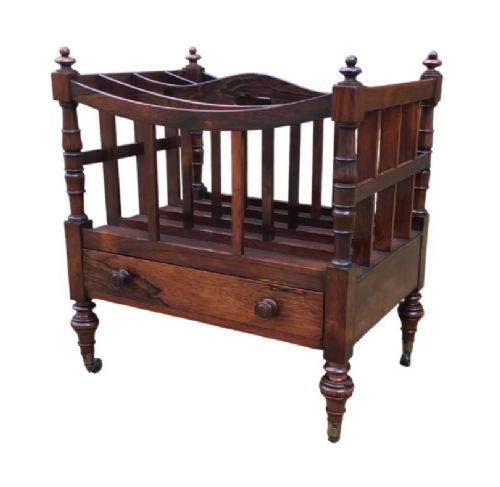
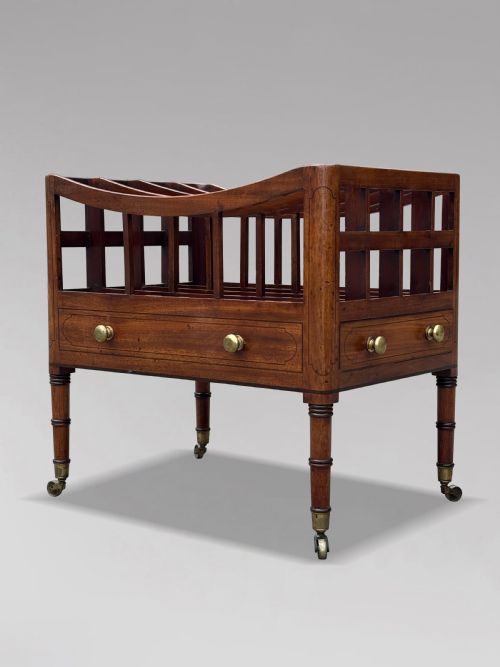
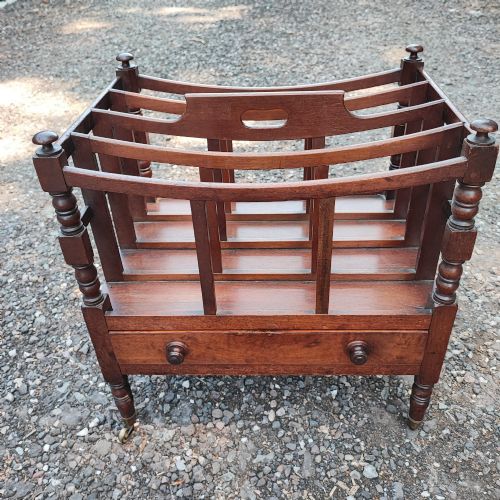
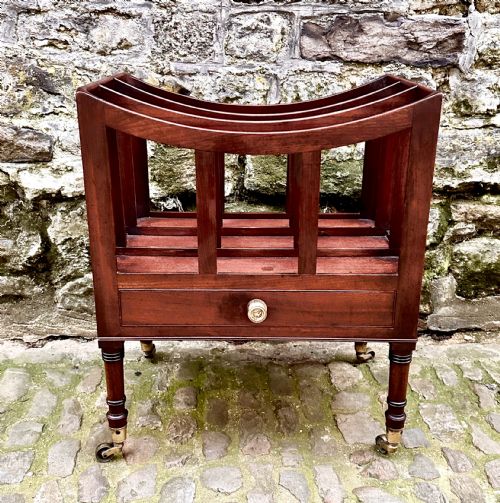
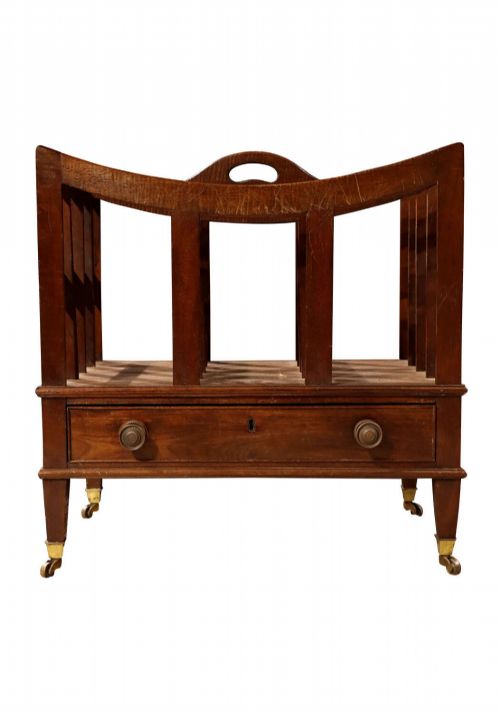
Cabinetmakers built these pieces predominantly in mahogany and rosewood, often selecting timber with rich grain and warm tone. Brass details appear frequently on castors and structural mounts, adding metal contrast to the wood.
Inlay and carved motifs such as Prince of Wales feathers decorate finer examples. Joinery combines precise framing for the vertical divisions with dovetailed drawer construction below.
Georgian Wood Canterbury Retail Price Guide 2026
Typical asking prices for georgian wood canterbury among the pieces listed under this phrase on Sellingantiques today, from the lower quarter to the upper quarter. They describe what is for sale here now, not the wider market.
Listings feature mahogany and rosewood timber across Georgian, Regency and Edwardian periods.
What separates the finest pieces
Quality rests in the crispness of the carving and the selection of figured veneers. Finer examples display balanced proportions, delicate pierced scrollwork, and secondary timbers of equal grade.
Construction integrity distinguishes workshop output, seen in the seamless attachment of divisions and the preservation of original brass castors. Heavier, country house scales show sturdier timber framing rather than decorative refinement.
Charles Dowsett·J C Loudon
The Georgian Wood Canterbury Glossary
- Canterbury
- A low freestanding rack with partitioned sections for holding sheet music, newspapers or folios. The name derives from the Archbishop of Canterbury, who supposedly commissioned the first such stand.
- Division
- One of the upright partitions forming the slots in a rack. These sections are often shaped with pierced scrollwork or curved slats.
- Folio stand
- A larger variant designed to hold oversized prints, maps or bound volumes rather than loose sheets of music.
- Boat-shaped
- A hull-like profile characteristic of certain Regency racks, featuring curved ends that sweep upward from the base.
- Regency
- A stylistic period spanning the early nineteenth century defined by classical restraint, heavy use of rosewood and brass inlay.
Georgian Wood Canterbury: Frequently Asked Questions
What was a canterbury originally used for?
These pieces were built to hold sheet music, scores and periodicals near a piano or seating area. They kept musical arrangements and daily reading tidy and accessible in the drawing room.
Over time, owners also used them for folios, newspapers and letters. Their compartmentalised design kept papers upright and separated.
How do I tell a Regency canterbury from a George III piece?
George III pieces often display rectilinear mahogany frames with straightforward vertical slats and square tapered legs. They reflect a classical architectural order.
Regency examples frequently introduce rosewood timbers, boat-shaped outlines, brass inlay and more elaborate turned or sabre legs. The detailing leans toward bolder decorative statements.
Are these stands sturdy enough for daily use?
Most pieces possess robust frame construction designed to hold heavy volumes of paper without structural strain. The vertical divisions are securely tenoned into the base.
Care should be taken with antique joints and original castors when moving the stand across thick carpets. Regular placement on level floors ensures the frame remains square.
Why do some canterburys have drawers?
The integrated drawer provided secure storage for smaller items such as manuscript notes, tuning keys or smaller pamphlets. It utilised the space beneath the slatted rack effectively.
Drawers feature hand-cut dovetails and small turned wooden knobs or brass pulls. They complete the functional storage of the piece.