

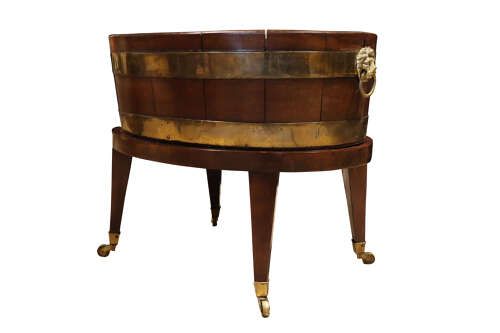


Georgian Wine Bucket Stand
A georgian wine bucket stand is a traditional serving piece designed to hold bottles at the table.
Georgian Wine Bucket Stand
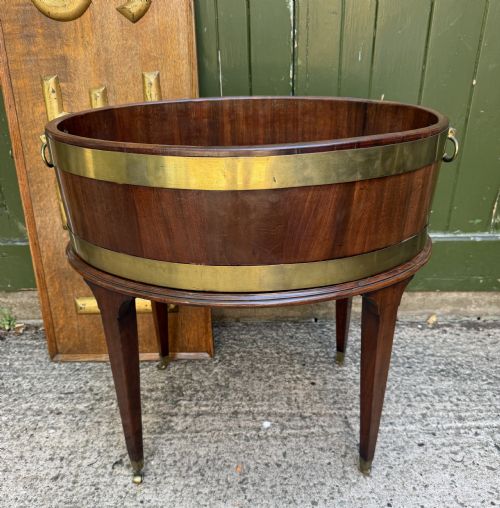
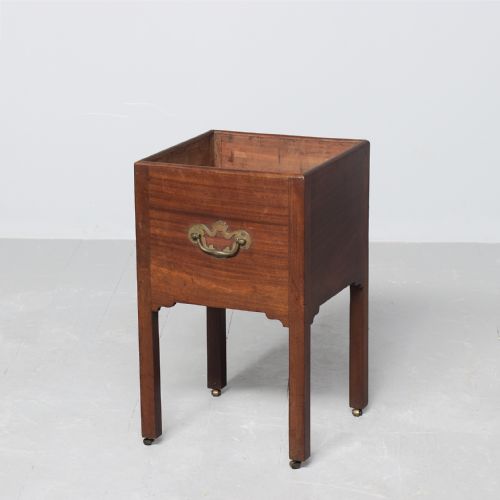
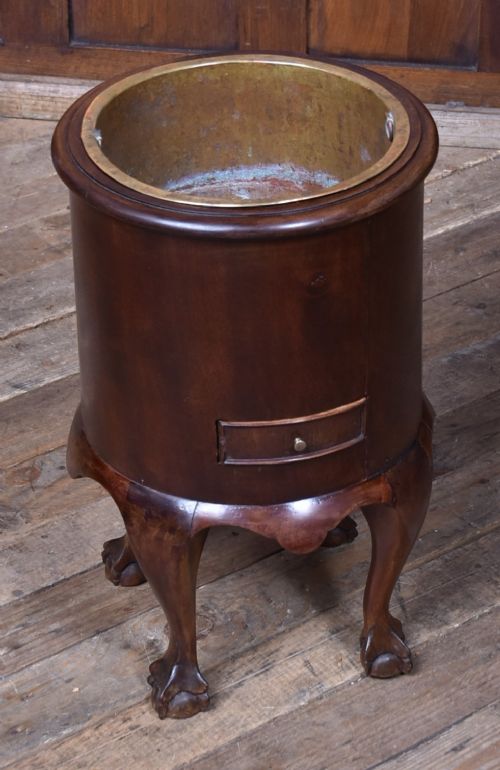
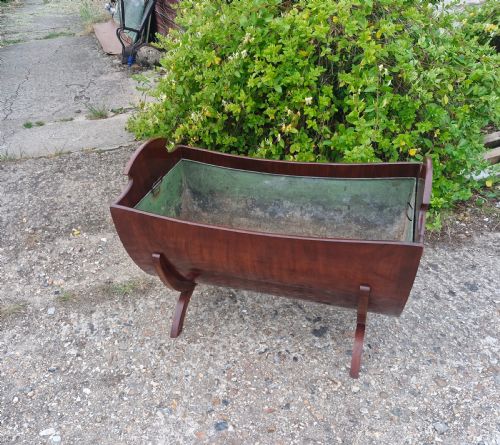
A georgian wine bucket stand encompasses oval and round vessels constructed to hold bottles and ice during dining. These forms frequently double as jardinières, planters, or log baskets in later settings.
The pieces appearing on this page span from the eighteenth century into later revival periods. Mahogany dominates the selection, often shaped with coopered staves.
Many examples sit upon dedicated stands, while others present as table-standing buckets or cellarettes. Brass banding and inlay frequently accent the timber bodies.
How they were made
Cabinetmakers utilised solid mahogany and occasionally walnut, shaping the staves using traditional cooperage techniques similar to barrel-making. Boxwood stringing and inlay added fine linear detail to select panels.
Metal components such as brass bands, hoops, and liners provided structural reinforcement and protection against moisture. Zinc liners frequently served to contain melting ice and water within the wooden vessel.
Many a dining room bucket spent decades quietly holding ferns after the claret ran dry.
What varies in quality
The distinction between standard items and superior examples lies in the selection of figured timber and the precision of the coopered joints. Original stands and matching brass hardware elevate the integrity of a piece.
Patina and surface preservation separate untouched items from heavily restored specimens. The crispness of inlay and the weight of the brass fittings indicate the original maker's investment in materials.
The Georgian Wine Bucket Stand Glossary
- Coopered
- Constructed from wooden staves fitted together and bound by metal hoops, much like a traditional barrel. This technique provided the necessary strength for holding liquids and ice.
- Cellarette
- A low cabinet or bucket designed to hold wine bottles near the dining table. They frequently featured fitted interiors or metal linings.
- Jardiniere
- An ornamental pot or stand intended for holding plants or flowers. Many wine buckets were repurposed for this role over time.
- Stringing
- A narrow inlay of contrasting wood used to create decorative borders on furniture surfaces. Boxwood was frequently utilised for this purpose against dark mahogany.
Georgian Wine Bucket Stand: Frequently Asked Questions
What is a wine bucket stand?
A wine bucket stand is a designated holder for chilling bottles during meals. They often feature wooden staves and metal liners.
These objects originated in dining rooms where temperature control for wine was essential before modern refrigeration.
How do I use a wine bucket stand today?
Modern owners utilise these pieces as bottle holders during gatherings or repurpose them as plant stands. They also function well as fireside log baskets.
Their substantial timber construction allows them to fit naturally into both traditional and contemporary interiors.
Are these pieces waterproof?
Many examples contain original metal or zinc liners intended to hold ice and melting water. Over time, these linings may develop leaks.
Owners should inspect the interior lining and use a secondary container if the original metal is compromised.
How do I date a wine bucket stand?
Dating relies on timber selection, construction methods, and hardware styles. Eighteenth-century pieces typically show hand-coopered staves and heavy brass banding.
Revival pieces from later centuries often employ machine-cut elements and different internal construction details.