




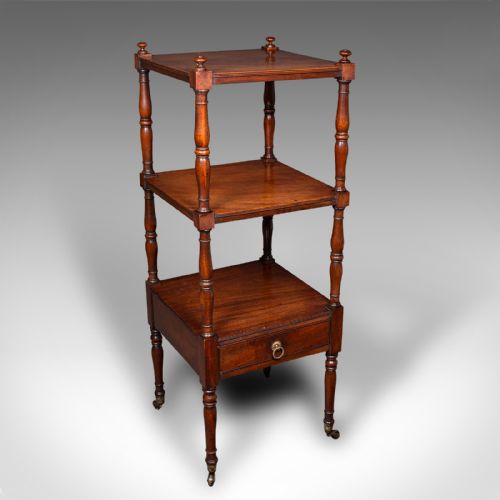


Georgian Whatnot Unit
A georgian whatnot unit brings tiered open display to a room, offering practical vertical storage through distinct shelves designed for books or ornaments.
Georgian Whatnot Unit
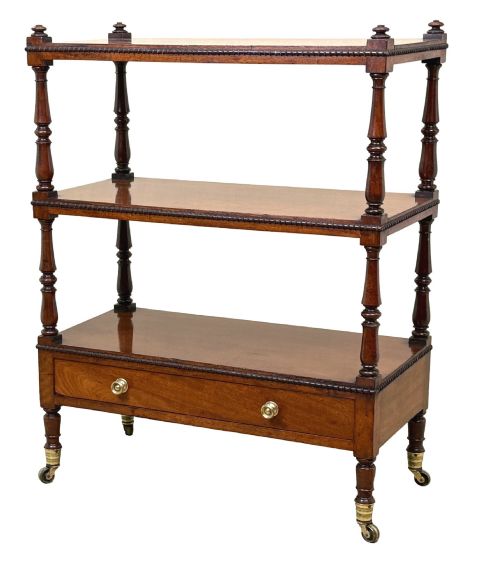
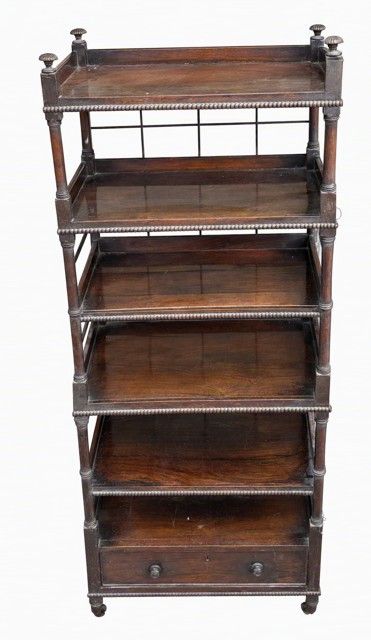
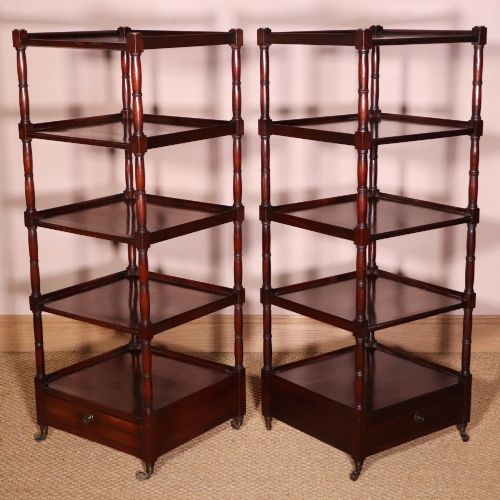
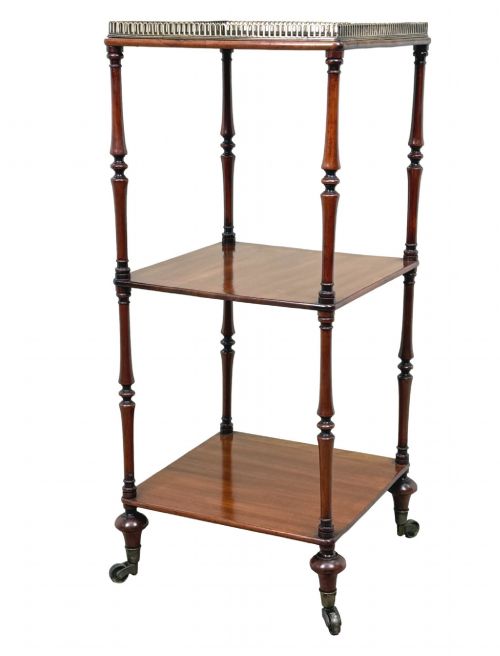
A georgian whatnot unit serves as a multi-tiered display stand or open shelving piece originating from the late eighteenth and early nineteenth centuries. The pieces on this page span the Georgian, Regency, George III, George IV, and William IV styles, alongside general nineteenth century items.
Most examples take the form of stacked open shelves supported by upright columns or corner posts, occasionally featuring cupboards, drawers, or A-frame structures. Buyers will encounter standard freestanding tiered stands, compact corner versions, and occasional tables with multiple platforms.
Origins trace directly to the primary periods of British furniture design, encompassing specific iterations from around eighteen hundred through the early nineteenth century. These items function primarily as versatile display units for rooms requiring accessible vertical surface area.
What varies in quality
The refinement of timber selection and the elegance of proportions separate standard examples from finer pieces. Cabinetmakers who utilised superior mahogany or figured rosewood achieved a depth of surface colour that elevates the overall presence of the furniture.
Construction choices such as unusual designs, compact scales, or specialised forms like bow fronts and octagonal shelves dictate the distinction within the range. The integration of auxiliary elements like bottom cupboards or brass castors alters the utility and execution of each piece.
Georgian Whatnot Unit Retail Price Guide 2026
Typical asking prices for georgian whatnot unit among the pieces listed under this phrase on Sellingantiques today, from the lower quarter to the upper quarter. They describe what is for sale here now, not the wider market.
Listings feature mahogany, rosewood, oak, birdseye maple, and ebonised wood across Georgian and Regency periods.
Gillows
The Georgian Whatnot Unit Glossary
- Étagère
- A piece of furniture consisting of a set of open shelves for displaying small articles or ornaments. This term is frequently used interchangeably with whatnot in period listings.
- Regency
- The period in British furniture history spanning from eighteen eleven to eighteen twenty, often extended to include the broader early nineteenth century aesthetic. It is characterised by classical restraint and refined proportions.
- A-frame
- A structural configuration where the side supports taper upward in the shape of the letter A. This design provides stability to multi-tiered shelving units.
- Birdseye maple
- Timber featuring small, circular figure marks resembling bird eyes within the grain. Cabinetmakers selected this wood for its decorative surface pattern.
Georgian Whatnot Unit: Frequently Asked Questions
What is a georgian whatnot unit?
A georgian whatnot unit is a multi-shelf open display stand designed for holding books, ceramics, or decorative objects. These pieces emerged in the late eighteenth and early nineteenth centuries to provide accessible vertical storage.
They appear in various forms, including freestanding square tiers, corner units, and compact occasional tables. Each version relies on upright posts to support stacked wooden platforms.
Where were they placed in rooms?
These units functioned primarily as auxiliary display and storage furniture in drawing rooms, libraries, or parlours. Their open structure allowed owners to keep frequently used items close at hand.
Corner versions fit neatly into unused angles of a room, while freestanding models stood against walls or beside seating. Their compact scale made them adaptable to different domestic spaces.
How do I identify a Regency piece?
Regency pieces often display classical architectural influences, crisp turnings, and dark dense timbers like rosewood or mahogany. They frequently incorporate brass details and castors for mobility.
Craftsmen working in this era focused on clean lines and balanced proportions across the multiple tiers. The style aligns with the early nineteenth century and the reigns of George III and George IV.
Are all these units open shelves?
While the majority feature entirely open tiers for display, certain examples include enclosed storage compartments at the base. These hybrid designs combine open shelving above with a small cupboard below.
Such variations offered owners a way to display decorative items on top while concealing domestic items away from view. Both open and enclosed variants share the same foundational tiered architecture.