


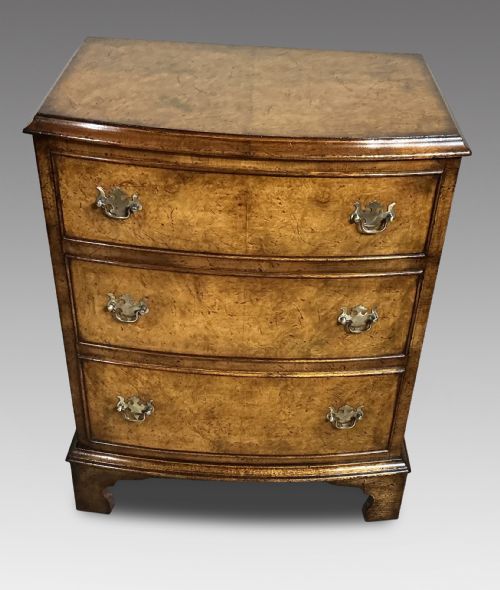


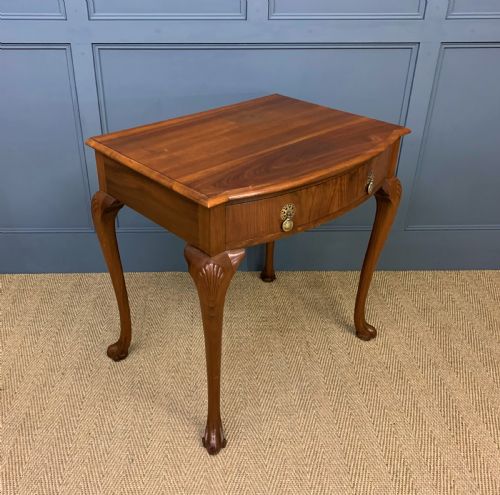

Georgian Walnut Nightstand
A georgian walnut nightstand brings rich grain and compact proportions to a bedroom, offering small-scale storage with genuine period character.
Georgian Walnut Nightstand
A georgian walnut nightstand embodies the practical needs of a bedroom through compact bedside cabinets, side tables, and small chests of drawers. These pieces range from authentic eighteenth-century examples to later revival pieces produced in the Edwardian era and the nineteen-twenties.
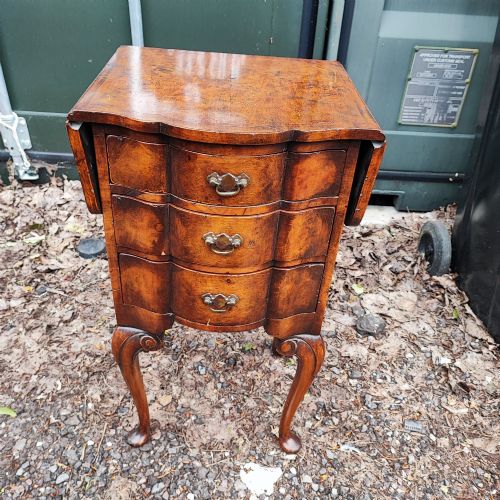
The forms vary between enclosed cupboards, small drawer chests, and open tray-top tables designed to sit neatly beside a bed. Revival styles often adopt Queen Anne or George I characteristics, pairing proportion with utility.
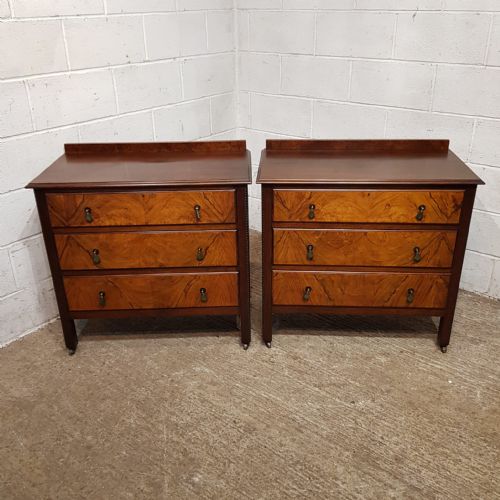
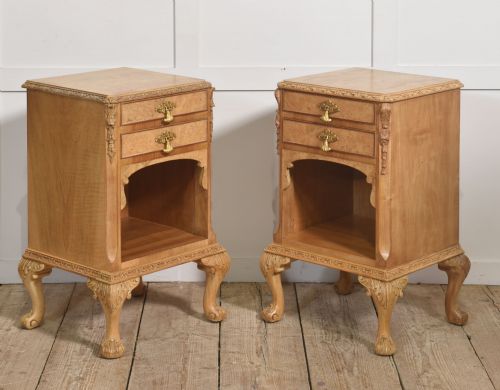
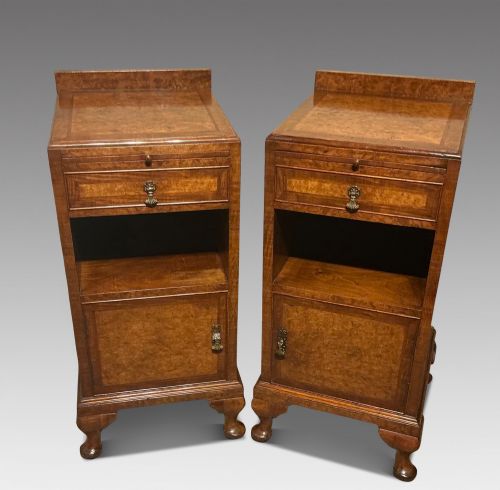
While genuine eighteenth-century pieces appear alongside nineteenth-century and early twentieth-century interpretations, the selection frequently includes matching pairs as well as individual side tables.
Materials and construction
Solid walnut and burr walnut veneer provide the primary visual surfaces, supported by secondary timbers such as oak within the internal construction. Burr walnut is frequently utilised for tabletops and drawer fronts to display rich, figured grain patterns.
Brass handles, escutcheons, and hinges add metallic contrast to the dark timber surfaces, particularly on drawer chests and cupboard doors. Joinery methods rely on traditional cabinet-making techniques suited to small-scale occasional furniture.
Listings span multiple eras from the eighteenth century to the nineteen-thirties, combining solid walnut, burr walnut veneer, oak, and brass hardware.
Evaluating craftsmanship and proportion
Quality rests upon the selection of timber veneers and the crispness of the cabinet work, distinguishing finely figured burr surfaces from plain timber. The integration of functional elements, such as smoothly operating drawers or well-fitted cupboard doors, indicates attentive execution.
Proportion and scale dictate the visual success of the piece, with balanced heights and depths ensuring the furniture functions effectively as a bedside companion. The depth of colour and finish achieved on the walnut timber further separates standard production from superior examples.
The Georgian Walnut Nightstand Glossary
- Burr walnut
- A figured veneer sliced from the knot growths of walnut trees, prized for its swirling grain patterns. It creates highly decorative surfaces on tabletops and drawer fronts.
- Tray top
- A tabletop finished with a raised rim or moulding designed to prevent small items from rolling off. This feature appears frequently on occasional and bedside tables.
- Tambour
- A flexible shutter formed of narrow strips of wood glued to canvas, allowing a cupboard door to slide open in a tight curve. It provides concealed access to compact compartments.
- Queen Anne revival
- A stylistic movement reviving early eighteenth-century furniture forms, characterised by curved lines and figured walnut veneers. Pieces often date from the Edwardian period onwards.
Georgian Walnut Nightstand: Frequently Asked Questions
Are these tables genuine eighteenth-century pieces?
The selection includes authentic eighteenth-century examples alongside revival pieces made during the Edwardian era and the nineteen-twenties. Each piece reflects the decorative preferences of its specific period of manufacture.
Examining the construction methods and timber characteristics helps determine whether a piece originates from the Georgian era or later revival workshops.
How do I choose the right height for a bed?
Measuring the top surface of the mattress ensures the table sits at a comfortable level for reaching items during the night. Most bedside cabinets and side tables offer standard proportions suited to traditional bed heights.
Comparing the listed dimensions with your bedroom layout prevents scale issues when placing the furniture.
Can I find matching pairs of bedside tables?
Several listings feature matched pairs of bedside cabinets and chests of drawers, particularly among pieces produced in the early twentieth century. These sets offer symmetrical placement on either side of a bed.
Single side tables also appear frequently for those seeking an individual accent piece.
How should I care for walnut veneer surfaces?
Polishing walnut with appropriate wax preserves the depth of the grain and protects the timber from drying out. Avoiding direct sunlight prevents fading in the figured burr surfaces.
Gentle dusting maintains the finish without requiring harsh chemical cleaners.