
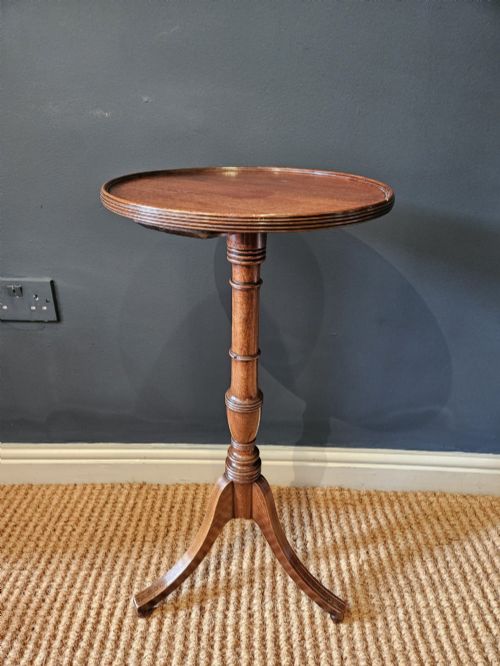
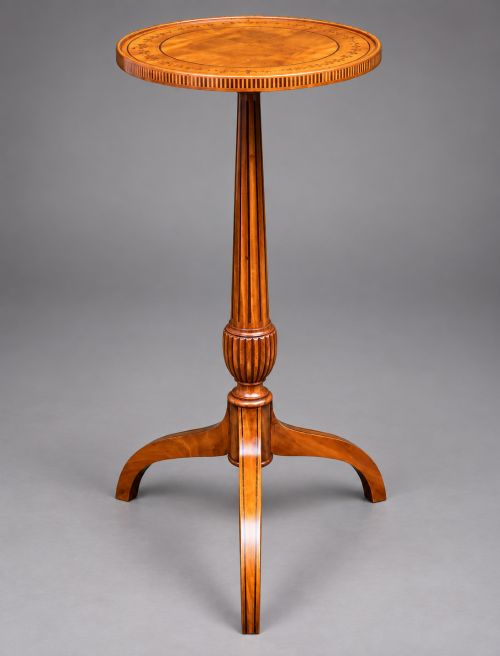
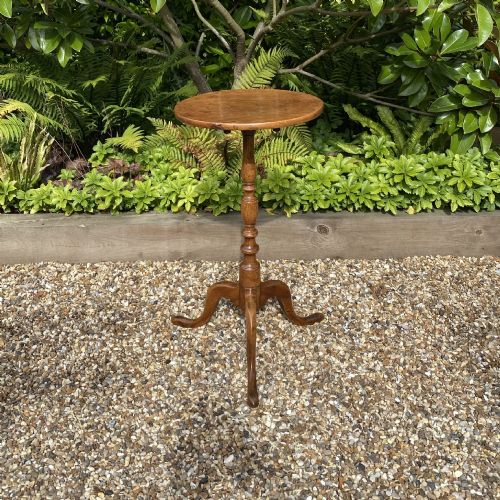
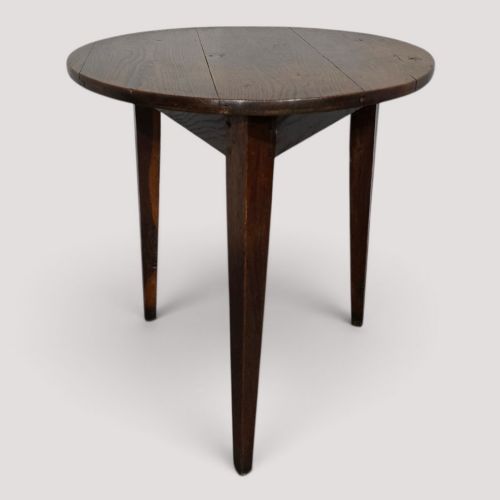
Georgian Tripod Lamp Table
A Georgian tripod lamp table brings compact elegance to a corner, serving original needs for candlelight or wine with steady three-legged balance.
Georgian Tripod Lamp Table
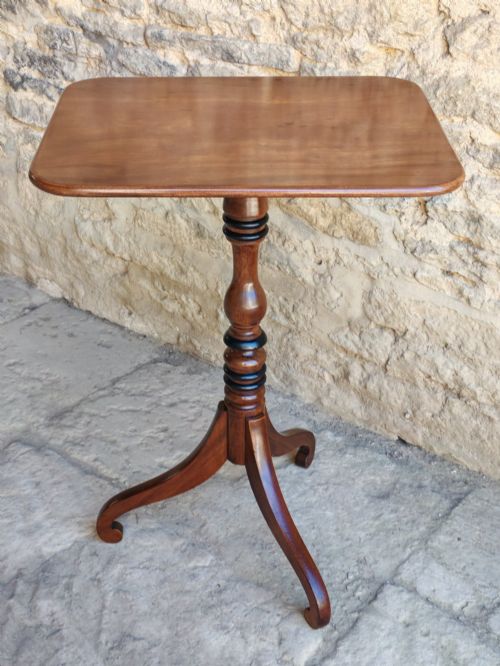
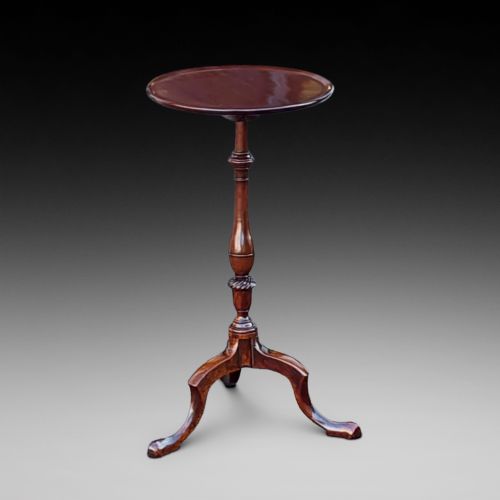
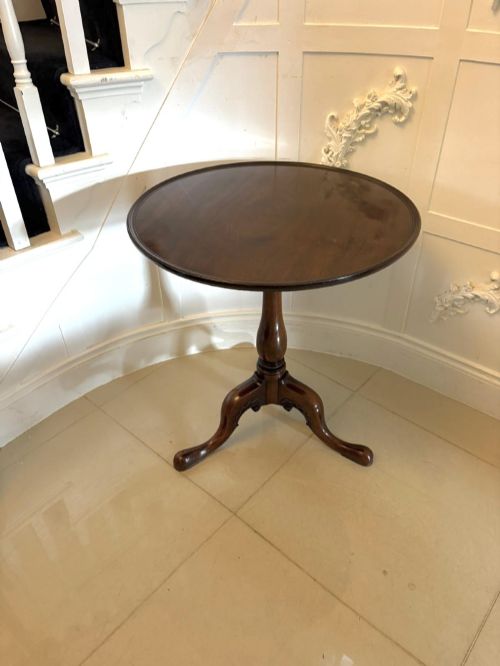
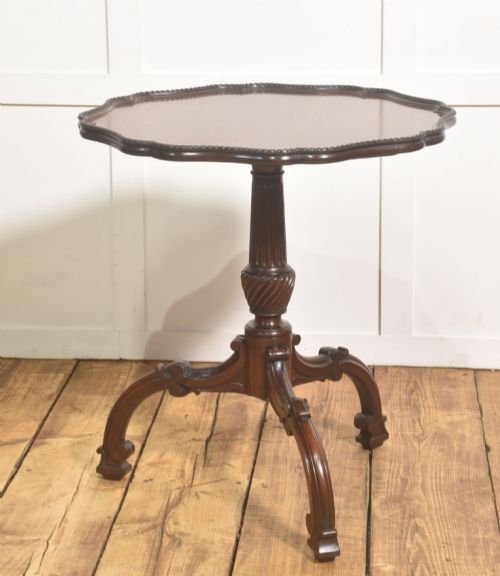
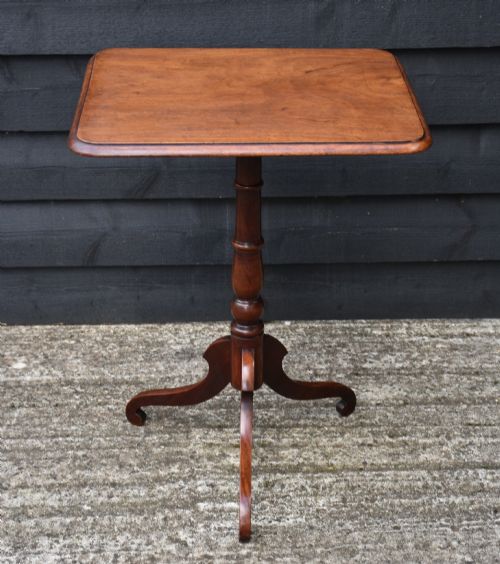
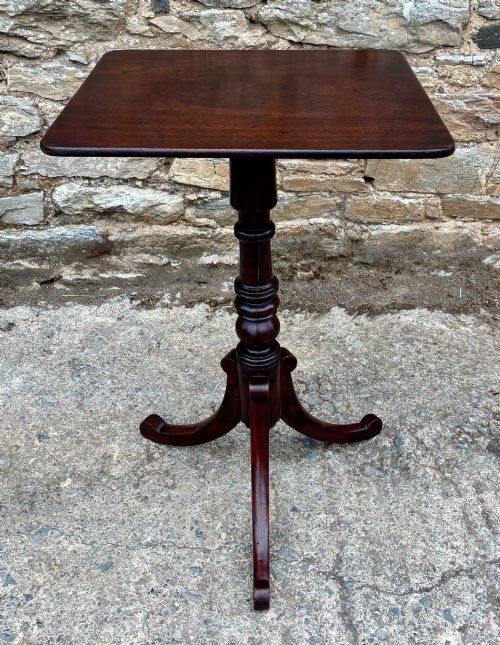
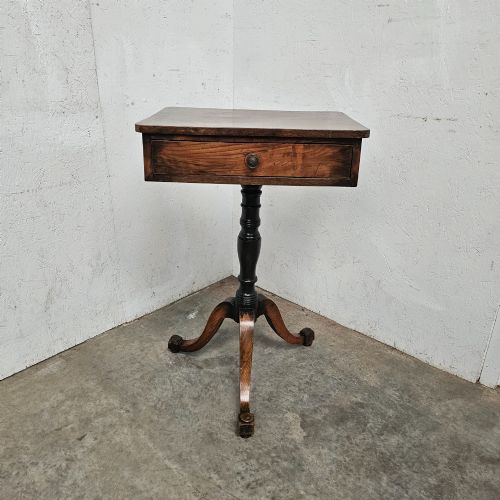
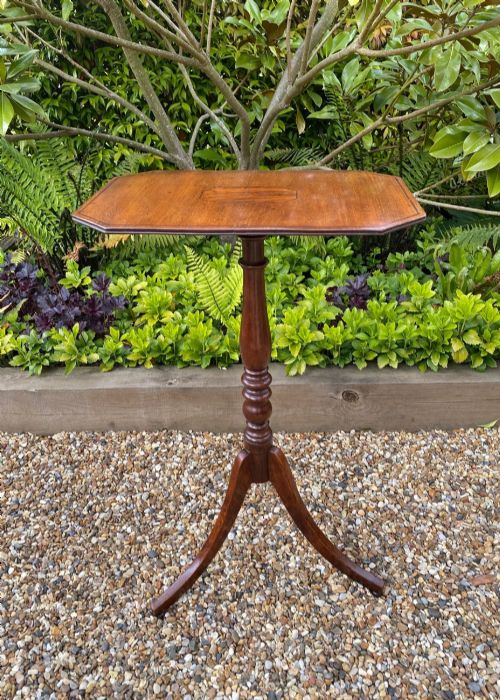
A georgian tripod lamp table operates primarily as a portable surface for lighting, cups or wine, supported by a central pillar and three splayed legs. These agile pieces move easily beside a chair or sofa in modern rooms just as they did in eighteenth-century parlours.
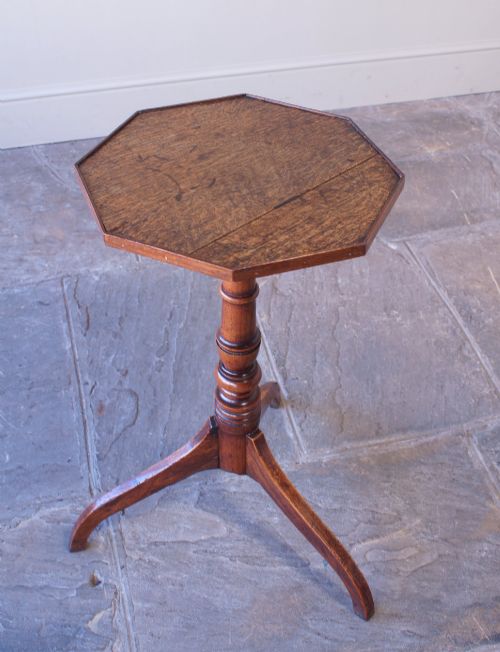
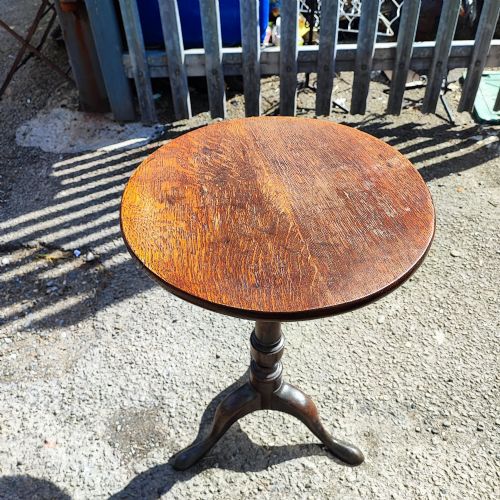
The selections on this page span diverse forms, from plain oak country pieces to refined mahogany tables with tilt mechanisms. You will encounter wine tables, candle stands and occasional tables sharing the characteristic three-legged pedestal design.
While true eighteenth-century examples feature alongside later nineteenth-century revivals and Edwardian interpretations, the core typology remains consistent. They are small-scale circular or occasional surfaces engineered for lightness and stability.
How They Were Made
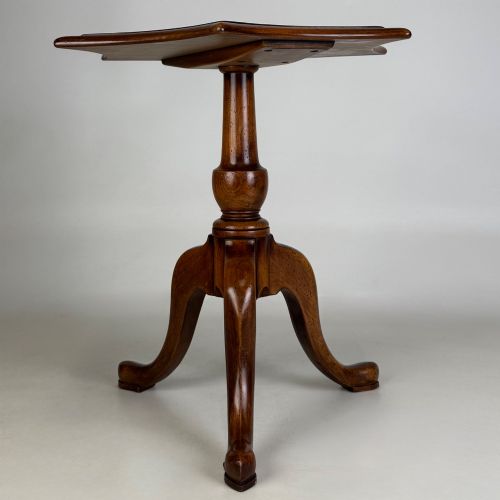
Cabinetmakers constructed these tables using dense timbers like mahogany, oak, walnut and burr oak, often turning the central column on a lathe. The three legs typically join the pedestal with robust dovetail or tenon joints to bear weight evenly despite the slender footprint.
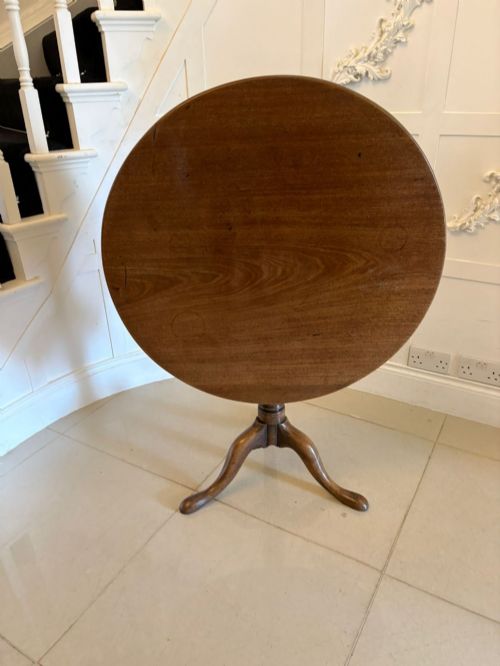
Many examples incorporate a snap-top or tilt-top mechanism featuring a wooden catch and birdcage block, allowing the top to fold flat against the pillar when not in use. This clever engineering saved valuable floor space in historic homes and remains a defining structural feature.
Some tilt-top tables were folded away and tucked against parlour walls like oversized wooden shields when the room needed to host dancing.
What Varies in Quality
The grade of timber dictates much of the distinction, with highly figured Cuban mahogany or rich burr oak commanding greater visual depth than plain utility woods. Figuration in the grain adds movement and catches the light differently across the circular top.
Refinement in turning and leg carving separates standard vernacular pieces from masterworks. Crisp claw-and-ball feet, fluted columns and well-fitted tilt mechanisms show the hand of a superior workshop rather than routine country production.
The Georgian Tripod Lamp Table Glossary
- Tripod table
- A small freestanding table supported by a central column resting on three legs. This construction prevents wobbling on uneven historic floors.
- Tilt top
- A hinged tabletop mechanism that locks horizontally for use or folds vertically for storage. It is often secured with a brass catch.
- Wine table
- A small circular occasional table designed originally to hold a single bottle and glasses. They are frequently built with a slender pedestal shaft.
- Cricket table
- An early English three-legged table typically made of oak with a round top. The three legs ensure it stays level on flagstone floors.
- Snap top
- An alternative term for a tilt-top table utilising a spring or catch mechanism. The tabletop snaps securely into a horizontal position.
Georgian Tripod Lamp Table: Frequently Asked Questions
Where should I place a tripod table?
These compact tables fit effortlessly beside an armchair, reading seat or sofa where surface space is limited. Their small footprint allows them to occupy awkward corners without crowding a room.
Historically used for candles or wine, they function well today as lamp stands or pedestals for small decorative objects.
How do I operate the tilt top?
Most tilt-top examples feature a small wooden catch or brass latch beneath the surface. Releasing this catch allows the circular top to pivot vertically against the central column.
This mechanism was originally designed to save space when the furniture was pushed against a wall between uses.
Are these tables stable on modern floors?
The three-legged design naturally accommodates uneven surfaces without rocking, a principal reason they remained popular across centuries. Each foot makes firm contact with the floor independently.
Care should be taken on thick carpets where the slender feet might sink unevenly, though hard floors suit them perfectly.
What is the difference between a wine table and a lamp table?
In historical terms, wine tables were engineered specifically for portable refreshment during evening gatherings. Lamp tables describe the same physical form adapted later for lighting.
Both share the identical tripod pedestal construction and small circular top, making the terms largely interchangeable in practice.