

Georgian Tilt Top
Georgian tilt top tables offer clever space-saving design paired with remarkable timber figure, serving as versatile occasional surfaces that fold away when not in use.
Georgian Tilt Top
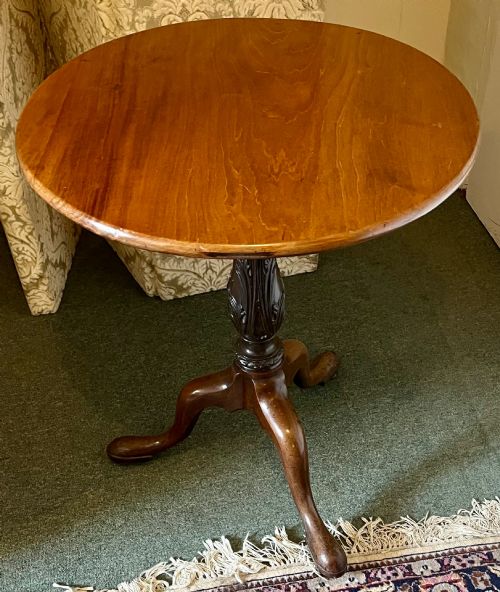
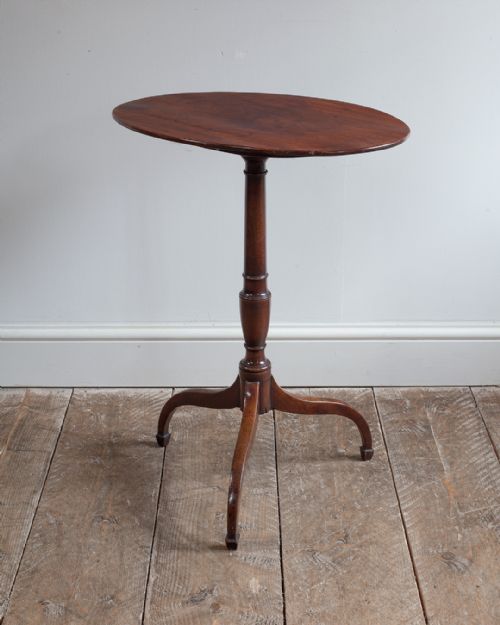
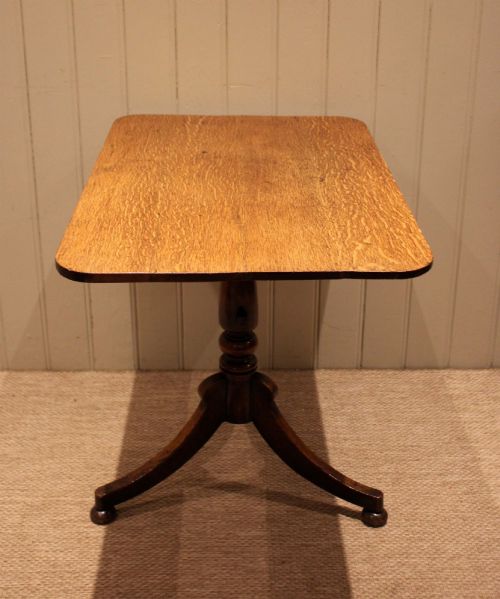
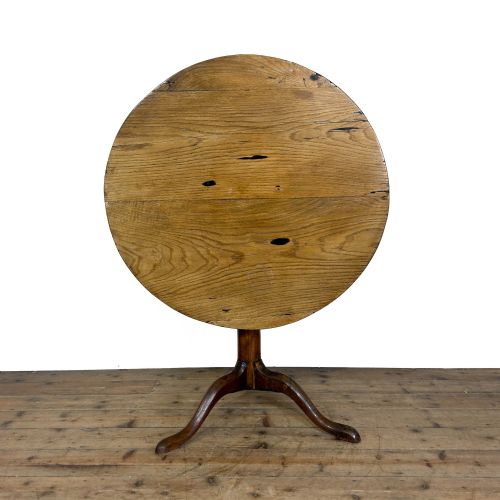
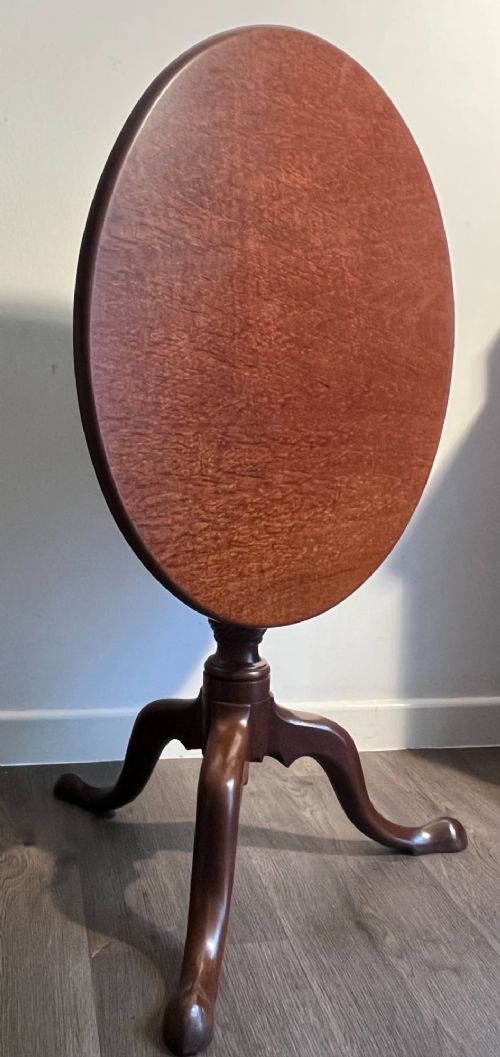
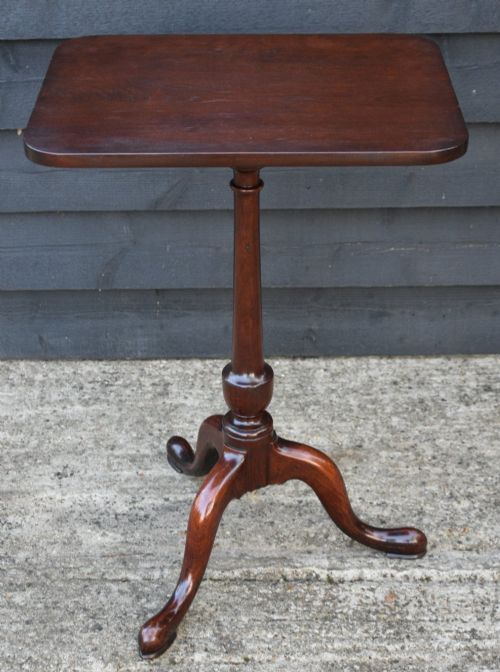
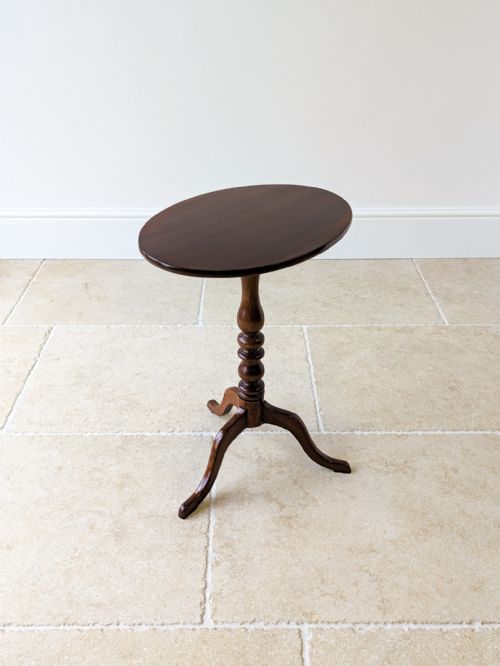
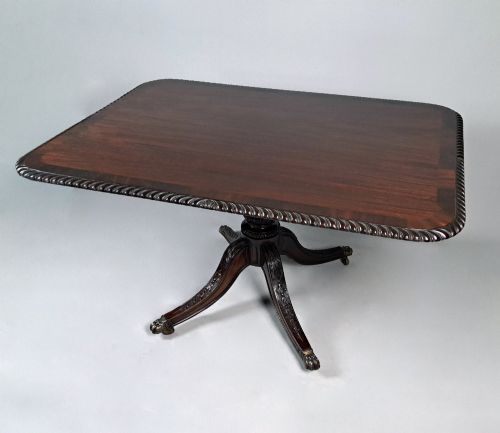
When searching for a georgian tilt top, buyers encounter tripod tables, wine tables and occasional tables engineered with a pivoting mechanism that allows the top to rotate into a vertical position. These utilitarian pieces span the eighteenth and nineteenth centuries, taking forms from compact circular wine stands to large dining tables supported on pedestals.
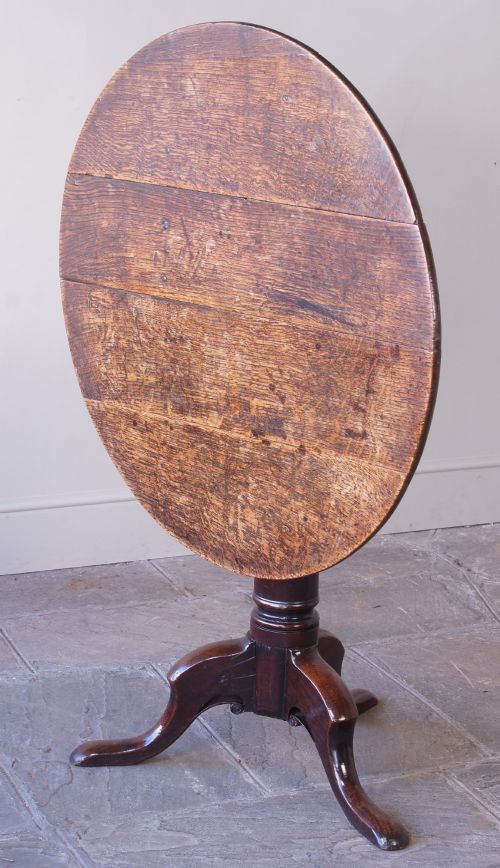
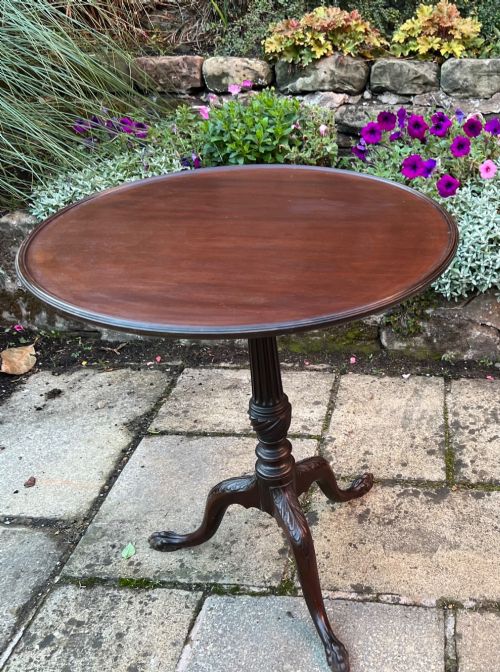
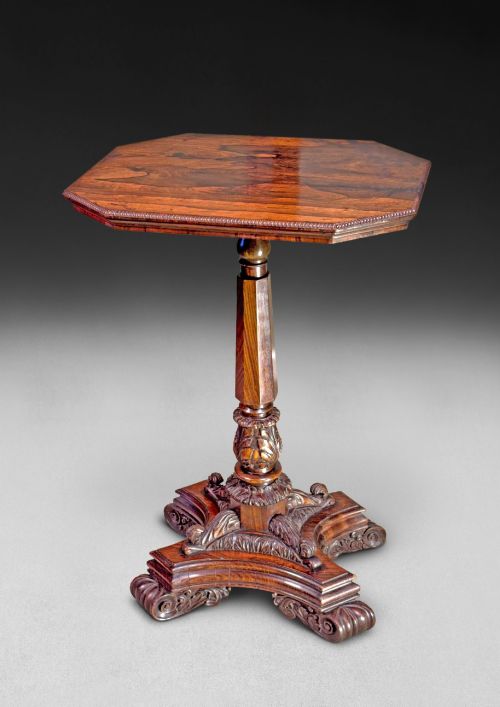
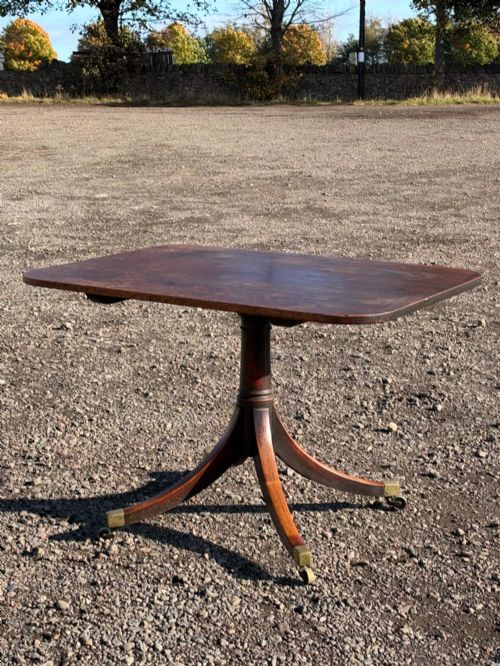
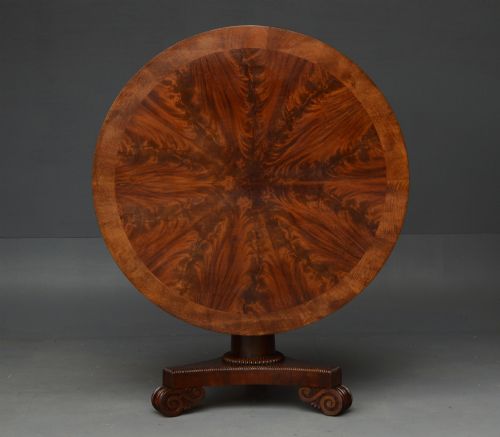
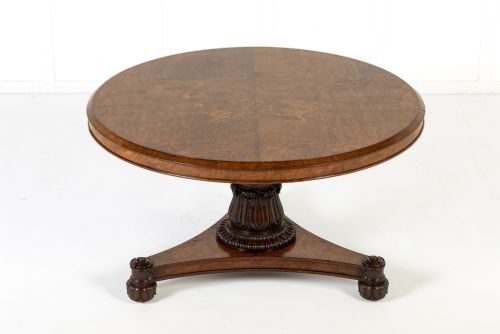
Mahogany and oak dominate the selection, appearing alongside walnut, elm, yew and flame mahogany veneer. The surfaces rest upon slender tripod bases or central pillars fitted with brass casters, reflecting the shifting domestic requirements of period interiors.
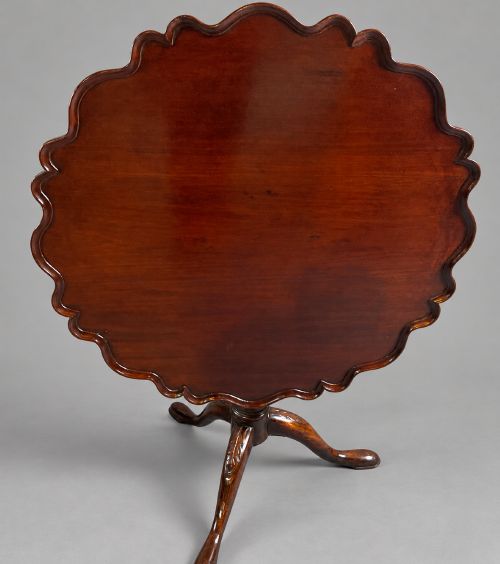
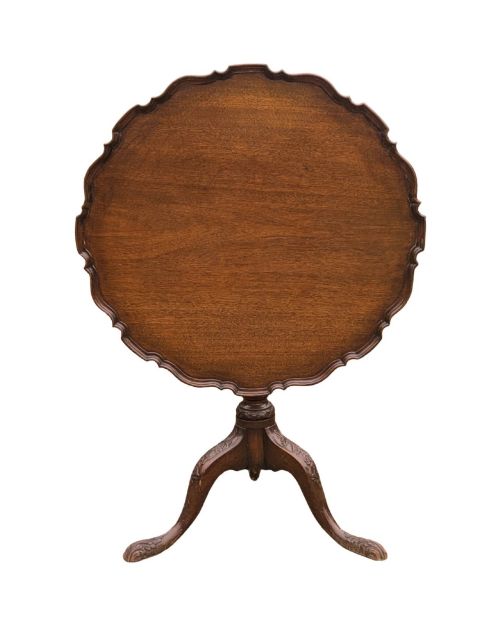
The aesthetic ranges from vernacular country pieces with painted surfaces to sophisticated George III and Chippendale designs displaying carved tripod legs and piecrust edges. Later examples include Regency variants with brass inlay and nineteenth-century interpretations built in the Georgian style.
How they were made
Cabinet makers constructed these tables using solid hardwoods such as mahogany, oak and walnut, frequently applying figured veneers to the circular or oval tops to create striking grain patterns. Turning and carving shaped the central pedestals and tripod legs, while specialised iron or wooden catch mechanisms allowed the surface to pivot and lock securely into place.
Joinery methods relied on sturdy tenons and dovetails to withstand the daily pivoting action without compromising the stability of the central column. Brass fixtures, including casters and hinges, added mobility and durability to finer examples.
Georgian Tilt Top Retail Price Guide 2026
Typical asking prices for georgian tilt top among the pieces listed under this phrase on Sellingantiques today, from the lower quarter to the upper quarter. They describe what is for sale here now, not the wider market.
Some vernacular oak tables wear their original naïve paintwork, untouched by later restoration.
What varies in quality
Quality rests in the choice of timber and the crispness of the carving on the tripod base, where spirited claw-and-ball feet or carved acanthus leaves distinguish master craftsmanship from simpler vernacular work. The integrity of the pivoting mechanism and the flatness of the timber top over centuries of fluctuating humidity also divide standard pieces from superior examples.
Proportion and balance dictate the architectural success of the table, ensuring the slender legs support the weight of the tilting top with absolute stability whether positioned vertically or horizontally.
The Georgian Tilt Top Glossary
- Tilt-top table
- A table featuring a hinged mechanism beneath the surface that allows the top to rotate into a vertical position when not in use. This clever adaptation saved valuable floor space in period rooms.
- Tripod table
- A small freestanding table supported by a central pillar resting on three legs. This construction ensured the table remained stable on uneven floors.
- Piecrust edge
- A decorative raised border carved into the perimeter of a circular table top, resembling pastry crimping. It required immense skill to shape from a solid piece of timber.
- Snap top
- An alternative term for a tilt-top table, referring to the audible click of the wooden or iron catch locking the top into a horizontal position.
- Flame mahogany veneer
- A thin slice of timber cut from the fork of a mahogany tree, displaying a dramatic, flickering flame pattern. Cabinet makers applied this to the most formal table tops.
Georgian Tilt Top: Frequently Asked Questions
What is a tilt top table used for?
These tables served flexible domestic purposes, functioning as tea tables, wine tables or occasional surfaces for reading and card games. Their pivoting tops allowed them to be stored flat against a wall when floor space was required.
Today, they adapt easily to modern living rooms and studies as lamp tables or decorative accent pieces.
How do you operate the tilt mechanism?
A wooden or brass catch beneath the top releases the pivot, allowing the surface to swing upward into a vertical position. A sliding wedge or spring-loaded pin usually secures the top in place.
Care should be taken when operating older mechanisms to support the weight of the timber.
How do I date a Georgian table?
Dating relies on timber choice, leg style and construction details such as secondary woods and fastening methods. Earlier eighteenth-century examples often feature solid mahogany with delicate tripod bases, while nineteenth-century pieces may incorporate veneers or heavier pedestal designs.
Comparing the turned details with documented period furniture provides further chronological context.