
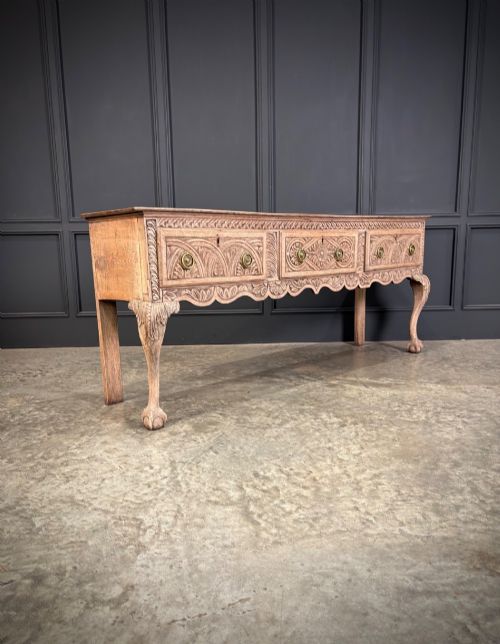
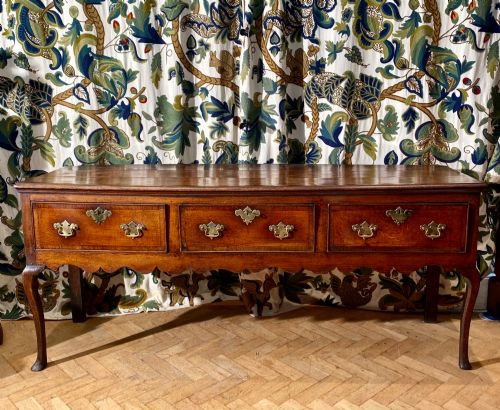
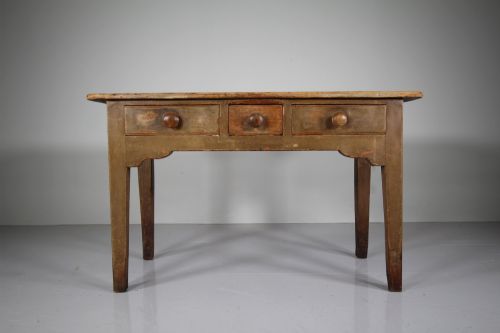
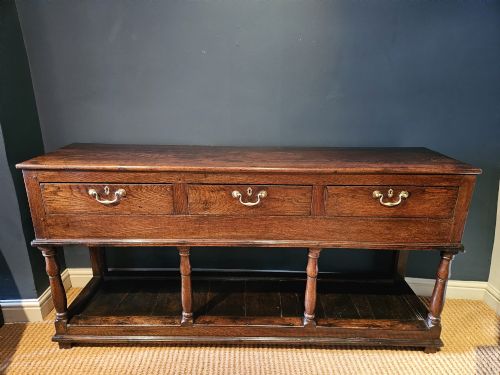
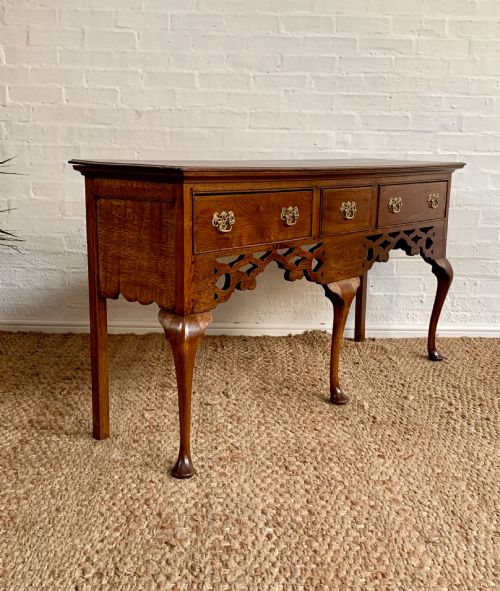
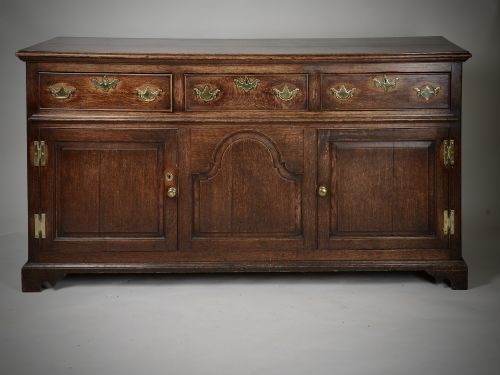
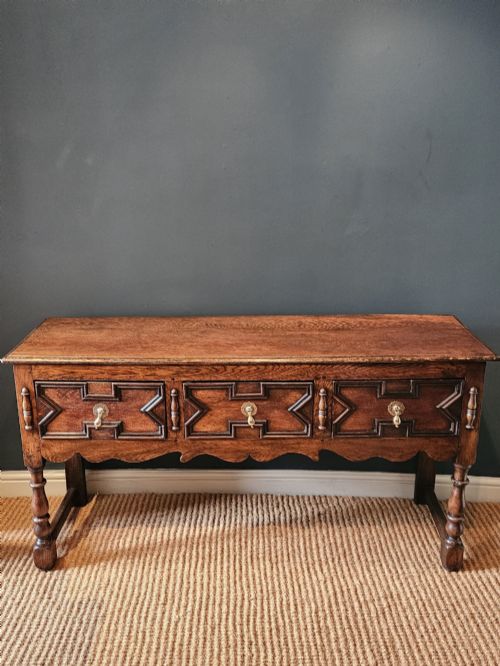
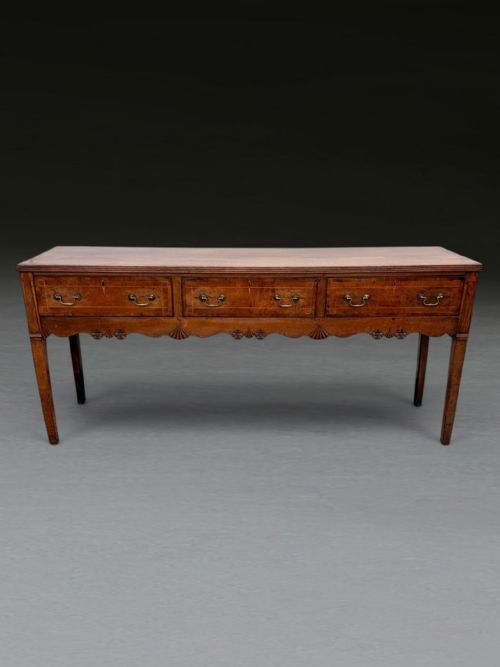
Georgian Three Drawer Sideboard
A georgian three drawer sideboard provides utilitarian storage and surface space, forged from solid timber during periods of domestic craft.
Georgian Three Drawer Sideboard
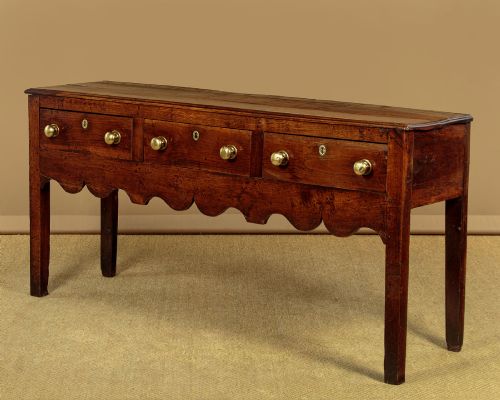
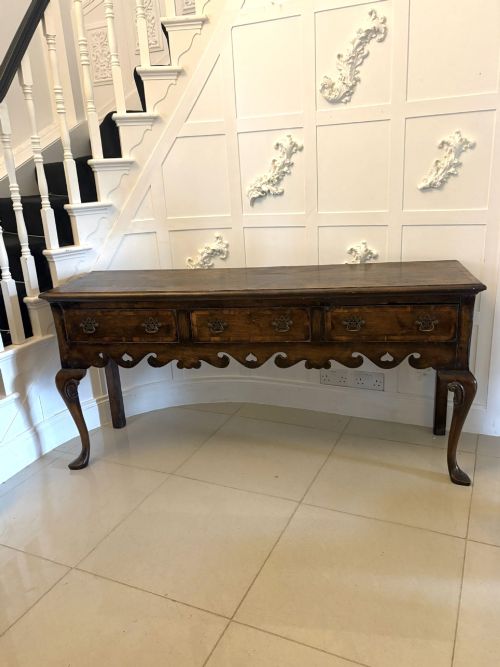
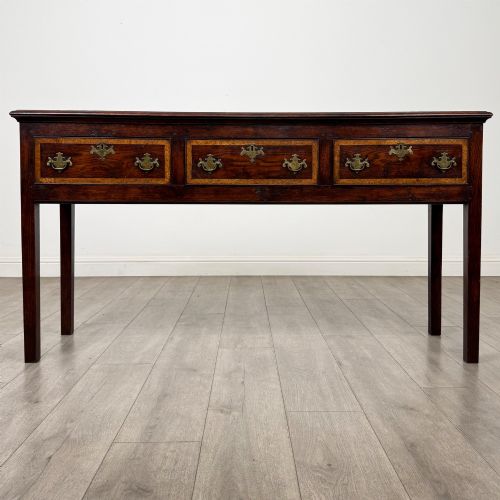
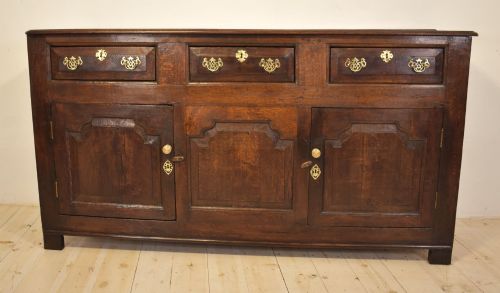
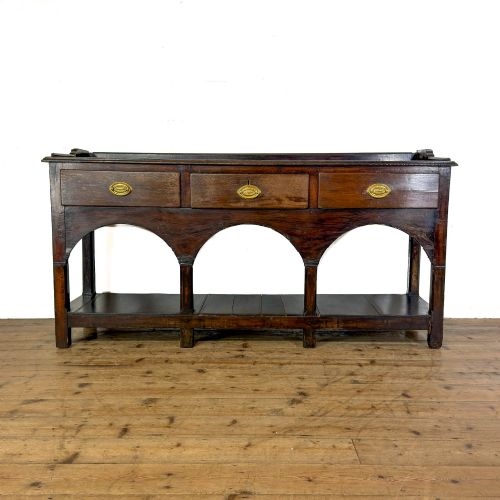
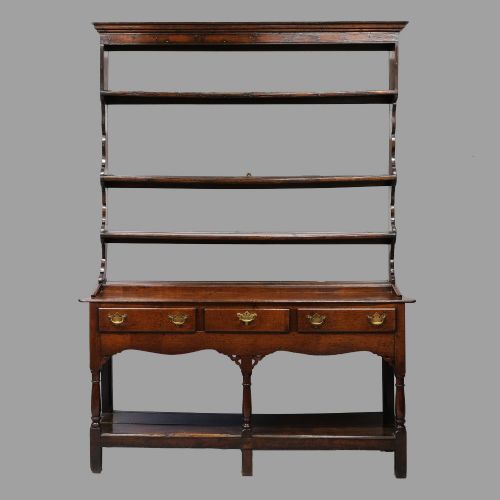
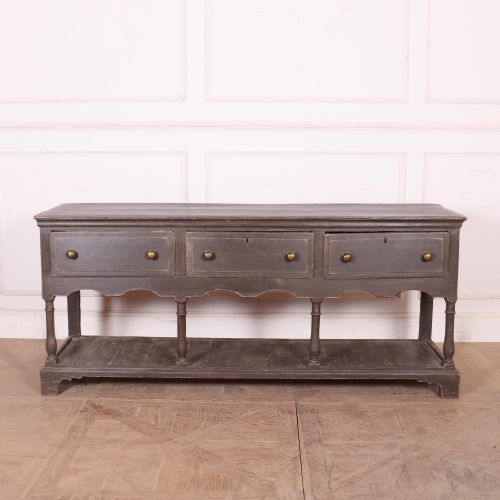
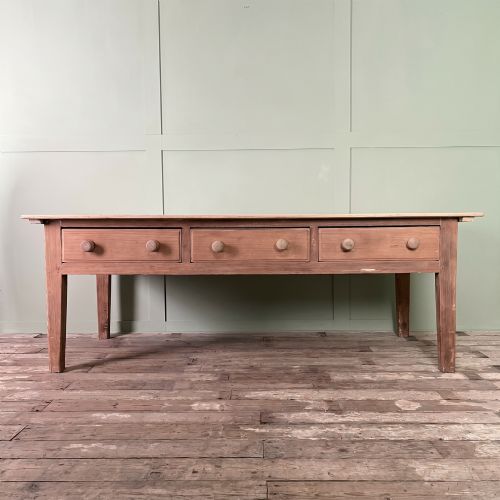
When you examine a georgian three drawer sideboard, you encounter low timber serving pieces, dresser bases, and servers designed for domestic utility. The format typically presents a linear bank of three drawers set above a potboard or open base, functioning as a primary workspace and storage unit in historical kitchens and dining rooms.
The pieces appearing here span the eighteenth and nineteenth centuries, alongside regional variations from Wales, England, and Shropshire. Vernacular items sit alongside formal George III examples, demonstrating how local cabinetmakers adapted the three drawer template for regional homes.
How they were made
Makers utilised solid oak, elm, pine, and mahogany, often pairing denser hardwoods for framing with softer secondary timbers for internal linings. Boards were hand-sawn and planed, showing tool marks that reveal the rhythm of historical workshop production.
Construction relies on pegged mortise and tenon joints for structural stability, while drawer boxes feature hand-cut dovetails. Surfaces display plain waxed finishes, occasional historic paint layers, or subtle inlay work rather than heavy veneer.
Dairy prep tables appear alongside grander servers, hinting at centuries of spilled cream and heavy kneading.
What varies in quality
Proportion and timber selection dictate the standing of a piece, distinguishing utilitarian country workshop output from finer urban cabinet work. Grain figure in the primary wood, clever integration of potboards, and the restraint of mouldings separate standard examples from exceptional survivals.
The integrity of construction, the depth of historical patina on the timber, and the retention of original brass hardware or structural elements govern the enduring character of each base.
The Georgian Three Drawer Sideboard Glossary
- Dresser base
- The lower section of a kitchen or dining dresser, built as a standalone sideboard with drawers and often a potboard beneath.
- Potboard
- An open lower shelf built close to the floor between the legs of a dresser base, historically used for storing heavy pots and pans.
- Geometric moulded
- A decorative treatment on drawer fronts or framing involving raised geometric panels formed by applied mouldings.
- Vernacular
- Regional furniture built by local joiners using native timbers to satisfy practical domestic needs rather than following strict metropolitan design books.
Georgian Three Drawer Sideboard: Frequently Asked Questions
What is a dresser base?
A dresser base is a long, low table fitted with drawers across the top, serving the function of a modern sideboard in historical dining rooms and kitchens.
These pieces provided a sturdy work surface for food preparation alongside enclosed storage for household utensils.
How were potboards used?
The lower shelf, known as a potboard, sat just above the floor to hold heavy iron cookware, earthenware vessels, and large platters.
Keeping bulky items off the floor protected them from damp flagstone surfaces while keeping them close to hand.
Where were these sideboards made?
Cabinetmakers and local joiners produced these items across English counties, Welsh valleys, and rural workshops using regionally available timber.
Regional traits often reveal themselves in the choice of wood, such as elm in certain districts or local oak varieties.
How do I care for antique oak?
Maintain historical oak surfaces by applying occasional coats of traditional beeswax and buffing with a soft cloth to nourish the dry timber.
Avoid placing these pieces near direct heat sources or in fluctuating humidity to prevent timber shrinkage and joint movement.