

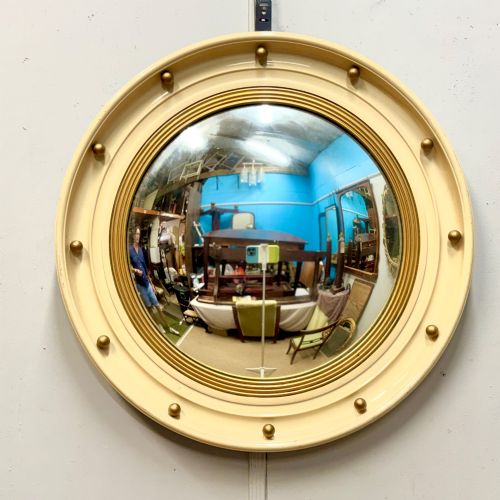
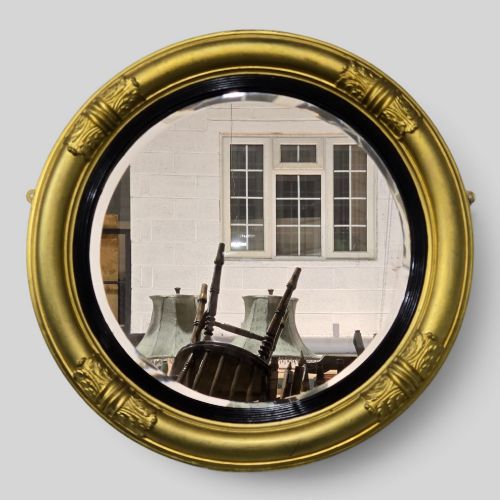
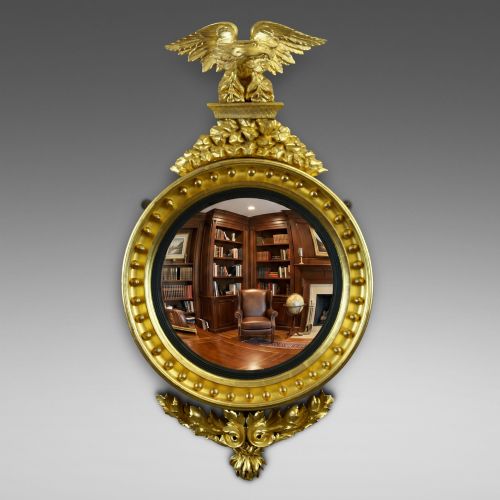


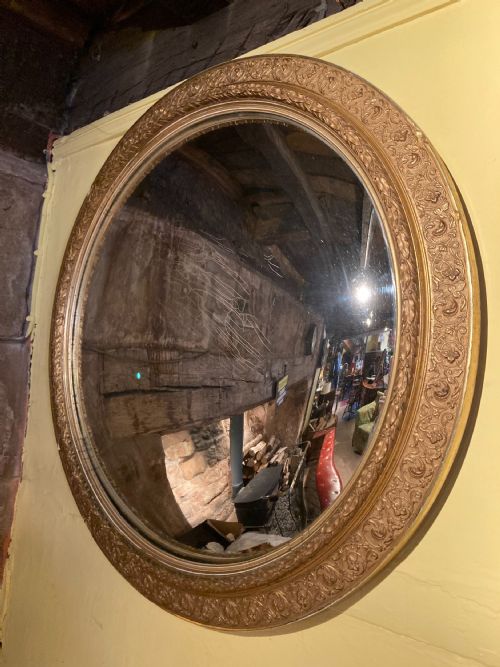


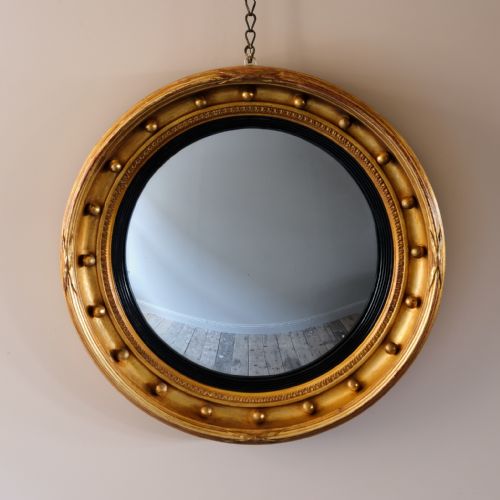


Georgian Style Round Mirror
A Georgian style round mirror brings deep focus and historic warmth to a room through its curved, reflective surface.
Georgian Style Round Mirror
A georgian style round mirror is typically encountered as a convex wall mirror or butler's mirror, drawing on the distinct aesthetic of the early nineteenth century. These circular looking glasses pull the entire breadth of a room into a single, curving optical field.
The pieces on this page span several periods, with nineteenth century examples, Regency originals, and later revivals from nineteen hundred all sharing the same circular format. Wall mirrors and hall mirrors dominate the forms, serving both practical checks and decorative expansion of interior space.
Origins represented in the current selection range from genuine Regency pieces to later Victorian and Edwardian interpretations. Buyers meet both grand giltwood frames and simpler brass or mahogany constructions, reflecting the enduring appeal of the round convex shape.
How they were made
Makers fashioned the frames of these circular mirrors from timber substrates coated in gesso and finished with rich layers of gilt or paint. Giltwood and ebonised wood provide the primary structure for the classic convex frame, often enhanced by composition ornament.
The defining feature is the curved glass plate, which bends reflections across the room. Frames frequently incorporate subsidiary materials like brass accents or mahogany surrounds, paired with painted wood to achieve distinct visual contrast.
Georgian Style Round Mirror Retail Price Guide 2026
Typical asking prices for georgian style round mirror among the pieces listed under this phrase on Sellingantiques today, from the lower quarter to the upper quarter. They describe what is for sale here now, not the wider market.
The listings on this site feature nineteenth-century and early twentieth-century examples rendered in giltwood, ebonised wood, and brass.
What varies in quality
The sophistication of the frame ornamentation dictates much of the visual hierarchy among these circular looking glasses. Finer examples display crisp moulding in the gesso and deep, even layers of gold leaf rather than flat modern paint.
Glass preservation also separates standard pieces from finer specimens, as original silvering develops a soft, mottled character over time. The structural integrity of the timber backing and the sharpness of the convex curve determine the overall presence on the wall.
The Georgian Style Round Mirror Glossary
- Convex glass
- Curved outward like the exterior of a sphere, this glass reflects a wide panoramic view of the surrounding interior. It was historically favoured in butler's mirrors to survey the entire room at a glance.
- Giltwood
- Timber coated with a thin layer of gold leaf over a prepared gesso ground. This technique creates a luminous surface that catches low candlelight and daylight alike.
- Gesso
- A plaster-like mixture applied to wood frames to create a smooth surface for gilding or painting. Artisans carved intricate decorative motifs directly into this dried compound.
- Ebonised wood
- Timber treated to imitate costly ebony, typically through dark staining and polishing. This dark finish provides a stark, formal contrast against bright gilt details.
- Regency
- A design period spanning the early nineteenth century defined by classical restraint and bold decorative forms. Pieces from this era often feature strong architectural lines and convex looking glasses.
Georgian Style Round Mirror: Frequently Asked Questions
What is a convex mirror used for?
Historically, these circular mirrors allowed staff in grand houses to monitor activities across a dining room or parlour from a single vantage point. Today, they serve as striking focal points that draw light and space into narrower hallways and reception rooms.
The curved glass creates an expansive, fish-eye perspective that visually opens up small interiors. This optical effect makes them particularly effective opposite a window or fireplace.
How do I date a round mirror?
Dating relies heavily on examining the frame construction, the type of wood beneath the gilding, and the characteristics of the mirror plate itself. Earlier pieces from the Regency period often show hand-wrought joinery and heavy gesso ornamentation.
Later nineteenth century and nineteen-hundred revivals frequently utilise machine-prepared timbers and composition mouldings. Checking the backboards and fixings offers further clues regarding the era of manufacture.
Are these mirrors heavy to hang?
Many of these circular frames carry substantial weight due to the solid wood substrates, thick gesso layers, and heavy glass plates. Proper wall fixings into solid masonry or direct wall studs are essential for secure placement.
Hanging hardware should be inspected and rated to support the specific load of the frame. Professional installation is often recommended for larger giltwood examples.
How should I clean the glass?
Cleaning requires a gentle touch to avoid disturbing fragile gilt surfaces or historic silvering on the mirror plate. Use a soft, lint-free cloth and apply cleaning fluid to the cloth rather than spraying directly onto the glass.
Harsh chemical ammonia solutions must be avoided to protect antique finishes. Regular dusting with a dry feather duster prevents grime accumulation in the carved details.