


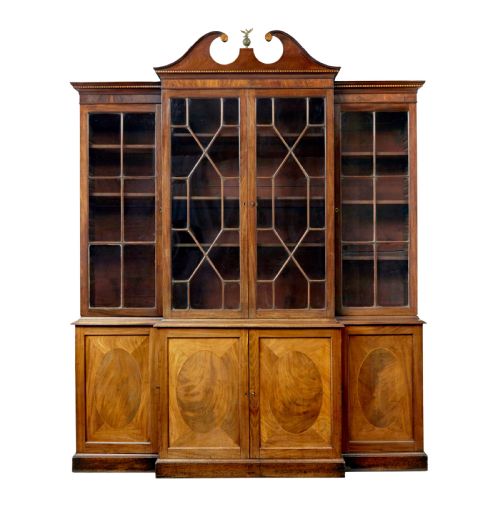


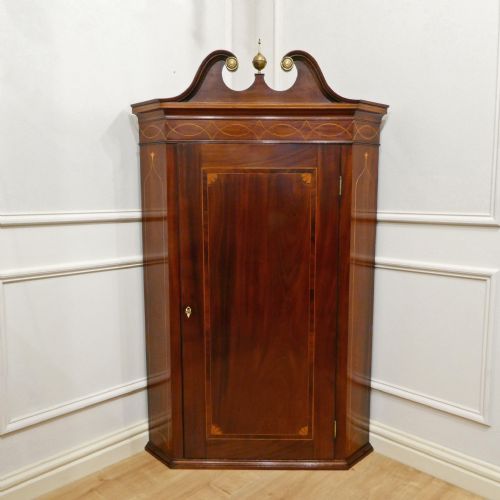
Georgian Style Pediment
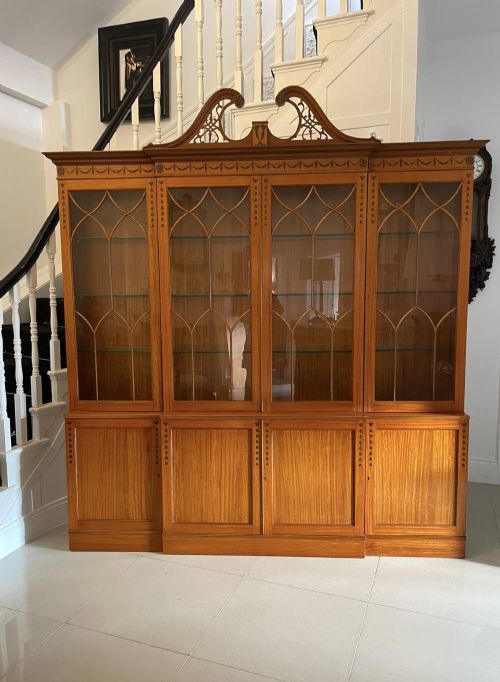
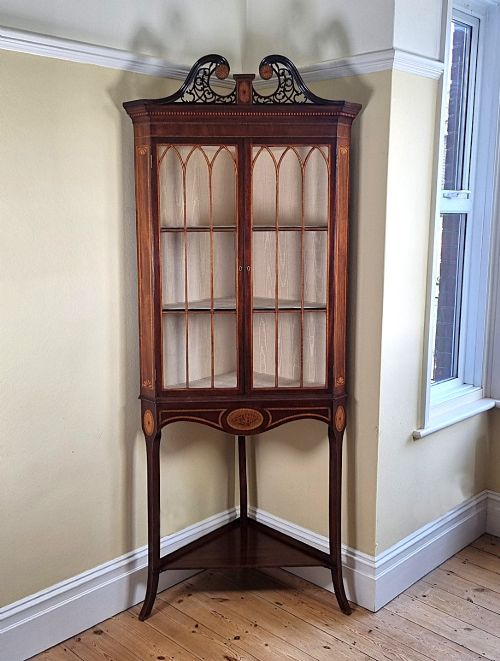
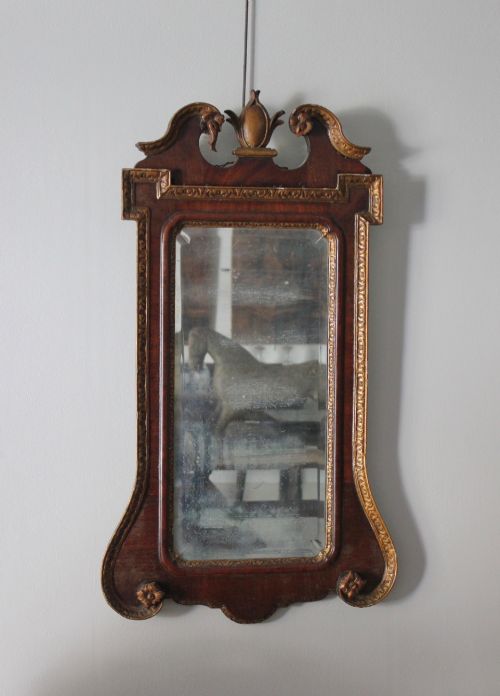
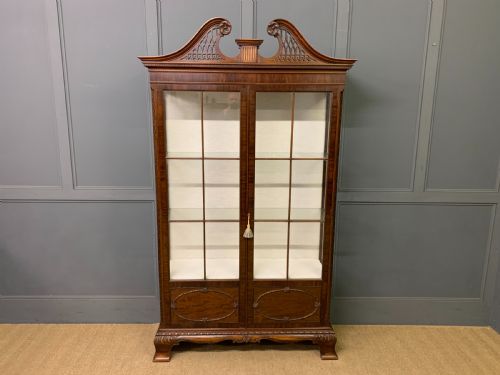
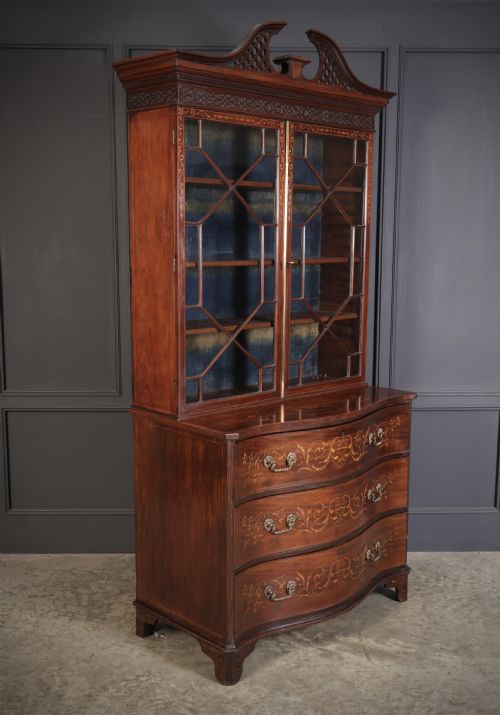
A georgian style pediment crowns large cabinetry and architectural mirrors, bringing classical architectural proportion to interior walls.
Georgian Style Pediment
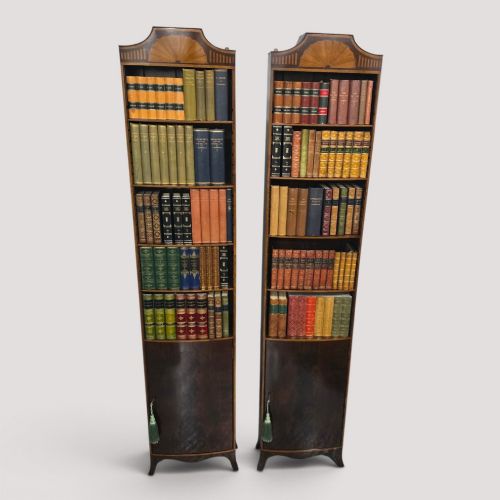
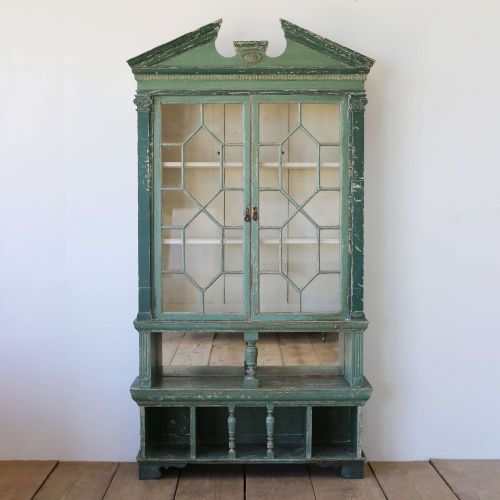
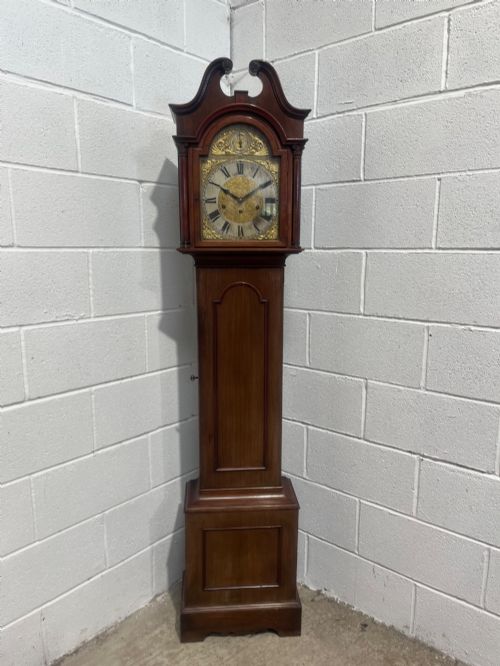
A georgian style pediment crowns large cabinetry and mirrors, drawing directly from classical architecture. Pieces on this page span the eighteenth century, the nineteenth century, and revival periods of the early twentieth century.
Cabinets, breakfront bookcases, and pier mirrors carry these architectural upper sections. Mahogany, walnut, and giltwood provide the primary structures for these imposing architectural elements.
Revival interpretations from the Edwardian era and the early twentieth century frequently adopt these classical pediment forms on display cabinets and bookcases. These later versions emulate the proportions and details of earlier Georgian originals.
Markers of quality
The precision of the woodwork and the crispness of the carving distinguish finer examples from standard production. Sharp detailing on parcel gilding and well-executed marquetry inlay show the hand of a skilled maker.
Proportion and scale dictate the visual success of a georgian style pediment. Superior pieces maintain balanced architectural relationships between the crown and the main body of the cabinet or mirror.
Georgian Style Pediment Retail Price Guide 2026
Typical asking prices for georgian style pediment among the pieces listed under this phrase on Sellingantiques today, from the lower quarter to the upper quarter. They describe what is for sale here now, not the wider market.
Listings feature mahogany, walnut, and satinwood cabinetry alongside giltwood mirrors spanning the eighteenth to the twentieth centuries.
Edwards and Roberts
The Georgian Style Pediment Glossary
- Pediment
- The triangular or curved architectural crowning member above a door, window, or cabinet. It originates from classical temple architecture and defines the upper silhouette of large case pieces.
- Breakfront
- A piece of furniture whose central section projects forward from the flanking wings. This configuration adds depth and architectural presence to large bookcases and display cabinets.
- Parcel-gilt
- Partially gilded woodwork where gold leaf highlights specific carved details against a painted or polished wood ground. It creates contrast on mirrors and frames.
- Marquetry
- Decorative veneer work forming pictures or geometric patterns using various coloured woods. It decorates the flat surfaces of cabinets and bookcases.
- Astral glazing
- Cabinet door glazing bars arranged in a fine lattice pattern to hold multiple small panes of glass. This design protects books while maintaining visibility.
Georgian Style Pediment: Frequently Asked Questions
What is a georgian style pediment?
A georgian style pediment is an architectural crowning element placed atop tall furniture like bookcases, cabinets, and large mirrors. It echoes the triangular or broken-curve rooflines of classical buildings.
These elements bring height and formal dignity to interior spaces, serving as the visual focal point of the piece below it.
How do I date a georgian style pediment piece?
Dating requires examining the secondary woods, construction techniques, and the specific characteristics of the revival period involved. Eighteenth-century originals differ in timber preparation from nineteenth-century copies and Edwardian revivals.
Hardware, dovetailing, and glass manufacture provide further clues to confirm whether a piece dates to the Georgian era or a later revival.
Where should I place a large cabinet with a pediment?
Large cabinets and bookcases with architectural pediments require rooms with high ceilings to accommodate their imposing vertical scale. Placing them against a primary wall allows the pediment to frame the piece correctly.
Ensure the room has adequate clearance above the furniture so the architectural detail remains fully visible and unobstructed.
How do I care for giltwood and wood pediments?
Giltwood surfaces require gentle dusting with a soft, dry brush to protect the delicate gold leaf layers. Avoid using liquid cleaners or chemical polishes on gilded areas.
Wax polished timbers benefit from occasional application of quality beeswax to nourish the grain and maintain the protective surface sheen.