



Georgian Style Gold Jewellery
Georgian style gold jewellery brings together gold, silver, diamonds and coloured stones in earrings, rings and pendants shaped by long-standing ornamental traditions.
Georgian Style Gold Jewellery
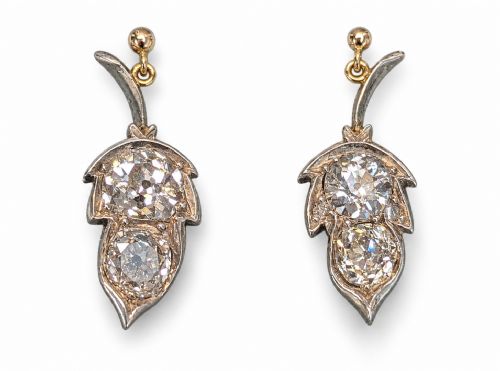
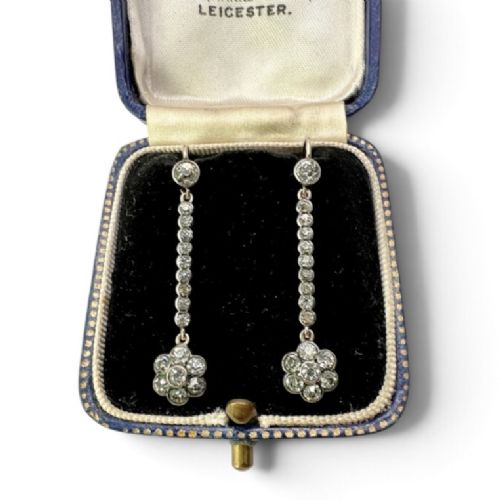
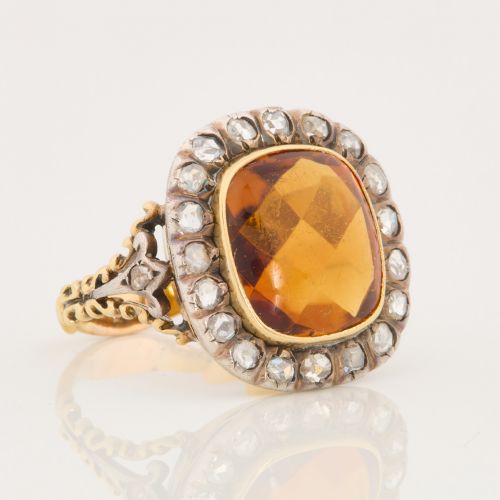
Georgian style gold jewellery encompasses rings, earrings, pendants, fob seals and stick pins spanning periods from the Regency era through to the early twentieth century. Buyers seeking this aesthetic encounter objects fashioned in gold alongside silver, often set with diamonds, emeralds, citrine, carnelian, amethyst, pearl and paste.
The pieces listed on this page range across multiple eras including the Georgian period, the Victorian era, Edwardian times and the early twentieth century. Earrings and rings appear frequently, alongside swivel pendant fobs and miniature portrait stick pins.
How they were made
Craftsmen utilised gold, ranging from nine carat up to eighteen carat weights, alongside silver settings designed to hold stones securely. Metals were shaped into ornate drops, cluster rings, navette forms and swivel mountings.
Stones such as old cut diamonds, rose cut diamonds, emeralds, citrine and carnelians were integrated into the metalwork, occasionally accompanied by natural pearls and paste.
Georgian Style Gold Jewellery Retail Price Guide 2026
Typical asking prices for georgian style gold jewellery among the pieces listed under this phrase on Sellingantiques today, from the lower quarter to the upper quarter. They describe what is for sale here now, not the wider market.
Materials in these listings include gold, silver, diamonds, emeralds, citrine, carnelian, amethyst, pearl and paste across multiple historical eras.
What varies in quality
The standard of workmanship shows in the refinement of the gold and silver work, from simple nine carat gold rings to intricate eighteen carat cluster settings and ornate drop earrings. The choice of stones, including diamonds, emeralds and citrine, dictates the richness of the finished ornament.
Design complexity marks the distinction between simpler fob seals and elaborate multi-stone navette rings or tassel drop earrings.
The Georgian Style Gold Jewellery Glossary
- Fob seal
- A small pendant historically used for stamping wax seals on correspondence. These often feature swivel mechanisms and hardstones like carnelian.
- Navette ring
- A boat-shaped ring style featuring an elongated cluster of stones. This form sits prominently across the finger.
- Old cut diamond
- A hand-faceted diamond cut before modern machine precision methods were adopted. These stones display distinctive open culets and softer facets.
- Paste
- Hand-cut glass used as a gemstone substitute in historical jewellery. It offers brilliance and colour without employing mined stones.
- Stick pin
- A decorative pin with an ornamental head used to secure neckties or lapels. The head frequently showcases miniature portraits or gemstones.
Georgian Style Gold Jewellery: Frequently Asked Questions
What periods do these pieces span?
The items cover eras from the Georgian and Regency periods through the Victorian and Edwardian phases up to nineteen twenty. Different decades introduced distinct stylistic choices in metalwork and stone selection.
Items reflect the design preferences of their specific period, combining gold and silver with various precious and semi-precious stones.
Which stone types appear most often?
Common stones include diamonds in old European and rose cuts, alongside emeralds, citrine, amethysts and carnelians. Natural pearls and paste also feature.
These materials are set into gold and silver across rings, earrings and pendants.
How were fob seals utilised?
Fob seals served a practical purpose for impressing wax seals on letters and documents. They were suspended from chains and often constructed with swivel mounts.
Many examples incorporate hardstones such as carnelian within their gold mountings.
What gold purities do makers use?
Gold purities vary across the items, including nine carat, fifteen carat and eighteen carat specifications. Metal selection often aligns with the period of manufacture.
Silver is frequently paired with gold, particularly in diamond-set pieces.