




Georgian Spill Vase
A georgian spill vase is a slender receptacle for holding taper matches to light candles and fires, bringing period charm to a mantelpiece.
Georgian Spill Vase
A georgian spill vase takes the form of a slender vessel designed specifically to hold taper matches near a hearth, standing ready to transfer flame from fire to candle. These functional objects appear across various periods, including the Regency era, the broader nineteenth century, and the Victorian epoch.
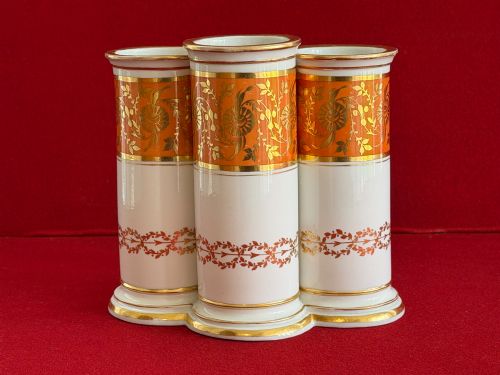
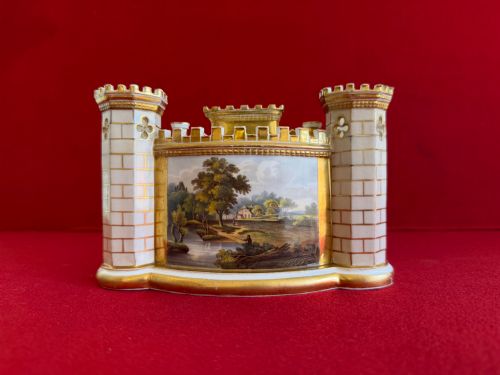
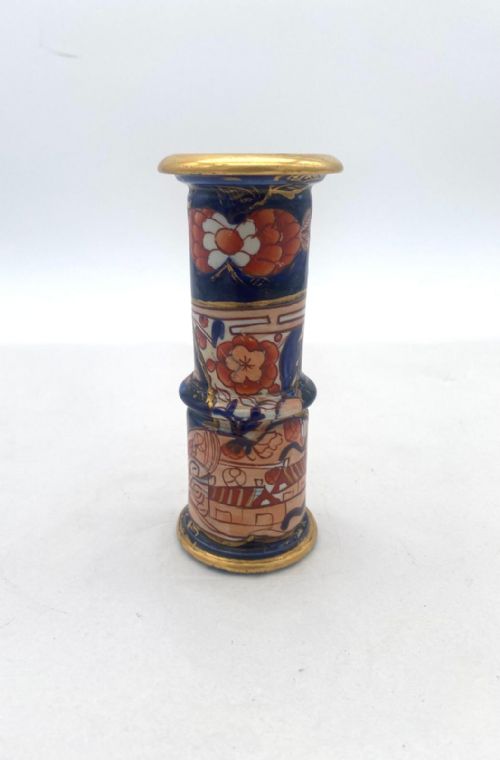
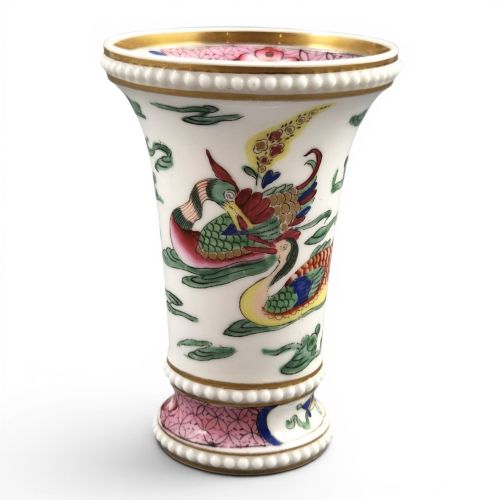
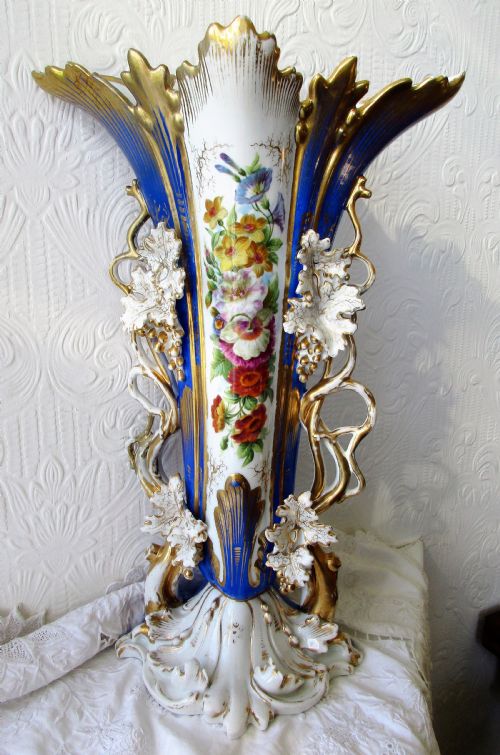
The pieces on this page span several distinct material traditions and decorative schemes, ranging from moulded porcelain structures shaped like castles to turned wooden vessels fashioned from dense timbers. Makers embraced diverse motifs, depicting subjects such as farmyard animals, architectural landmarks, and botanical patterns upon porcelain and earthenware bodies.
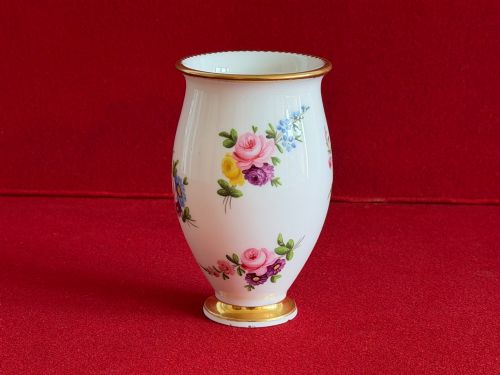
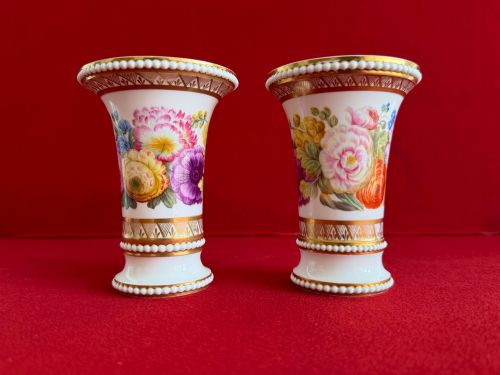
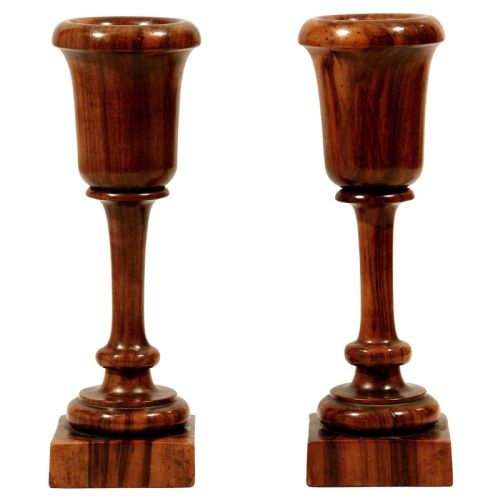
Collectors encounter both paired sets and individual examples, some exhibiting elaborate hand-painted surface decoration enriched with gilding. Other specimens rely entirely on the natural grain of turned wood, showcasing the skill of contemporary artisans who shaped dense timber into urn-like silhouettes.
How they were made
Potters constructed ceramic examples using porcelain, bone china, earthenware, and pearlware, often shaping them through moulding or careful throwing before applying painted patterns and glaze. Workshops utilised hand-painting alongside specific factory pattern numbers to decorate surfaces, frequently adding gold leaf or gilding to highlight raised details.
Woodturners fashioned other vessels from substantial timbers such as lignum vitae and yew wood, turning the dense material on a lathe to create symmetrical urn and stem profiles. These wooden pieces derive their visual appeal from the natural character and grain of the turned wood rather than applied ceramic decoration.
Georgian Spill Vase Retail Price Guide 2026
Typical asking prices for georgian spill vase among the pieces listed under this phrase on Sellingantiques today, from the lower quarter to the upper quarter. They describe what is for sale here now, not the wider market.
Some nineteenth-century sheep spillholders feature woolly earthenware backs designed to hold a match, quietly turning a flock of ceramic livestock into household matchboxes.
What varies in quality
The fineness of execution distinguishes individual specimens, particularly in the precision of hand-painted details and the crispness of moulded architectural or figural forms. Porcelain examples with named factory attribution and documented pattern numbers demonstrate greater artistic ambition than unmarked utilitarian earthenware.
Material choice and turning skill determine the merit of wooden examples, where dense native timbers like lignum vitae require exceptional lathe work to achieve balanced proportions. The presence of original gilding and matched pairs elevates the visual impact of ceramic spill holders.
Spode·Flight Barr and Barr·Walton
The Georgian Spill Vase Glossary
- Spill
- A slender rolled slip of paper or a thin wood taper used for transferring fire from a hearth to a candle or pipe. These matches sat within dedicated vases on the mantelpiece.
- Pearlware
- An improved earthenware developed by Josiah Wedgwood in the late eighteenth century, featuring a thin glaze with a slight bluish tinge that pooled in crevices to mimic Chinese porcelain.
- Lignum Vitae
- A very dense, heavy heartwood obtained from trees of the genus Guaiacum, prized by turners for its durability and oily self-lubricating properties.
- Bone China
- A type of soft-paste porcelain incorporating bone ash, developed in England to produce a strong, translucent ceramic body suitable for delicate vessel walls.
- Gilding
- The application of gold leaf or powdered gold to the surface of porcelain, wood, or metal to provide decorative highlights and enrichment.
Georgian Spill Vase: Frequently Asked Questions
What is a georgian spill vase?
A georgian spill vase is a small decorative vessel designed to hold paper or wooden tapers next to a fireplace. They kept dry spills within easy reach for lighting candles and lamps.
These pieces reflect the domestic habits of the period, combining practical utility with the ceramic or wooden fashions favoured by contemporary households.
How were spill vases used?
Households placed these vessels on mantelpieces and tables near hearths where fires burned constantly. Users drew out a single spill, lit the end in the flames, and carried the fire to candles or tobacco pipes.
Because matches were dangerous and expensive before safety matches appeared, reusable tapers served as the primary method for transferring fire across a room.
How do I date a spill vase?
Dating relies on identifying ceramic bodies, factory pattern numbers, and stylistic markers such as Regency neoclassical outlines or Victorian figural modelling. Turned wooden specimens are assessed through timber choice and turning characteristics.
Marks stamped or painted on the base of porcelain pieces often provide direct links to specific potteries operating during the early nineteenth century.
Are spill vases found in pairs?
Makers frequently produced spill vases in matched pairs designed to sit symmetrically at either end of a mantelpiece. Single survivors also appear regularly.
Paired examples usually share identical dimensions, moulding techniques, and painted pattern numbers applied by the original factory workshop.