

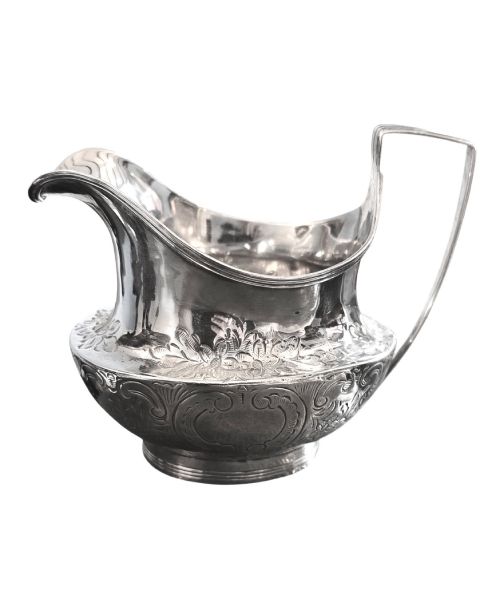
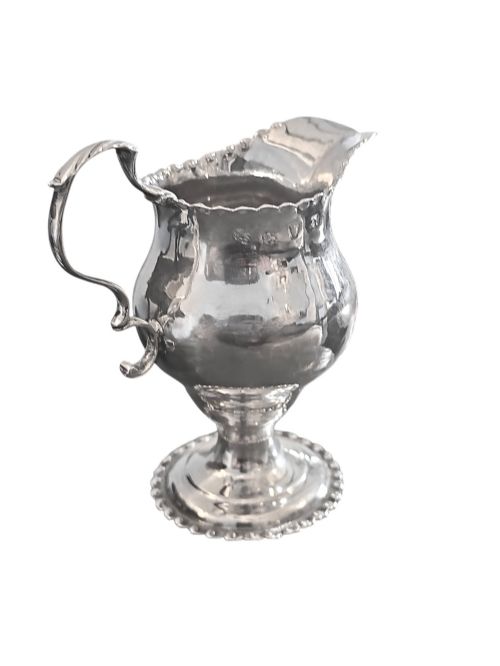
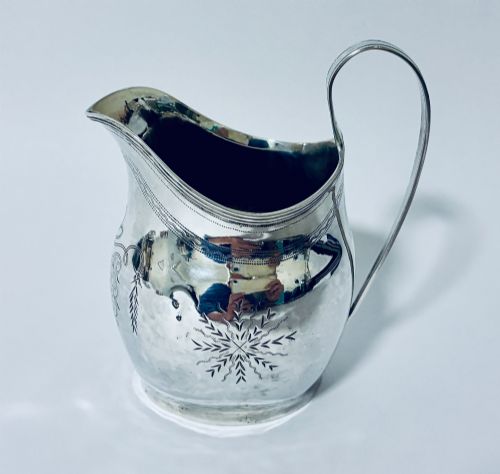
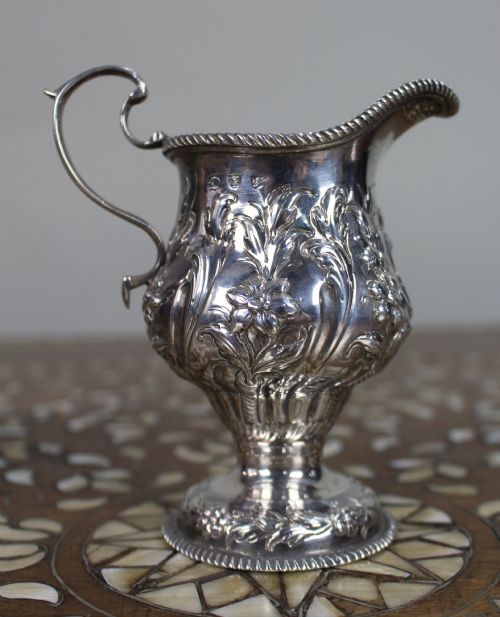




Georgian Silver Service Jug
A georgian silver service jug is a functional vessel for milk, cream, or sauce, prized for its classic proportions and enduring metalwork.
Georgian Silver Service Jug
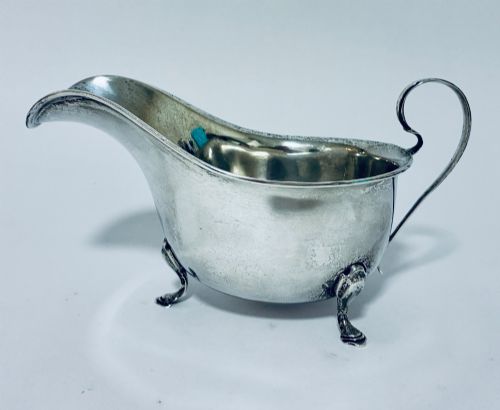
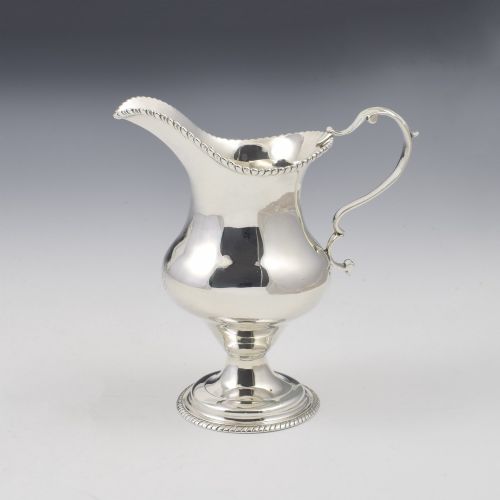
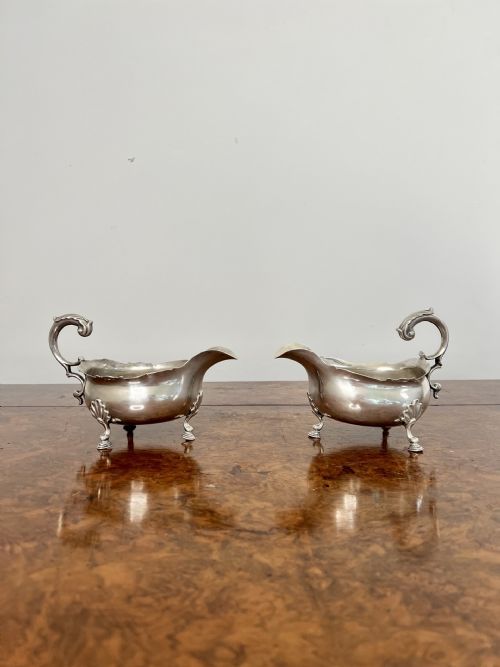
A georgian silver service jug encompasses cream jugs, milk jugs, sauce boats, and components of larger tea and coffee services. Buyers seeking these forms will encounter examples spanning the eighteenth century, the regency era, and the reigns of George III, George IV, and William IV.
The pieces appearing on this page range from provincial pieces originating in Exeter and Newcastle to London hallmarked items bearing the marks of notable makers. Forms vary from simple footed ewers to sauce boats and full tea sets decorated with grape vine and leaf motifs.
Materials and construction
Makers shaped these vessels primarily from sterling silver and silver plate, often utilising copper as a base metal for plated items such as Sheffield plated sugar bowls and cream jugs. Gilding, including silver gilt and gold gilt finishes, appears on select interiors and decorative surfaces.
Silversmiths employed traditional hammering, casting, and soldering techniques to raise the bodies, apply handles, and attach feet. Decoration was achieved through hand chasing, engraving, and applied cast elements such as floral and botanical motifs.
Georgian Silver Service Jug Retail Price Guide 2026
Typical asking prices for georgian silver service jug among the pieces listed under this phrase on Sellingantiques today, from the lower quarter to the upper quarter. They describe what is for sale here now, not the wider market.
Listings feature items from the eighteenth and nineteenth centuries, alongside twentieth-century reproductions and Victorian naturalist designs.
Factors that define quality
Quality rests upon the crispness of the original chasing, the integrity of the hallmarks, and the weight of the metal used in construction. Superior pieces retain their intended geometric or organic proportions without distortion from repair or excessive polishing.
The reputation of the maker and the clarity of provincial or London assay marks add distinction to a piece. Execution of decorative details, from simple beaded rims to elaborate naturalist vine leaves, separates standard utility items from masterwork service vessels.
Stalker & Mitchison·John Emes·Peter & Ann Bateman·Joseph Craddock·Benjamin Smith
The Georgian Silver Service Jug Glossary
- Hallmark
- Official marks stamped on precious metals to indicate the standard of silver, the assay office, the maker, and the year of production. These stamps provide the primary documentation for dating and attribution.
- Sterling silver
- An alloy consisting of ninety-two point five percent silver and seven point five percent other metals, typically copper. This standard has governed British silver manufacturing for centuries.
- Repoussé
- A metalworking technique where the smith hammers the design from the reverse side to form a raised pattern on the front. It is frequently combined with chasing to refine the details.
- Sauce boat
- An open vessel with a lip and handle used for serving gravies or sauces at the table. They often stand on three cast legs or an integral footed base.
- Silver gilt
- Silver objects that have been coated with a thin layer of gold on the surface. This technique protects the underlying silver and provides a rich two-tone appearance.
Georgian Silver Service Jug: Frequently Asked Questions
What is a georgian silver service jug used for?
These vessels were designed to serve cream or milk during tea service, or to hold sauces and gravies at the dining table. Their forms evolved from simple pear-shaped ewers to boat-shaped vessels matching larger tea and coffee sets.
Today, they function both as decorative tableware and as usable accessories for contemporary dining and entertaining.
How do I identify a georgian piece?
Identification relies primarily on the stamped hallmarks, which record the assay office, date letter, and silversmith's mark. Stylistic clues such as neoclassical shapes, gadrooned rims, and specific handle designs also point to the period.
Consulting reference books on British silver marks helps match unfamiliar ciphers to their correct decade.
How should I care for antique silver?
Silver requires gentle cleaning with specialised non-abrasive polishes and soft cloths to preserve the surface and highlights. Regular handling and proper storage away from direct sunlight and damp environments prevent heavy tarnish build-up.
Avoiding harsh chemical dips protects the original patina and any gilt interiors.
What is the difference between silver and plate?
Solid silver pieces are made entirely from precious metal alloys throughout their structure, meeting official assay standards. Plated items consist of a base metal, such as copper, covered by a thin external layer of silver.
Examining the wear points and looking for underlying metal or maker's plating marks helps distinguish between the two.