

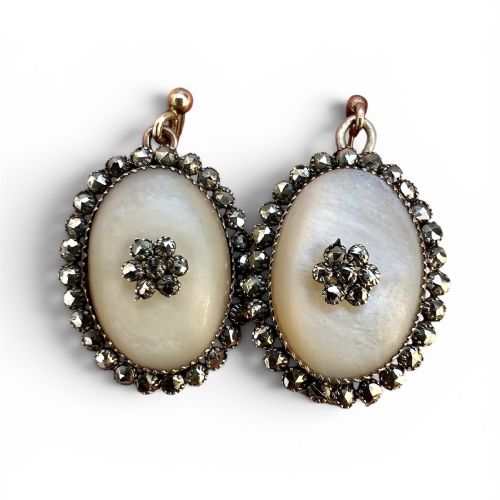
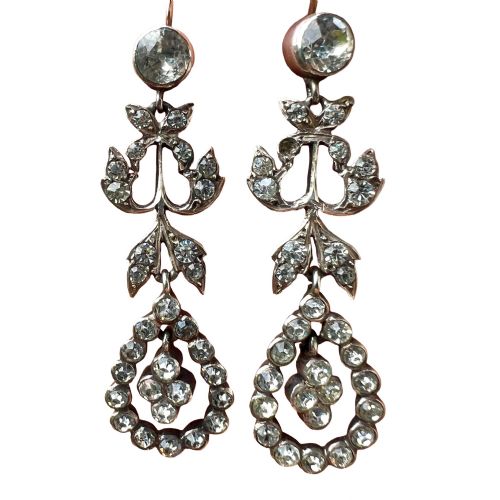


Georgian Silver Earrings
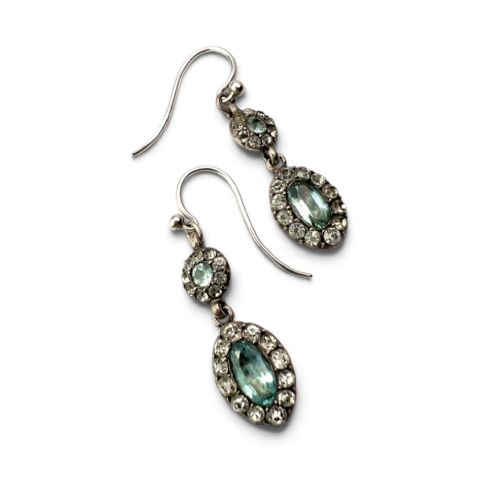
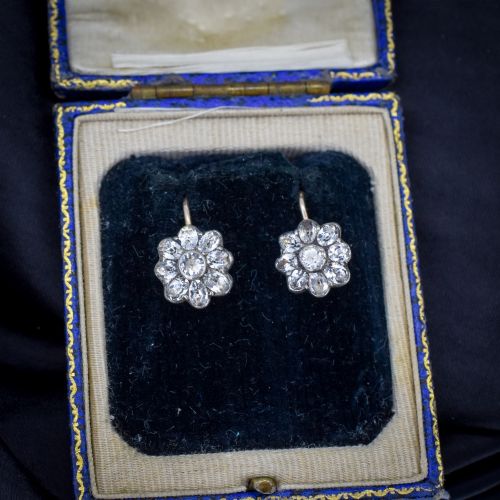
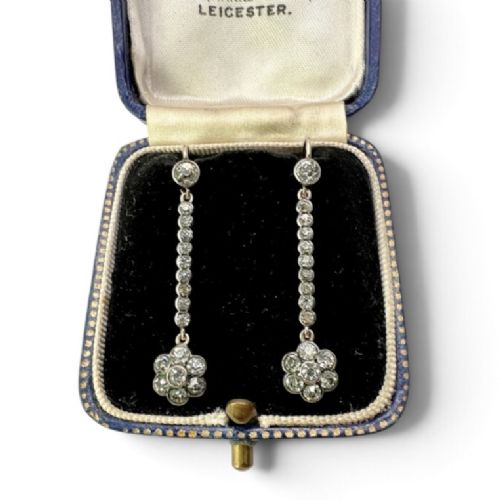
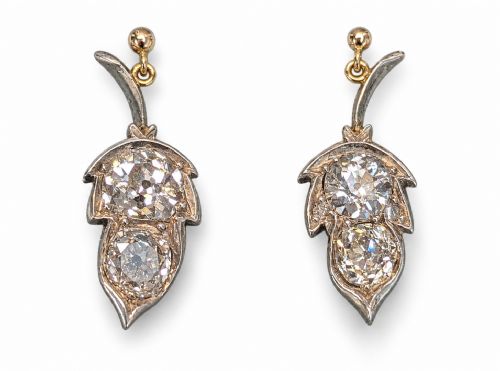
Georgian silver earrings bring genuine eighteenth and early nineteenth century sparkle to the ear, offering remarkable hand-cut stones set in silver and gold.
Georgian Silver Earrings
The pieces on this page span genuine Georgian items and later Victorian revivals, featuring characteristic drop, tassel, and cluster silhouettes. The survival of these delicate jewels demonstrates the enduring appeal of hand-fashioned silver work from the eighteenth and nineteenth centuries.
Earrings from this period rely heavily on silver settings designed to enhance the brilliance of diamonds, paste glass, and marcasite. Collectors find various configurations ranging from simple solitaire dormeuse styles to elaborate multi-stone drop arrangements.
How they were made
Maker's hands shaped these jewels using combinations of silver and gold, frequently mounting silver collets over gold backing plates to prevent tarnishing against the skin. This dual-metal technique is characteristic of the period and provides structural strength alongside bright silver faces.
Stones including old cut diamonds, paste glass, and natural pearls were secured using hand-cut foil backing inside closed settings to concentrate ambient light. Artisans shaped each component individually, utilising rose cuts, old European cuts, and table cuts tailored to the specific raw material.
Georgian Silver Earrings Retail Price Guide 2026
Typical asking prices for georgian silver earrings among the pieces listed under this phrase on Sellingantiques today, from the lower quarter to the upper quarter. They describe what is for sale here now, not the wider market.
Listings feature items from the Georgian and Victorian periods, incorporating materials such as silver, gold, diamond, paste glass, natural pearl, mother of pearl, and marcasite.
What varies in quality
The distinction between standard and exceptional pieces rests upon the precision of the stone cutting and the integrity of the original foil linings. Hand-cut facets executed with geometric regularity create superior light play compared to hastily finished stones.
Quality also manifests in the subtlety of the silver and gold smithing, where delicate granulation, wirework, and secure setting bezels survive intact. Finer examples retain their original hook wires and matched stones without later alterations or replacement elements.
The Georgian Silver Earrings Glossary
- Paste glass
- Vitreous glass compositions hand-cut and polished to imitate gemstones such as diamonds or emeralds. These historic stones possess distinct weight and refractive qualities unique to period manufacturing.
- Old cut diamond
- A hand-faceted diamond shape predating modern brilliant cuts, characterised by a small table and high crown. These stones were shaped individually by hand to maximise sparkle under low artificial light.
- Marcasite
- Small polished pieces of iron pyrite set into silver to provide metallic glitter. The mineral is faceted and closely fitted to form shimmering surface patterns.
- Dormeuse
- A style of secure drop earring originally designed to be worn comfortably during sleep. They feature close-fitting hoops or lever backs suited for continuous wear.
- Foil back
- A thin sheet of coloured or reflective metal placed behind a gemstone or paste inside a closed setting to enhance brilliance. This traditional technique alters the perceived depth and colour of the stone.
Georgian Silver Earrings: Frequently Asked Questions
Are these earrings safe to wear daily?
Georgian silver earrings require careful handling due to their age and delicate foil-backed stones. Water exposure and modern cosmetics can damage the interior foils and delicate metalwork.
Storing them securely away from moisture and putting them on after applying perfumes ensures these historic pieces survive in good condition for future wear.
How do I identify genuine Georgian work?
Authentic pieces typically exhibit closed-back settings where stones rest against reflective foil enclosed in silver over gold. The hand-cut facets and irregular proportions of the gems reflect traditional eighteenth-century lapidary techniques.
Examining the metal construction under magnification reveals hand-soldered joints and tool marks absent in mass-produced modern replicas.
What is paste glass?
Paste glass is a high-density lead glass hand-cut and polished by period artisans to replicate genuine gemstones. Far from being cheap plastic, historic paste required significant skill to shape and set.
Jewellers valued paste for its intense brilliance and the ability to create complex multi-stone designs that rivaled natural diamond jewellery.
Why are the backs made of gold?
Makers combined silver on the front with gold on the reverse to prevent silver tarnish from marking the wearer's skin or clothing. Gold provided a durable, non-reactive backing for hooks and wires while silver maintained a bright white face for the stones.