



Georgian Silhouette
A georgian silhouette captures the sharp likeness of an ancestor through simple shadow and profile.
Georgian Silhouette
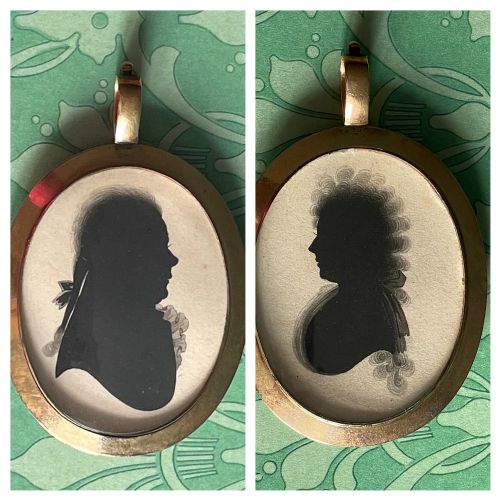
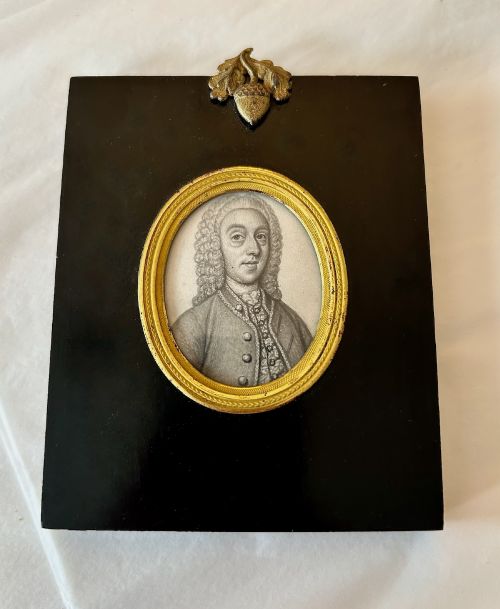
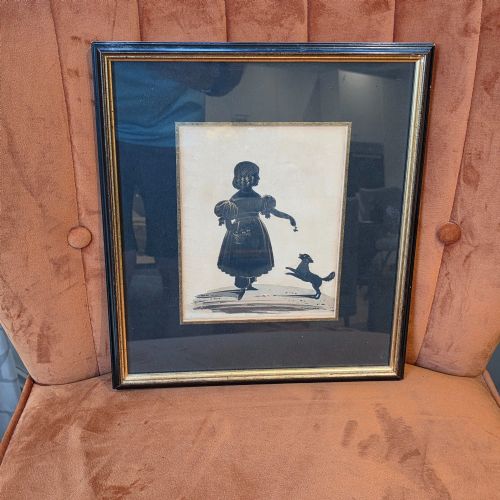
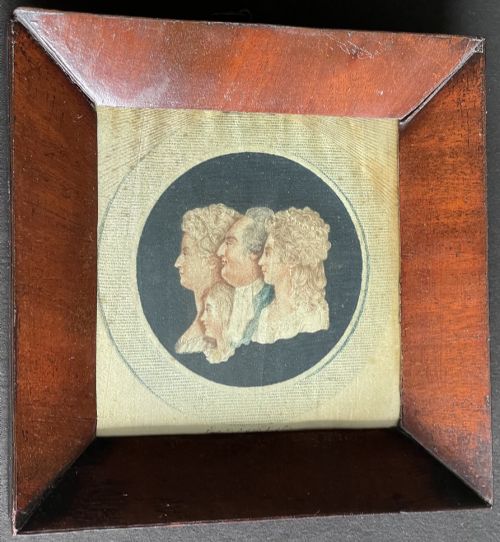
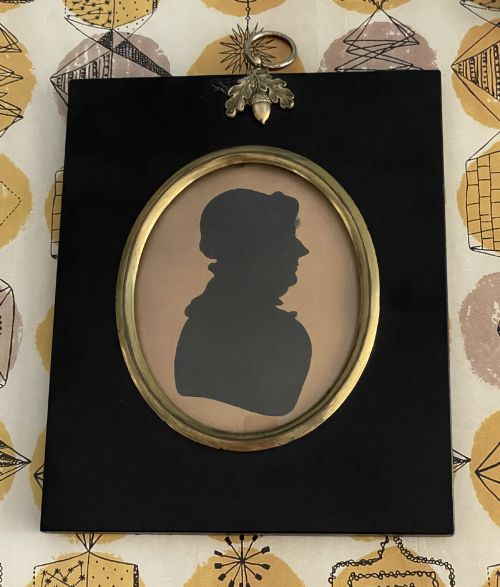
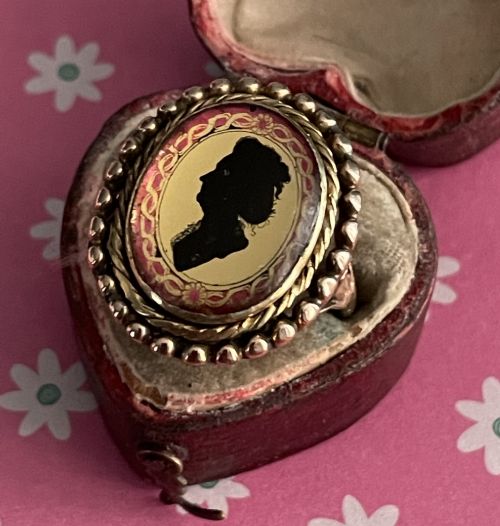
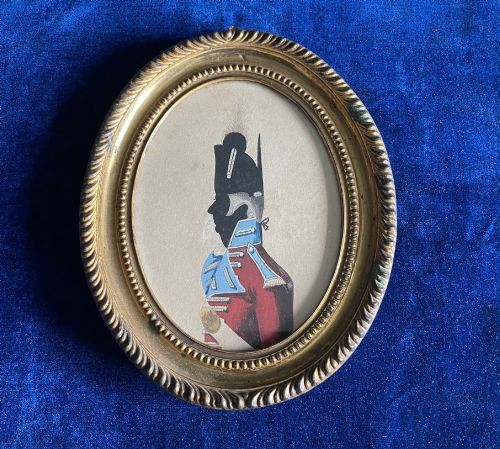
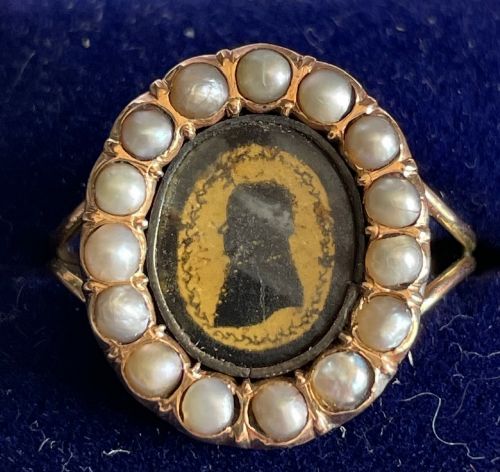
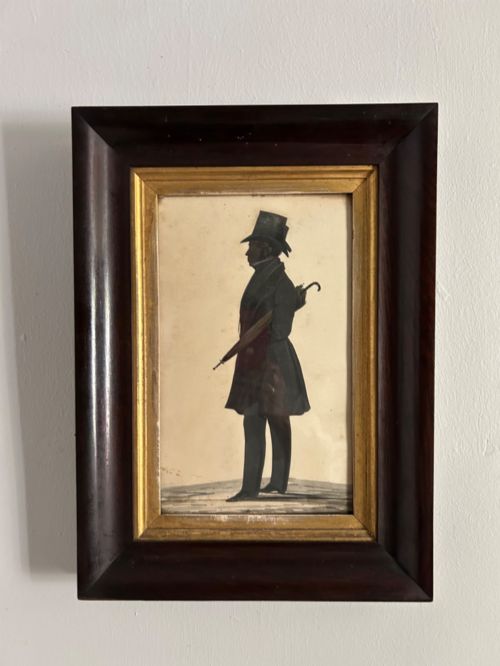
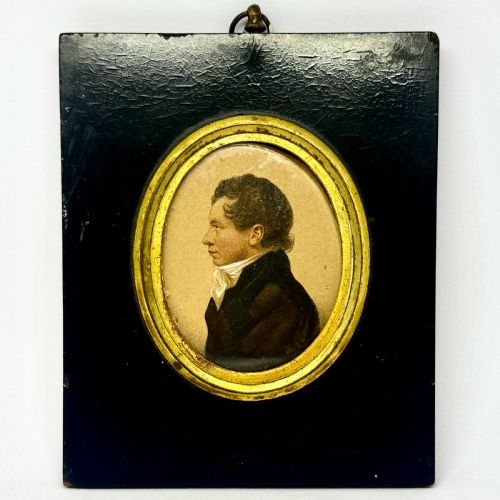
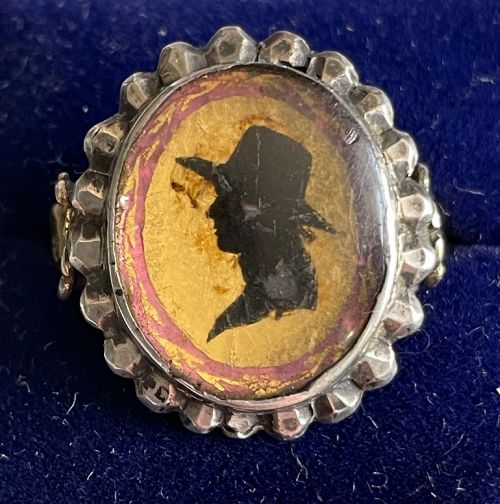
The pieces appearing on this page span the Georgian, Regency, and early nineteenth-century periods, showing sitters from gentlemen and ladies to children and animals. Many take the form of wall art or miniature portraits, whilst others appear in jewellery such as rings.
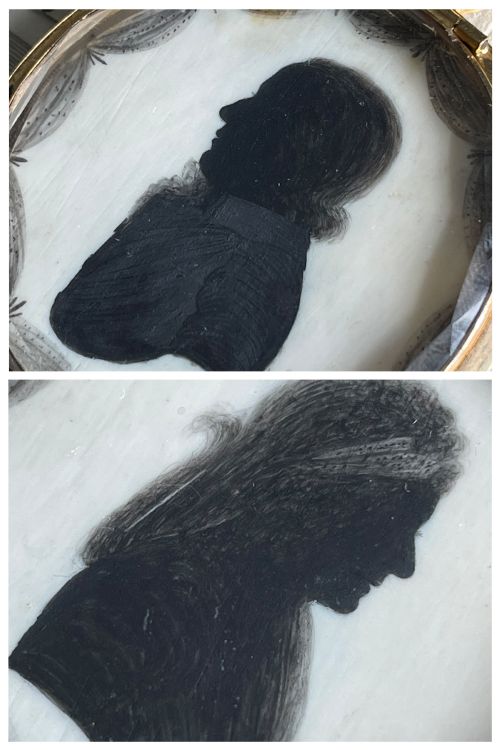
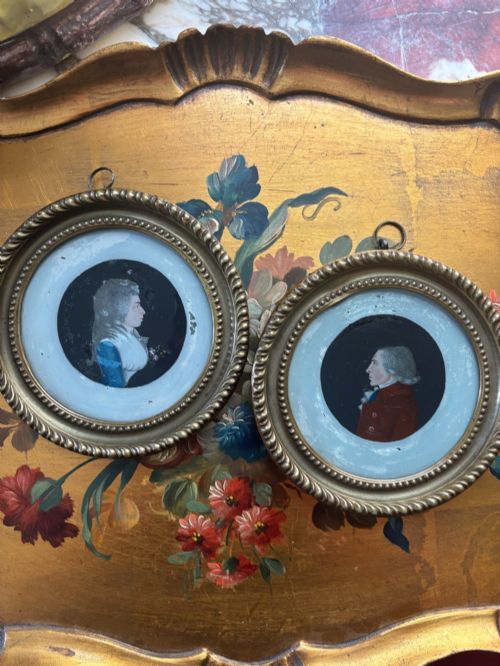
Makers utilised various methods to create these profiles, ranging from delicate cut paper to reverse painting on glass and ink on plaster. The survival of these works depends heavily on the original framing and the stability of the support materials.
Materials and Techniques
Makers created these profiles using paper, card, or plaster, frequently combining black cut paper with subtle touches of gold leaf for costume details. The delicate paper cutouts were often laid against a contrasting white or pale background to heighten the stark profile effect.
Alternative techniques involved painting directly onto glass, sometimes using the verre églomise method where gold leaf backs the glass panel. Pigments and ink also appear on paper and plaster, frequently housed within ebonised wood or rosewood frames.
Georgian Silhouette Retail Price Guide 2026
Typical asking prices for georgian silhouette among the pieces listed under this phrase on Sellingantiques today, from the lower quarter to the upper quarter. They describe what is for sale here now, not the wider market.
Several profiles record the likenesses of beloved family pets, including horses and dogs, keeping household companions in shadow for centuries.
Distinctions in Quality
Quality rests upon the precision of the cutting or brushwork, where master profileists captured accurate likenesses and subtle facial expressions with minimal strokes. Pieces bearing the signature of recognised practitioners demonstrate superior draughtsmanship and sharper detail in costume rendering.
The condition of the backing material and the preservation of original glass and framing significantly influence the integrity of the piece. Fading of ink or deterioration of the delicate paper layer alters the visual impact, whilst original period mountings preserve the intended presentation.
William James Hubard·Augustin Edouart·John Miers·Royal Victoria Gallery
The Georgian Silhouette Glossary
- Verre eglomise
- A process of applying design and gold leaf to glass. This technique creates a reflective, metallic border or background for the silhouette.
- Reverse painted on glass
- Painting applied to the rear side of a glass panel so the image is viewed through the clear front. This protects the pigment from atmospheric damage.
- Cut paper
- The art of snipping black paper with scissors or a knife to form a likeness. The resulting silhouette is mounted onto a pale backing sheet.
- Profile
- A side view of a human head or figure. This format defines the essential characteristic of silhouette portraiture.
- Miniature portrait
- A small-scale painting or profile designed for personal portability or intimate display. These objects often feature delicate frames made of brass or wood.
Georgian Silhouette: Frequently Asked Questions
How were silhouettes displayed?
Makers housed these portraits in small ebonised wood, brass, or rosewood frames intended for hanging on interior walls.
Smaller examples were also set directly into finger rings or kept as portable pocket mementoes.
How do I identify the period?
Dating relies on the costume of the sitter, the framing materials, and the style of the silhouette support.
Regency examples often feature high-waisted dresses or specific hairstyles like turban caps, whilst earlier pieces display powdered wigs and stiff neckwear.
Are all profiles cut from paper?
Not all silhouettes are cut paper; many are painted with ink or pigment on plaster, card, or glass.
Artists frequently added highlights in gold leaf to accentuate the buttons, lace, and hair of the subject.