
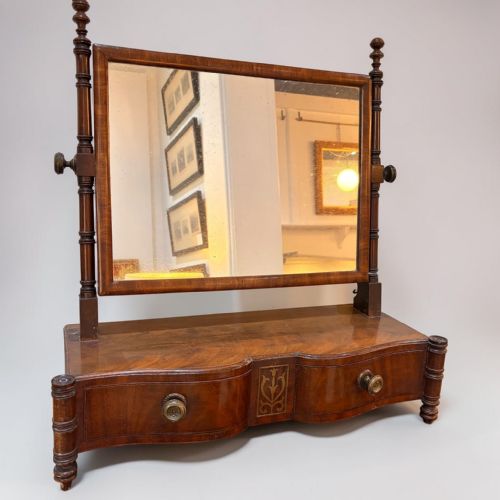
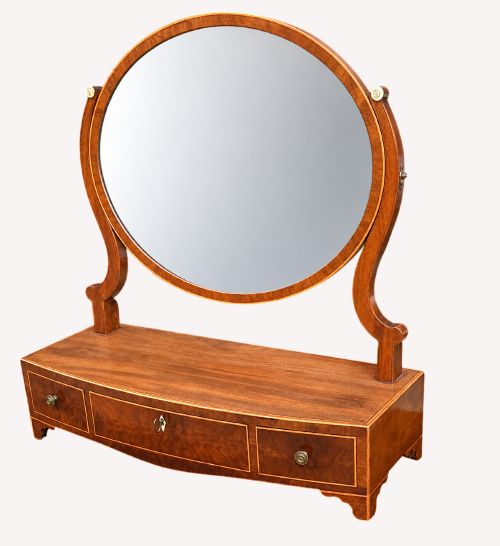
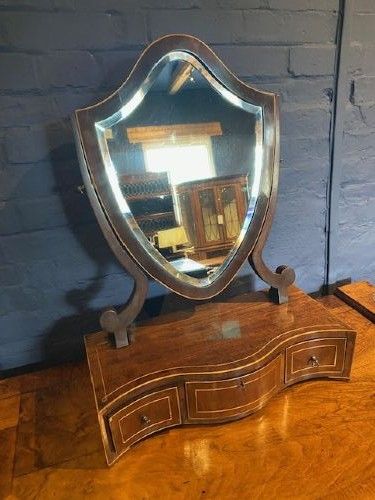
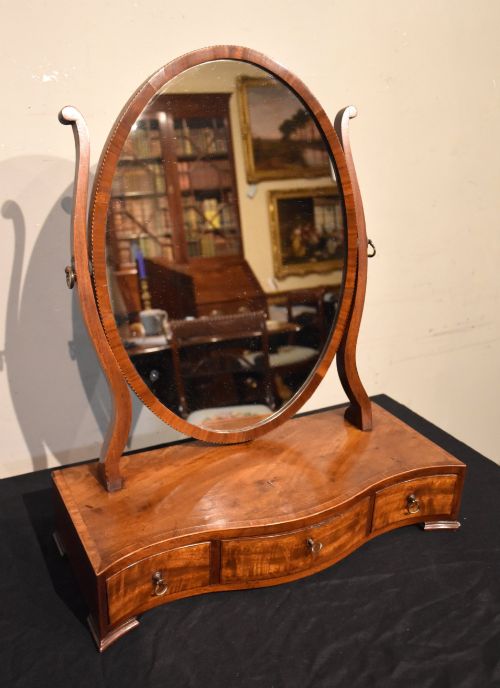




Georgian Serpentine Vanity Mirror
A georgian serpentine vanity mirror offers a curved silhouette and rich timbers that elevate any dressing table.
Georgian Serpentine Vanity Mirror
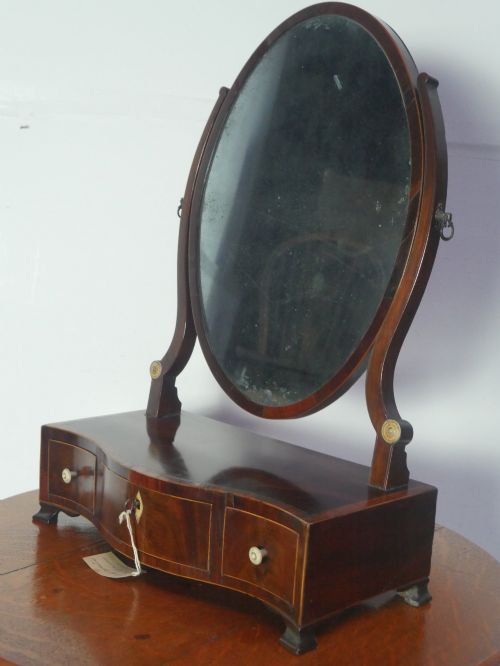
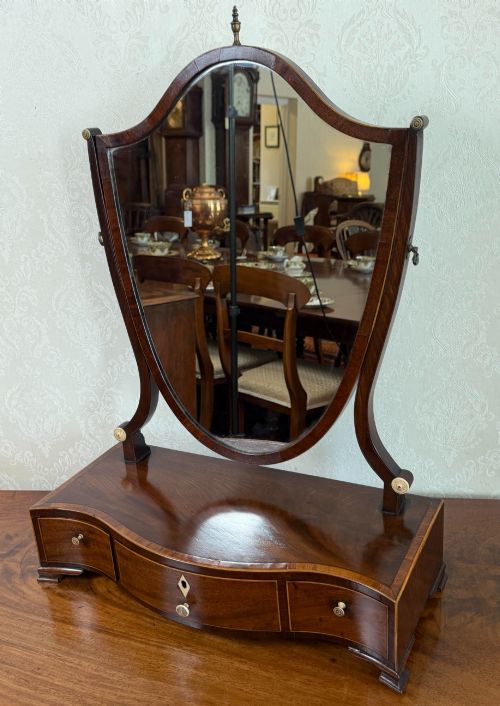
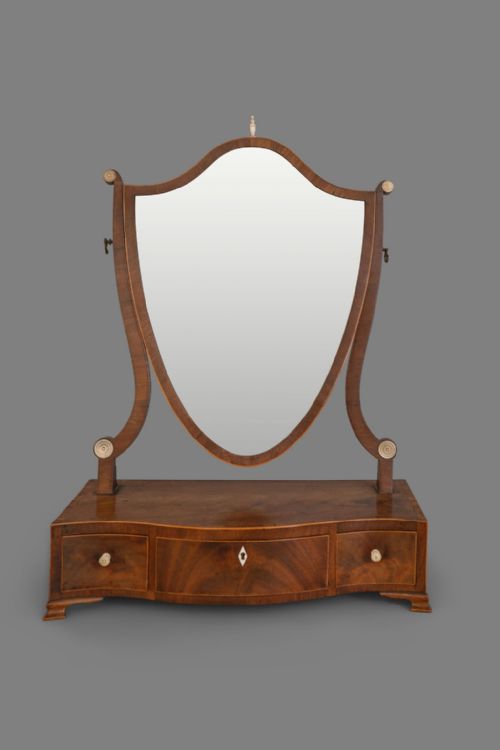
A georgian serpentine vanity mirror is a tabletop looking glass designed for grooming and personal use, featuring a distinctive undulating front base. Most examples encountered here date from the eighteenth and nineteenth centuries, spanning Georgian, George III, and Regency periods.
These pieces primarily function as dressing table mirrors or toilet mirrors, housing small drawers within their wooden box bases. The form sits securely on tables, combining practical reflection with compact storage for small valuables.
Origins range across the Georgian era and into later revival styles, utilising classic cabinetmaking forms. Buyers encounter rectangular and oval glass plates supported by upright frame arms above the serpentine compartment.
How they were made
Construction relies heavily on solid mahogany and walnut timbers, shaped to create the characteristic curved serpentine lines of the base. Cabinetmakers joined the box sections using traditional woodworking joints while incorporating fitted drawer interiors.
Reflecting surfaces consist of traditional mirror glass framed by moulded wooden surrounds, frequently pivoted on brass screw knobs or pins. Fine decorative touches include boxwood inlay and contrasting satinwood veneers on select surfaces.
The subtle wave of a serpentine front turns a simple morning routine into a small, daily encounter with eighteenth-century geometry.
What varies in quality
The sophistication of the woodwork and the crispness of the serpentine curve dictate the standing of a piece. Finer examples display meticulous attention to timber selection, grain alignment, and delicate inlay work across the box base.
Hardware integration and drawer construction further separate standard examples from superior ones. Original brass fittings and smooth-sliding drawers with secondary woods matching the period indicate high workshop standards.
The Georgian Serpentine Vanity Mirror Glossary
- Serpentine
- A curved shape that undulates outward in the centre and inward at the sides, creating a dynamic silhouette on furniture fronts.
- Toilet mirror
- A smaller tabletop looking glass traditionally used for personal grooming at a dressing table or chest of drawers.
- Boxwood inlay
- Light-coloured wood inserted into contrasting darker timber surfaces to create decorative geometric or linear borders.
- Swing mirror
- A looking glass mounted on vertical pivot posts that allow the plate to tilt forward or backward.
Georgian Serpentine Vanity Mirror: Frequently Asked Questions
Where should I place a dressing mirror?
These mirrors suit placement on top of sturdy chests of drawers, sideboards, or dedicated dressing tables where the base footprint fits safely.
Ensure the surface is level and avoid direct, prolonged sunlight to protect the antique wood finish and glass plates.
How do I care for antique mirror glass?
Clean the glass surface gently using a soft cloth and mild, non-ammonia cleaner applied to the cloth rather than directly sprayed.
Keep the timber frames polished with appropriate traditional wax to nourish the antique mahogany or walnut surfaces.
How do I identify a Georgian mirror?
Look for traditional construction methods such as hand-cut dovetails on the internal drawers and period timber selections like solid mahogany.
The proportions, subtle hand-shaped serpentine curves, and historical hardware styles provide key indicators of eighteenth-century origin.