

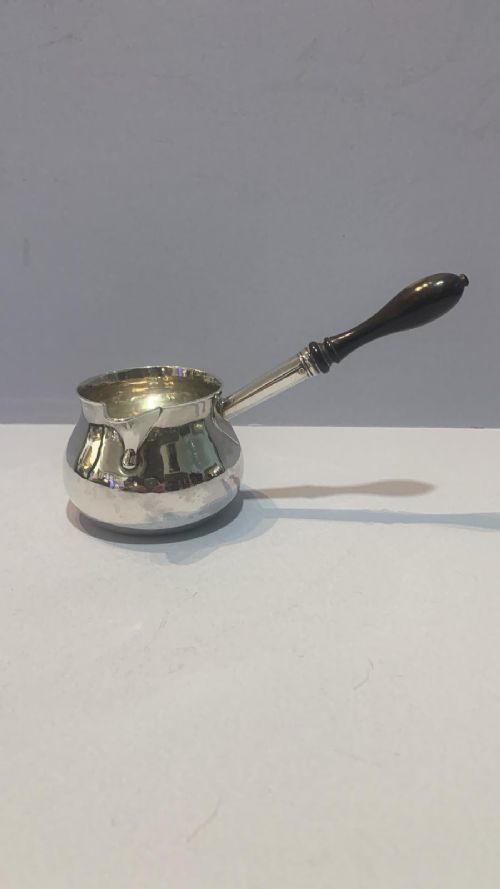


Georgian Saucepan
These georgian saucepan examples are robust pieces of period metalware that bring genuine warmth and history to a traditional kitchen.
Georgian Saucepan
A georgian saucepan represents the heavier, functional cookware of the eighteenth and early nineteenth centuries, designed for active hearth and stove use rather than mere display. Buyers exploring this category encounter sturdy copper pans, iron skillets, and occasional silver brandy warmers hailing from the Georgian period.
The versions most frequently met on this page include large copper saucepans and smaller brandy warmers or posnets. These items reflect the domestic routines of Georgian kitchens and firesides, combining practical utility with solid craftsmanship.
How They Were Made
The makers of these items relied heavily on heavy-gauge copper, iron, and brass, often pairing metal bodies with turned wooden handles in ebony or other dense timbers. Surfaces were frequently lined with tin to protect food from direct contact with reactive base metals during cooking.
Construction techniques involved hand-beaming and riveting thick metal sheets, whilst handles were secured with robust pins or wrought iron mounts. Bronze skillets and posnets were cast in moulds before being finished by hand.
Georgian Saucepan Retail Price Guide 2026
Typical asking prices for georgian saucepan among the pieces listed under this phrase on Sellingantiques today, from the lower quarter to the upper quarter. They describe what is for sale here now, not the wider market.
Some of these diminutive brandy warmers spent more time near the parlour hearth than the kitchen table.
What Varies in Quality
Quality in a georgian saucepan is largely determined by the thickness of the metal plate and the integrity of the original dovetailed or riveted seams. Finer examples display substantial weight, even hammering marks, and well-preserved maker stamps or touches.
The presence of original wooden handles and sound interior tinning elevates a piece considerably above domestic kitchenware that has suffered heavy thinning from centuries of scouring.
Liptons
The Georgian Saucepan Glossary
- Saucepan
- A deep cooking vessel with a handle, used historically over open hearths or early stoves for boiling and simmering liquids.
- Brandy Warmer
- A small specialised pan or pot featuring a long handle, designed specifically for heating spirits over a low flame.
- Posnet
- A small metal cooking pot or boiling vessel supported on three legs, commonly cast in bronze or brass during the eighteenth century.
- Skillet
- A domestic cooking utensil with a long handle and sometimes feet, utilised for frying or warming over embers.
Georgian Saucepan: Frequently Asked Questions
Are these saucepans safe for daily cooking?
Most antique copper pans require specialist re-tinning before they can be used safely for modern food preparation. Many collectors prefer to display them as decorative pieces rather than putting them back to work.
Using them daily exposes soft historic metals and original wooden handles to modern heat sources and detergents that can cause permanent damage.
How do I clean an antique copper pan?
Gentle washing with warm soapy water and a soft cloth is sufficient for general upkeep. Avoid harsh abrasive scouring pads that will strip away the remaining patina.
Specialist metal cleaners can be applied sparingly if you wish to brighten the exterior copper, though many prefer the aged finish.
How can I tell a Georgian piece from a later copy?
Examine the construction methods closely for hand-hammered surfaces, irregular dovetail joints, and hand-turned wooden handles secured with pegged pins. Machine-rolled edges and uniform modern screws indicate a later reproduction.
Age is also revealed through the natural oxidation and heavy wear patterns built up over centuries of domestic service.