



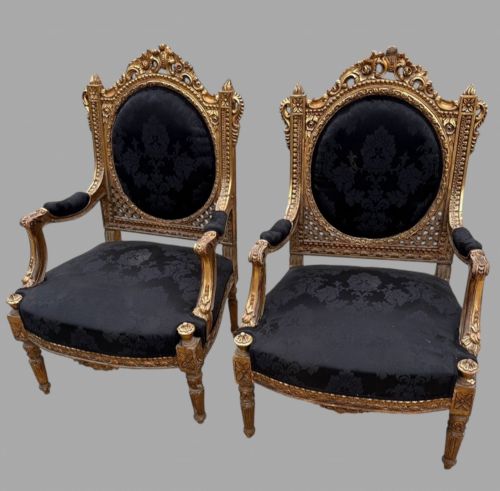


Georgian Salon Chairs
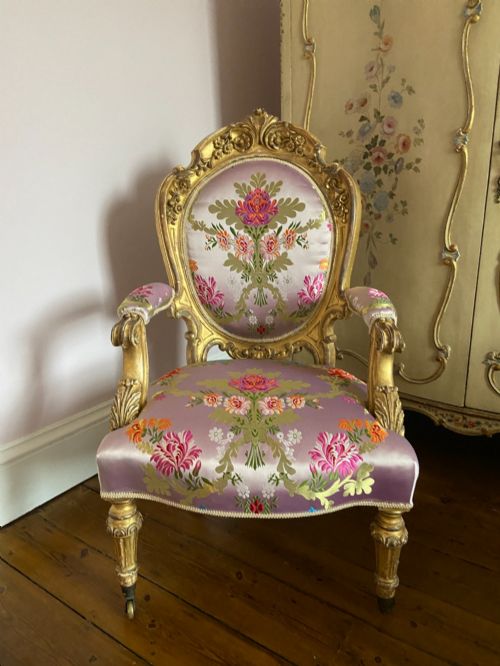
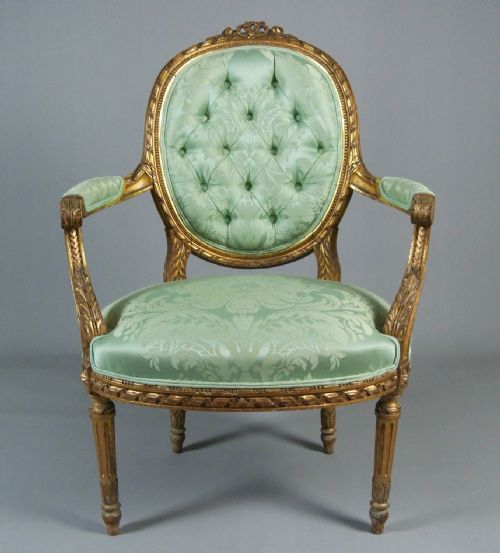
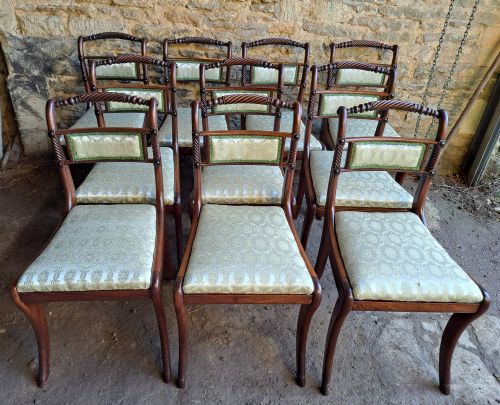
Georgian salon chairs bring formal neoclassical grace and rich mahogany or giltwood presence into a room.
Georgian Salon Chairs
When searching for georgian salon chairs, buyers encounter seating spanning the eighteenth century through the regency era and into later revival periods, encompassing armchairs, side chairs, and settees.
The selections on this page heavily feature mahogany and giltwood constructions, often displaying Chippendale, George III, and Regency stylistic influences.
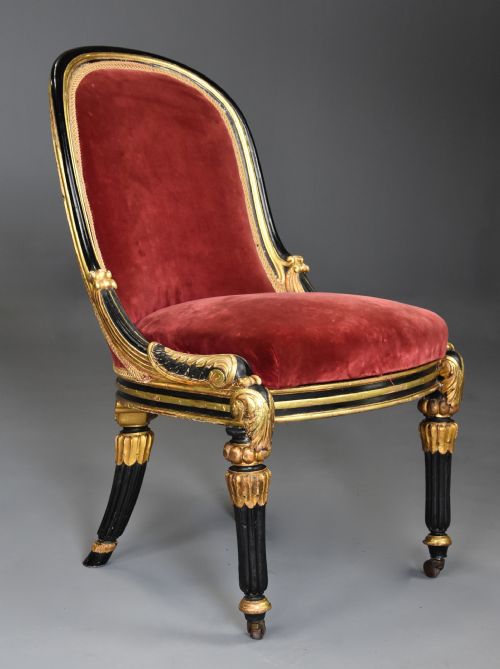
Many examples incorporate traditional upholstery fabrics such as velvet, silk damask, and red damask to complement their carved wooden frames.
How they were made
Cabinetmakers shaped these seats using solid mahogany and giltwood, frequently applying ebonised highlights and brass details to accentuate the carved ornamentation.
Structural embellishments rely on intricate hand carving, seen in classic motifs like the lyre front, spoon back, and neoclassical framing.
Frames are finished with traditional upholstery techniques, securing luxury textiles including velvet, silk damask, and patterned damask across the seats and backs.
Georgian Salon Chairs Retail Price Guide 2026
Typical asking prices for georgian salon chairs among the pieces listed under this phrase on Sellingantiques today, from the lower quarter to the upper quarter. They describe what is for sale here now, not the wider market.
Some chairs feature spoon backs designed to cradle the sitter, proving that Georgian ergonomics could be surprisingly modern.
What varies in quality
The standard of carving determines much of the distinction, separating crisp, deep hand-cut relief work from softer or later decorative milling.
Material selection and timber figure also set pieces apart, distinguishing dense, richly grained mahogany and original gilding from simpler secondary woods.
Coherence of style and period integrity elevate certain items, particularly those retaining their original silk damask or specific neoclassical proportions.
Thomas Chippendale·John Linnell
The Georgian Salon Chairs Glossary
- Giltwood
- Wood that has been coated with gold leaf or thin gold paint. This technique creates a brilliant, reflective surface often utilised on formal neoclassical frames.
- Damask
- A reversible figured fabric woven on a jacquard loom with patterns formed by contrasting warp and weft threads. Silk damask and red damask frequently appear on period seating.
- Regency
- An English design period spanning the early nineteenth century defined by classical archaeological influences. Pieces from this era often feature ebonised elements and brass mounts.
- Chippendale
- A style of eighteenth-century English furniture named after the renowned cabinetmaker. It is characterised by ornate carving, ribbon-backs, and robust mahogany structures.
- Spoon back
- A chair back curved in three dimensions to fit the human spine, resembling the bowl of a spoon. This ergonomic shape became popular during the nineteenth century.
Georgian Salon Chairs: Frequently Asked Questions
Are these chairs suitable for daily use?
These chairs are sturdy enough for regular seating when handled with care, though historic frames benefit from thoughtful placement away from direct heat and heavy daily wear.
Their antique joinery and delicate carved elements require mindful sitting rather than rough casual lounging.
How do I identify a genuine period piece?
Examine the timber grain, tool marks, and construction methods used in the frame's hidden joints to understand its age. Consistency in the carving style and period-appropriate upholstery materials also help confirm authenticity.
Comparing the proportions against known eighteenth and nineteenth-century examples provides further clarity.
What is the difference between George III and Regency styles?
George III styling tends to draw inspiration from strict neoclassical and elaborate Chippendale traditions, favouring rich carved mahogany and balanced ornamentation. Regency design leans toward bolder archaeological motifs, frequently incorporating ebonised finishes, giltwood, and brass details.
Both periods reflect classical ideals but express them through distinct decorative vocabularies.
How should I care for antique upholstery?
Protect delicate textiles like silk damask and velvet by keeping them out of direct sunlight to prevent fading and fibre degradation. Gentle vacuuming with a soft brush attachment helps remove surface dust without straining the fabric.
Professional textile conservators should handle any deep cleaning or restoration needs.