


Georgian Rustic Stool
These georgian rustic stool examples are honest everyday timbers built to last centuries, bringing warmth and character to any room.
Georgian Rustic Stool
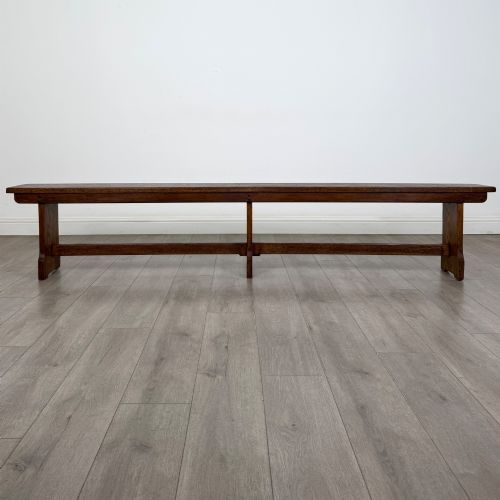
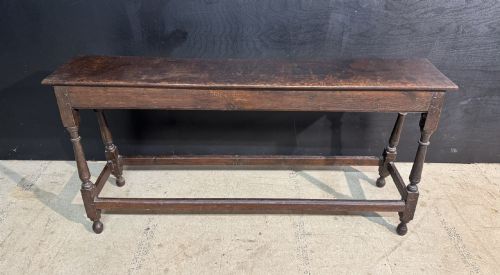
When searching for a georgian rustic stool, buyers encounter utilitarian domestic seating and surfaces made across the eighteenth and nineteenth centuries. These pieces encompass sturdy joint stools, milking stools, low hearth seats and box stools shaped by rural makers for practical household tasks.
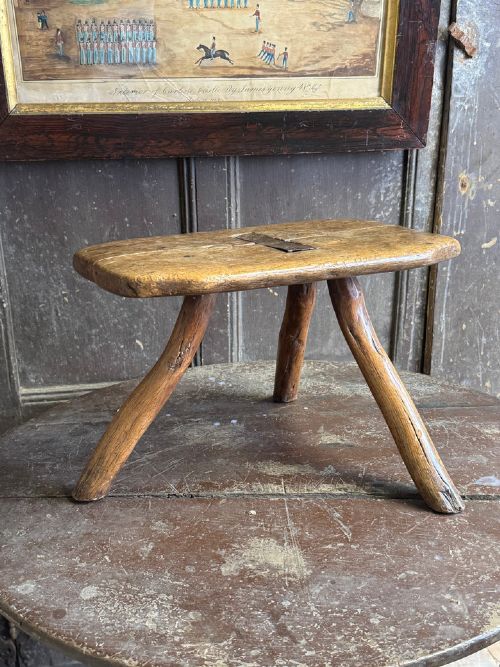
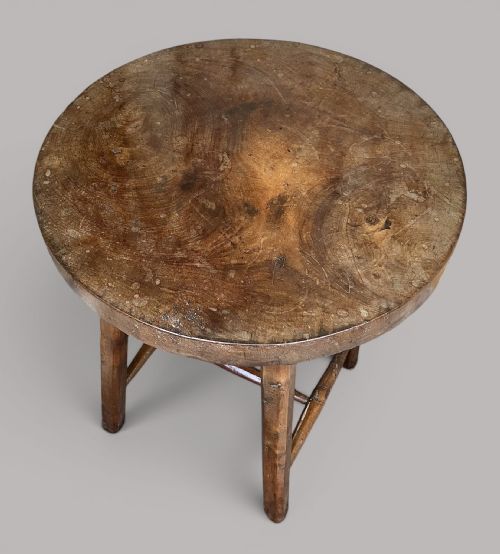
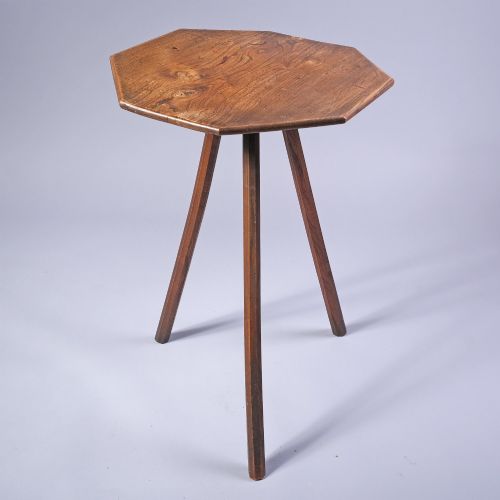
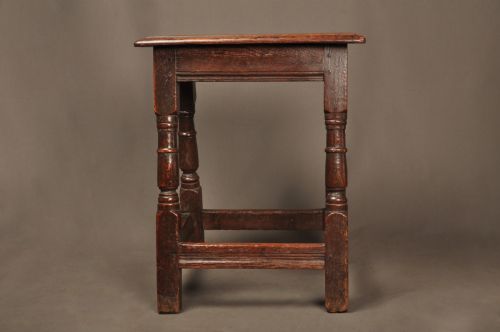
The selection on this page demonstrates the heavy reliance on indigenous British hardwoods and simple construction methods. Forms range from square-topped elm examples to three-legged ash designs and sturdy oak joint stools.
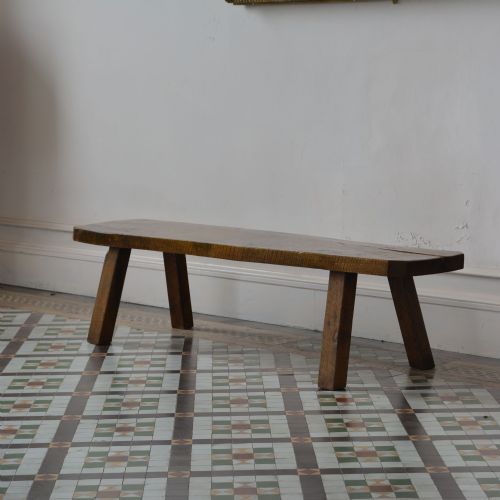
Makers often adapted basic forms for specific agricultural or domestic uses, creating low seats and benches that served kitchens, dairies and hearths. Surviving items retain the marks of daily utility, blacksmith repairs and patinated timber surfaces accrued over generations.
How they were made
Construction relies heavily on native hardwoods including oak, elm, ash and solid walnut, chosen for structural strength and local availability. Carpenters utilised pegged mortise and tenon joints or drilled splayed legs directly into thick plank seats.
Secondary materials such as iron provided functional blacksmith repairs, bracing weak joints and securing split timbers for continued domestic use. Surface finishing was minimal, leaving the bare grain exposed to friction, wax and natural wear over centuries.
Listings span from the seventeenth century through the Victorian era, showcasing timbers like oak, elm, ash and solid walnut alongside iron and rush.
What varies in quality
Quality separates through the integrity of the original timber and the survival of untouched surfaces rather than elaborate decoration. Pieces retaining original pegging, unreduced seat thicknesses and honest blacksmith repairs sit at the upper end of the scale.
Proportion and stance dictate visual appeal, where splayed hedgerow legs or sculpted rounded seats display greater maker skill than routine utilitarian production. Excessive replacement of structural components or heavy sanding diminishes the historical value.
The Georgian Rustic Stool Glossary
- Joint stool
- A sturdy wooden stool constructed with mortise and tenon joints, pegged together rather than glued. These pieces date back to the seventeenth and eighteenth centuries and often served multiple household purposes.
- Splayed legs
- Legs that angle outward from the centre of the seat to provide greater stability on uneven floors. This technique is common in vernacular country seating.
- Close stool
- An early form of indoor sanitation furniture featuring an enclosed box seat with a lid, often containing a chamber pot. They frequently resemble ordinary storage boxes or low stools.
- Plank top
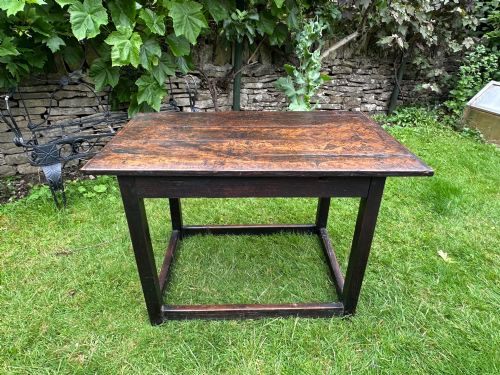
- A solid wooden top fashioned from a single board or joined planks rather than veneered panels. This construction method defines robust early tables and benches.
- Hedgerow legs
- Simple turned or cleft supports fashioned from locally gathered timber branches. They reflect the opportunistic material sourcing of rural rustic makers.
Georgian Rustic Stool: Frequently Asked Questions
What is a joint stool?
A joint stool is a rigid wooden seat built with pegged mortise and tenon joinery. They served as primary seating before chairs became common.
Carpenters built them low and sturdy to withstand heavy daily use in domestic and agricultural settings.
How do I date a rustic stool?
Dating relies on examining tool marks, timber shrinkage, joint construction and wear patterns. Hand-riven boards and iron blacksmith repairs indicate earlier manufacture.
Comparing leg turning styles and wood species provides further clues to the period of origin.
Were these stools used outdoors?
Most rustic stools were made for indoor household tasks, dairies or farm kitchens. Their design prioritized stability on uneven interior flagstone or dirt floors.
Exposure to modern central heating can dry out the historic timbers, requiring careful placement away from heat sources.
Why do some stools have three legs?
Three-legged stools naturally remain stable on uneven floors without rocking. This practical design suited rural cottages and farmhouses.
Makers could shape three-legged bases quickly using cleft timber and simple wedged tenons.