



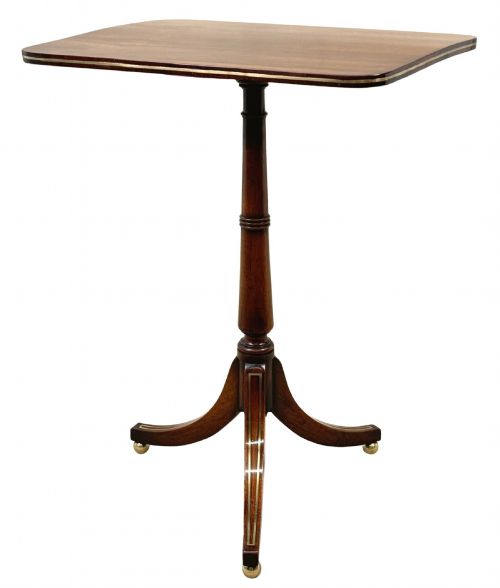


Georgian Rosewood Lamp
A georgian rosewood lamp table brings warmth and rich grain to a corner, combining compact proportions with the dark tones of the Regency period.
Georgian Rosewood Lamp
When searching for a georgian rosewood lamp, buyers encounter a selection of occasional, side, and standard lamp tables originating mainly from the Regency era and the nineteenth century. These pieces serve practical functions alongside seating areas while displaying the distinctive dark timber favoured in fashionable interiors of the period.
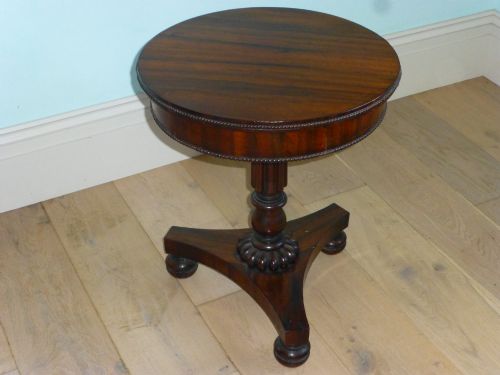
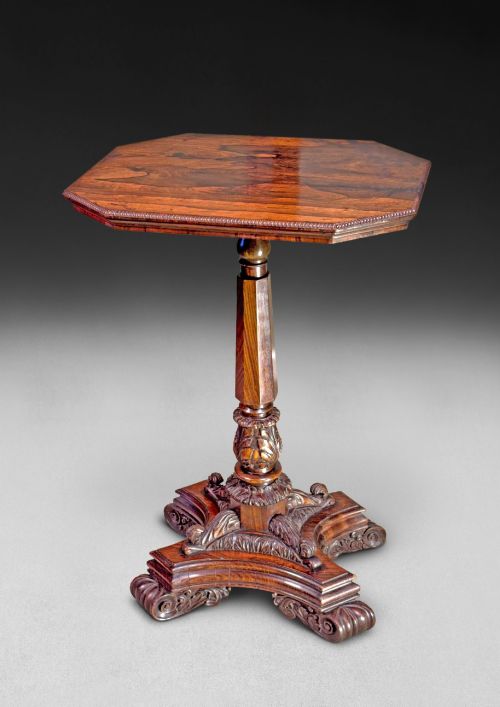
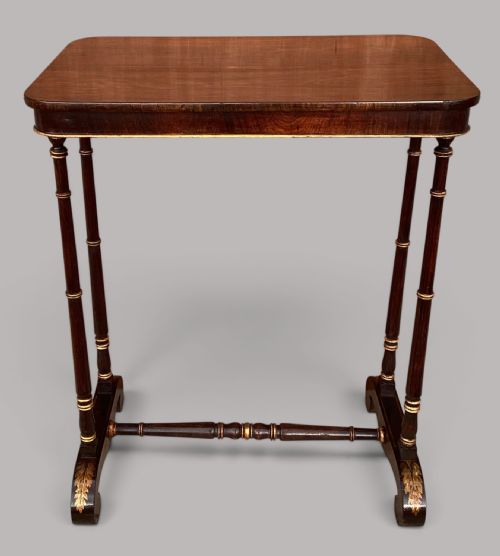
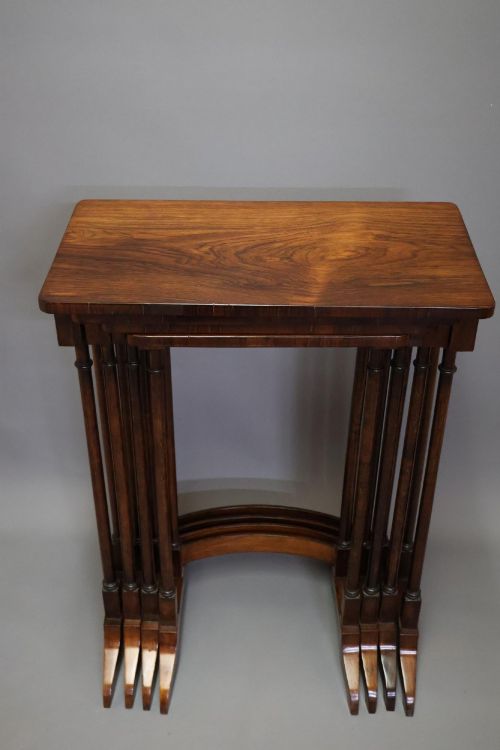
The standard lamp or occasional table is the most frequent form seen on this page, often featuring tripod bases or rectangular tops designed to hold lighting. Makers utilised the dense grain of rosewood and palisander to create refined surfaces suited to the morning room, lounge, or reading space.
Stylistic influences span from George III through George IV and early nineteenth century designs, occasionally incorporating drop leaves or single drawers. Each piece reflects the domestic habits of the period, when portable lighting required dedicated stands beside sofas and armchairs.
Quality and Craftsmanship
The refinement of brass inlay and the selection of timber veneers set finer examples apart from simpler utilitarian pieces. Crispness in the turning of pedestals and the tight fit of joints indicate the level of care taken in the workshop.
Proportion and balance define the better tables, where tripod legs or pedestal bases support the top without visual heaviness. Original brass mounts and untouched timber surfaces contribute significantly to the character of a piece.
Georgian Rosewood Lamp Retail Price Guide 2026
Typical asking prices for georgian rosewood lamp among the pieces listed under this phrase on Sellingantiques today, from the lower quarter to the upper quarter. They describe what is for sale here now, not the wider market.
Some sewing tables hide tiny velvet compartments beneath their lids, once used for storing pins while reading by candlelight.
Gillows·George Smith·Ince & Mayhew
The Georgian Rosewood Lamp Glossary
- Rosewood
- A dense, heavy timber prized for its dark purple-brown colour and contrasting black grain figures. It takes a high polish and was extensively utilised for Regency occasional furniture.
- Occasional Table
- A small, movable table designed for a specific, non-permanent use in a principal room. These items often served multiple purposes including holding lamps, books, or sewing materials.
- Palisander
- A term frequently applied to various rich, dark rosewood species imported from South America and India. Cabinet makers valued the timber for its decorative figuring on table tops.
- Brass Strung
- Inlay work using very narrow strips of brass let flush into channels cut into the timber surface. This technique creates geometric borders and highlights the outline of the table.
- Tripod Table
- A small circular or dishtop table supported by a central pillar resting on three spreading feet. This form provides stable support on uneven floorboards.
Georgian Rosewood Lamp: Frequently Asked Questions
What is a Georgian rosewood lamp table used for?
These tables were originally positioned beside seating to support portable lighting, reading materials, or sewing work. Today they function effectively as small side tables in a study or living space.
The compact surface area makes them suitable for corners or beside armchairs where floor space is limited.
How do I identify a Regency period table?
Regency tables often display characteristics such as rosewood veneers, brass stringing inlay, and turned pedestal bases. The proportions tend to be neat and architectural, reflecting the design tastes of the early nineteenth century.
Examination of the timber underneath and the construction methods helps confirm the age of the piece.
Are these tables sturdy enough for daily use?
Most occasional tables and lamp stands from this era are structurally robust, provided the joints and pedestals remain secure. Tripod bases offer good stability on flat household surfaces.
Care should be taken to avoid placing excessive weight on drop leaves or cantilevered sections.
What maintenance does rosewood require?
Rosewood benefits from occasional light dusting with a soft, dry cloth to protect the polished finish. Direct sunlight and extremes of humidity should be avoided to prevent the timber from drying out.
Application of specialist wax polish helps maintain the lustre of the grain over time.