



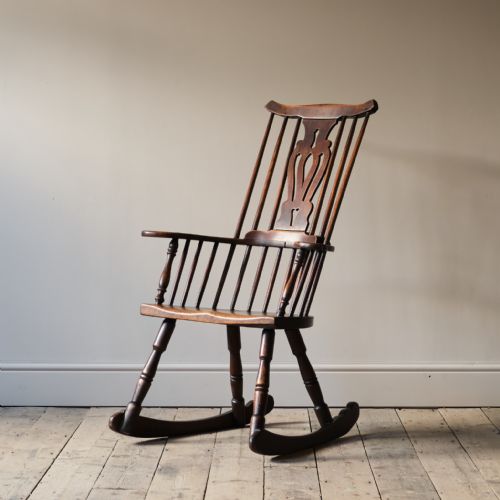


Georgian Rocking Chair
A georgian rocking chair is a domestic seat of movement spanning country elm, ash, and oak forms.
Georgian Rocking Chair
When searching for a georgian rocking chair, you encounter a mix of full-sized seating and smaller child variants dating from the eighteenth century into the nineteenth century. These timber pieces emerge from various regional traditions including English Country, Thames Valley, and Lancashire or Cheshire workshops.
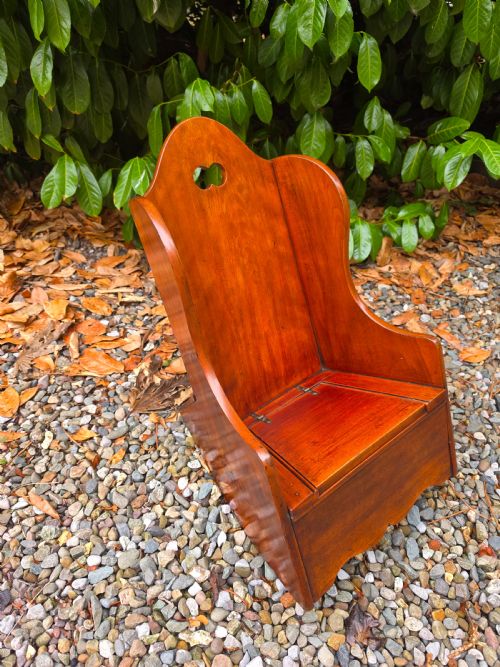
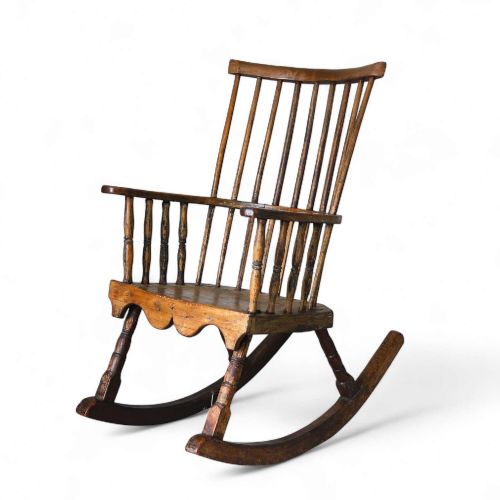
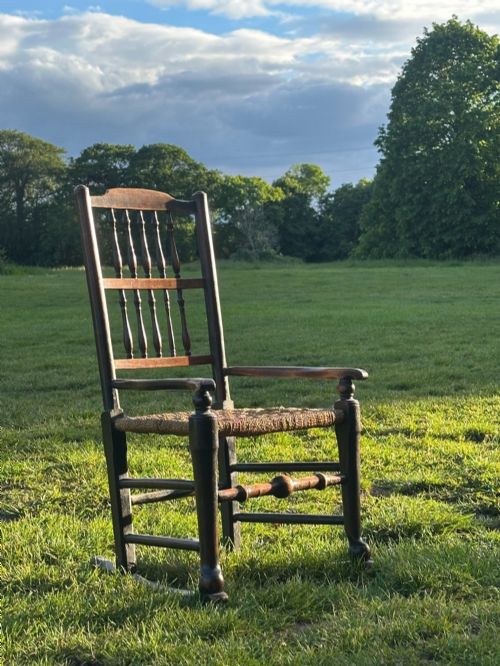
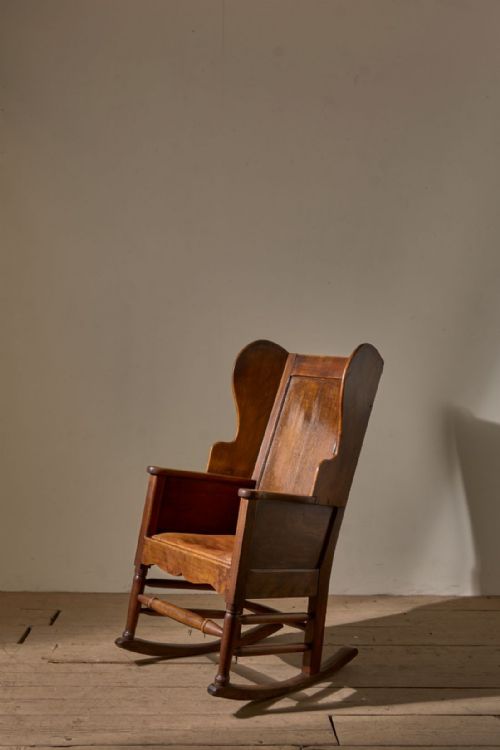
The dominant forms on this page include comb-back windsors, ladder backs, lambing chairs, and spindle backs constructed by vernacular makers. Both adult armchairs and child potty rockers or miniature versions appear across the periods listed.
Materials span native hardwoods like elm, ash, oak, fruitwood, and mahogany, often paired with rush seats or original paint finishes. Their origins range from Georgian periods through Regency country designs and primitive vernacular styles.
How they were made
Makers utilised native British timbers such as solid elm for seats, ash for spindles, and oak or fruitwood for frames. These woods were turned, carved, and joined using traditional pegging and Windsor construction methods.
Surface treatments range from bare timber showing natural grain to surviving original paint. Components like comb-backs and ladder backs required skilled steam-bending and spindle-turning by regional craftsmen.
Georgian Rocking Chair Retail Price Guide 2026
Typical asking prices for georgian rocking chair among the pieces listed under this phrase on Sellingantiques today, from the lower quarter to the upper quarter. They describe what is for sale here now, not the wider market.
Current listings feature pieces spanning the mid-eighteenth century through the nineteenth century, utilising elm, oak, ash, fruitwood, and mahogany.
What varies in quality
Superior examples display harmonious proportions and retention of original components, such as undisturbed rocker rails and unaltered spindle heights. Regional quirks in turning and wood selection separate standard utility pieces from finer vernacular outputs.
The survival of early surfaces, including original paint or deep patination on elm and oak, distinguishes better preserved seating. Construction integrity relies upon the tightness of traditional joints rather than later metal reinforcements.
The Georgian Rocking Chair Glossary
- Windsor chair
- A wooden chair built with a solid saddle-shaped seat into which the legs and back spindles are directly dowelled. These chairs often feature bentwood hoops or comb-backs.
- Comb-back
- A chair back design where vertical spindles rise through a horizontal crest rail, resembling the teeth of a comb. This style appears frequently in vernacular Windsor seating.
- Ladder back
- A chair back featuring horizontal arched slats between two upright posts. This traditional form offers robust support in country seating.
- Potty rocker
- A specialised child's chair incorporating a cutout seat for chamber pot use. These low-slung rockers combine domestic utility with miniature scale.
- Vernacular
- Objects designed by local craftsmen using regional materials and traditional methods rather than following metropolitan fashion. Such pieces reflect distinct local building habits.
Georgian Rocking Chair: Frequently Asked Questions
What is a lambing rocking chair?
A lambing rocking chair is an enclosed seating form traditionally featuring solid wooden sides designed to block draughts. These pieces often incorporate storage compartments beneath the seat.
They reflect rural vernacular furniture making from the eighteenth century, intended for practical comfort near hearths.
How do I identify a childs rocking chair?
A child's rocking chair is immediately recognised by its reduced scale, lower seat height, and shorter armrests. They mirror the proportions of full-sized adult Windsor and ladder back designs.
These smaller pieces served nurseries and domestic living spaces during the Georgian and Regency periods.
What woods were used in these chairs?
Constructors relied on native British hardwoods readily available in local workshops. Elm provided tough, split-resistant seats while ash offered flexible strength for spindles.
Oak, fruitwood, sycamore, and mahogany also appear depending on regional availability and the specific workshop tradition.
Are these chairs comfortable to use?
These seats were built for practical domestic tasks using ergonomic saddle-shaped wooden seats. The inclusion of rocking rails adds gentle movement to traditional upright forms.
Modern users often place cushions on the wooden seats for extended sitting comfort in living spaces.