
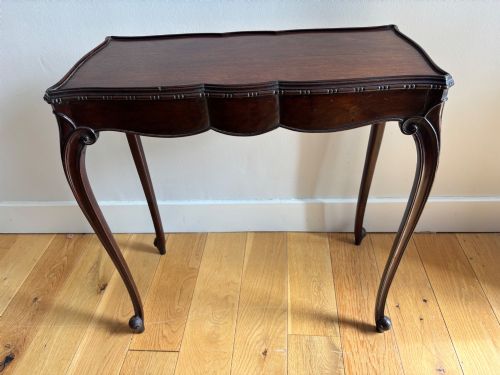
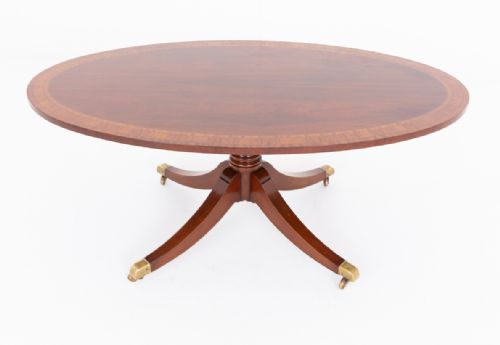
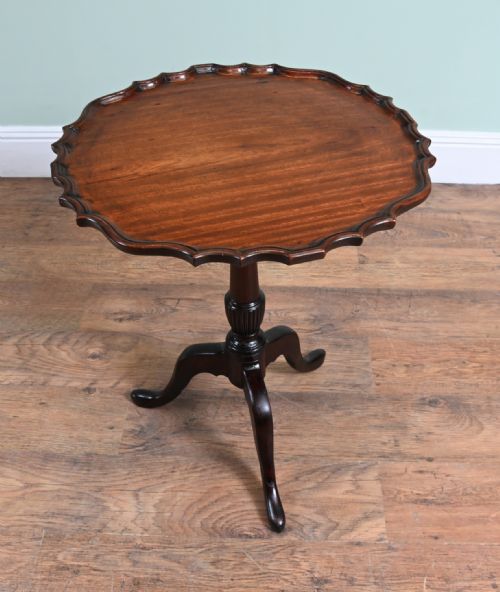
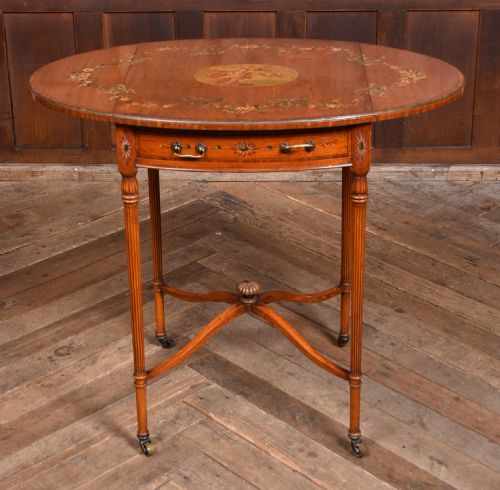


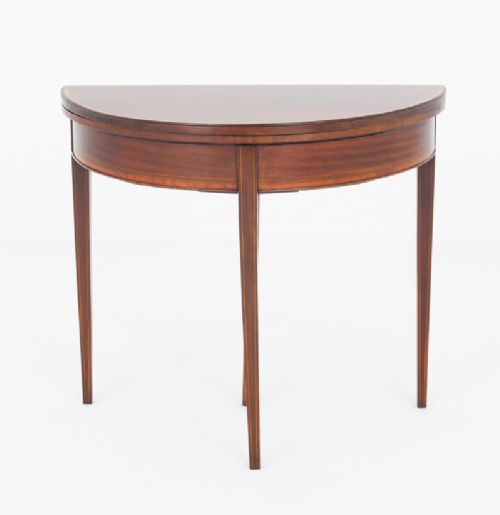


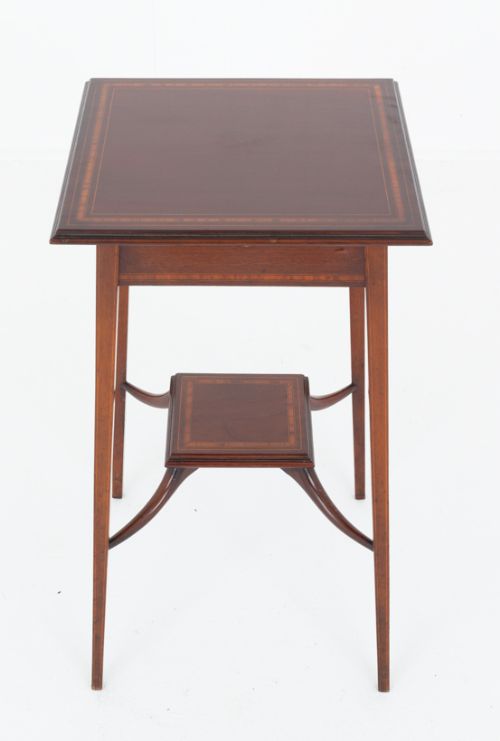

Georgian Revival Tea Table
A georgian revival tea table offers the disciplined elegance of eighteenth-century proportion built for early twentieth-century interiors.
Georgian Revival Tea Table
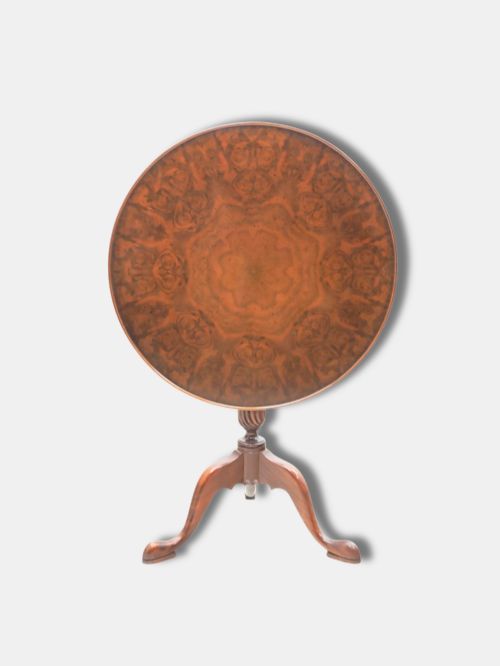
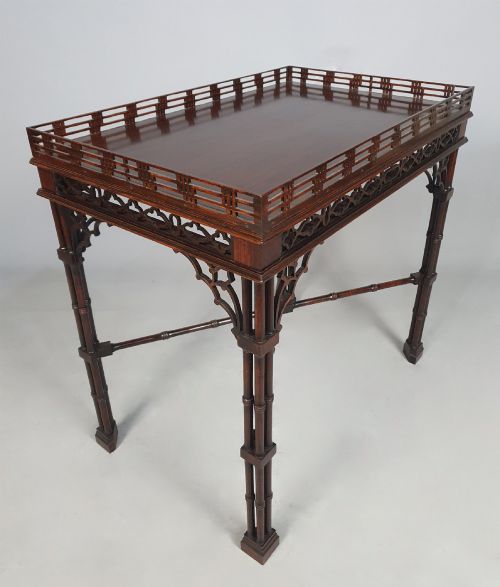
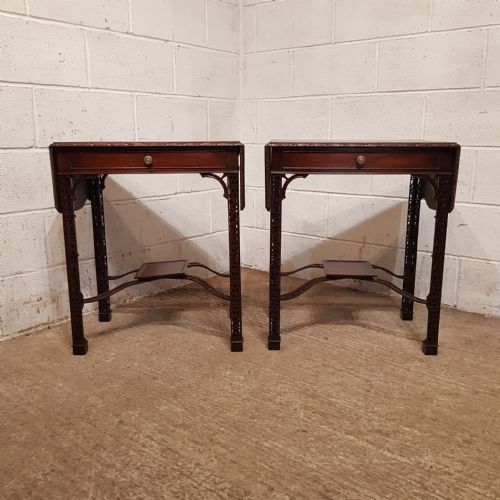
A georgian revival tea table spans diverse occasional formats, including card tables, drop-leaf tables, and silver tables rooted in nineteenth and early twentieth-century craftsmanship. Buyers encounter folding card tables, tripod wine tables, and centre tables echoing George III, Sheraton, and Chippendale aesthetics.
The pieces emerge predominantly from the Edwardian era through the nineteen-thirties, drawing upon earlier stylistic vocabulary. Makers adapted traditional tea and games functions into versatile occasional furniture suited to modern domestic spaces.
Craftsmanship and Proportion
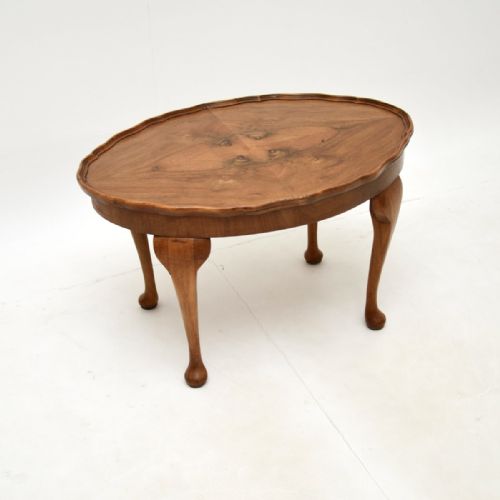
Quality rests in the crispness of the carving and the selection of timber veneers, where burr walnut and figured mahogany display deliberate grain matching. Superior examples maintain exact geometric proportion and seamless hinge operation in folding card tables.
Lesser pieces exhibit mechanical stiffness or flat, unfigured timber surfaces lacking depth. The integration of inlay work and the structural integrity of tripod or spider-leg bases distinguish finer workshops from mass production.
Listings feature woods including mahogany, satinwood, walnut, boxwood, rosewood, and burr walnut veneer across various periods.
The Georgian Revival Tea Table Glossary
- Card table
- A hinged folding table designed for playing cards, featuring a baize-lined surface when opened. These pieces often incorporate swivel tops and concertina frames.
- Pie crust edge
- A raised, carved moulding along the perimeter of a circular tabletop resembling pastry work. This decorative technique appears frequently on tripod coffee and wine tables.
- Silver table
- A high-sided occasional table designed to display silver tea services. They often feature pierced galleries and elaborate carved legs in the Chippendale manner.
- Stringing
- Thin inlaid lines of contrasting wood used to outline geometric panels on tabletops. This technique highlights the borders of satinwood and mahogany surfaces.
- Tripod table
- A small occasional table supported by a central pillar and three splayed legs. They frequently feature tilt-top mechanisms for storage against a wall.
Georgian Revival Tea Table: Frequently Asked Questions
What is a georgian revival tea table?
A georgian revival tea table is an early twentieth-century or late nineteenth-century piece built in the stylistic tradition of eighteenth-century furniture design.
These tables replicate the forms of earlier card, tea, and silver tables whilst serving contemporary domestic functions.
How do I date a georgian revival tea table?
Dating relies on secondary wood types, construction methods, and hardware styles found beneath the tabletop or inside the framing.
Revival pieces generally display twentieth-century or late Victorian manufacturing traits despite utilising eighteenth-century design motifs.
Were these tables actually used for tea?
Many tables served as surfaces for serving tea or displaying silver tea caddies and porcelain vessels.
Card tables and drop-leaf formats additionally accommodated social gatherings, card games, and general parlour use.
How do I care for mahogany and walnut surfaces?
Maintain polished wood surfaces by avoiding direct sunlight and applying occasional applications of appropriate wax.
Keep humidity stable to prevent timber shrinkage and protect delicate boxwood stringing and satinwood veneers.