



Georgian Revival Seating
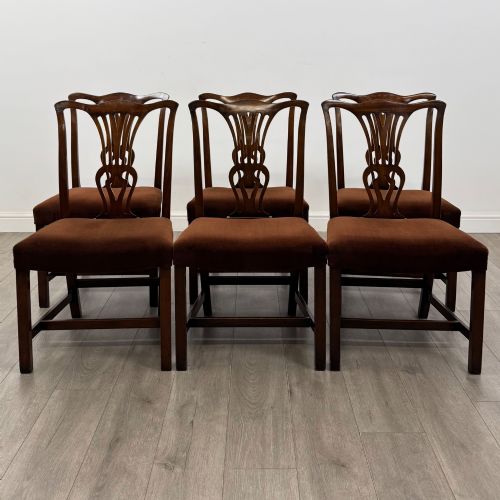
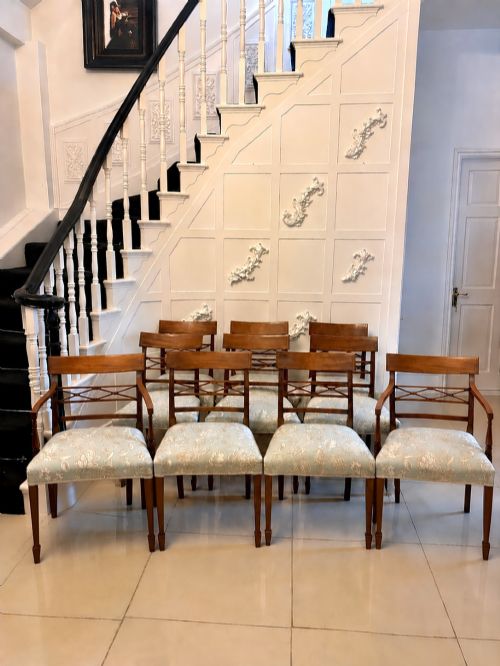
Georgian revival seating brings together mahogany dining chairs, armchairs, and settees built across the late nineteenth and early twentieth centuries to echo eighteenth-century forms.
Georgian Revival Seating
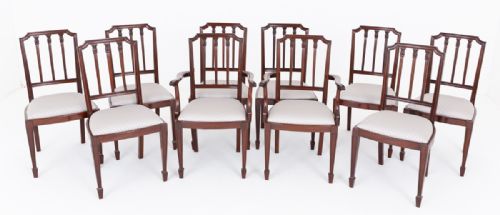
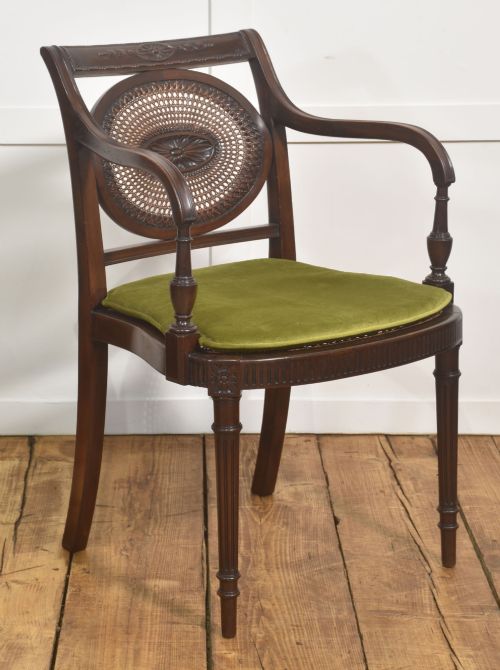
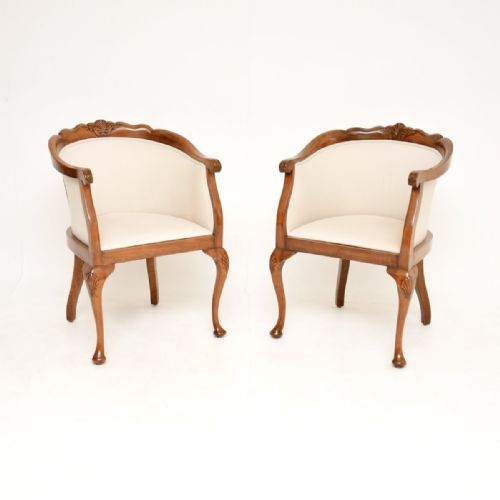
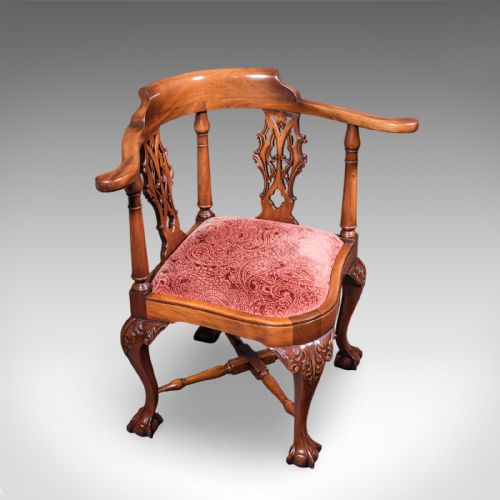
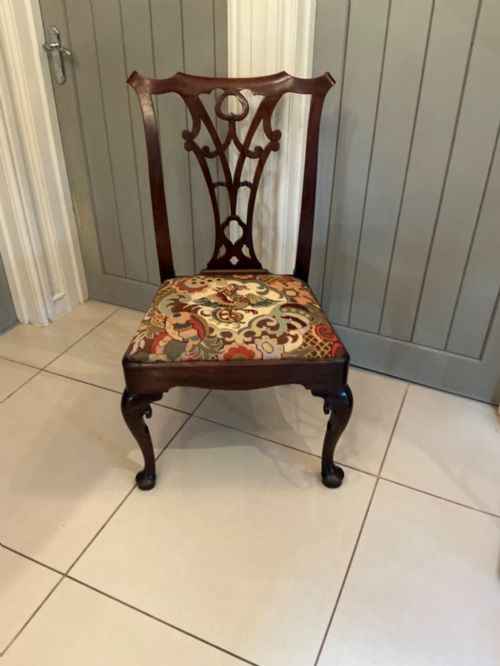
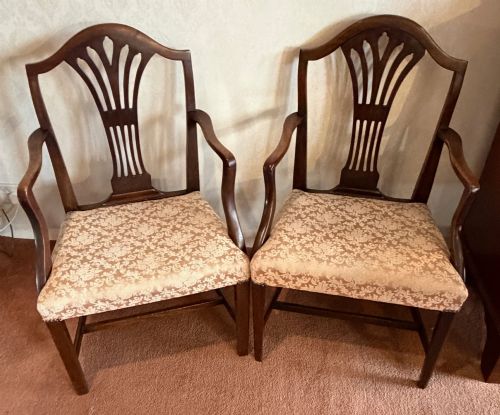
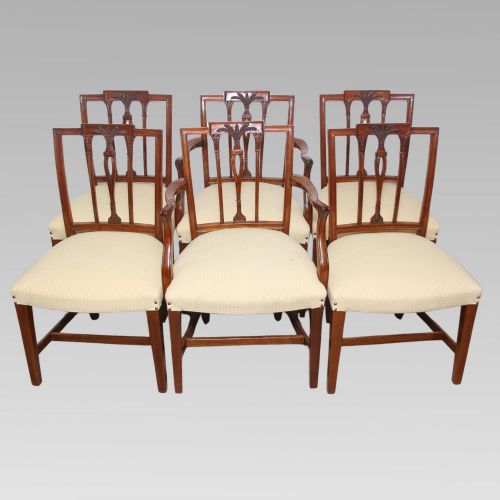
Georgian revival seating encompasses dining chairs, armchairs, side chairs, settees, and stools created predominantly during the Edwardian era, the 1910s, and the 1920s. Makers drew heavily on Chippendale, Hepplewhite, Sheraton, and George II vocabulary, producing matching sets for dining rooms alongside individual library armchairs and window seats.
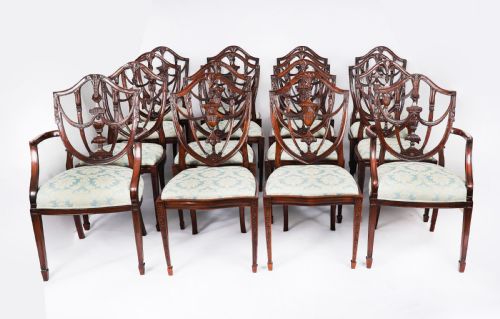
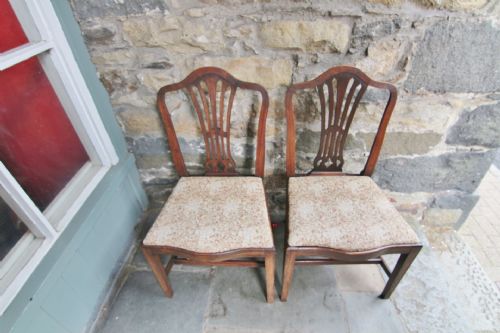
The pieces emerge from Victorian, Edwardian, and early twentieth-century workshops, adopting styles such as shield backs, ladderbacks, and Gothic or Neo-Classical motifs. Buyers frequently encounter large sets of dining chairs or matched pairs of armchairs constructed in this revival spirit.
Craftsmanship and Proportion
Quality rests heavily on the crispness of the wood carving and the fidelity of the proportions to eighteenth-century precedents. Finer examples display deeply sculpted splats, robust timber selection, and meticulous joinery that withstands heavy daily use.
The integrity of the original upholstery support and the condition of inlaid decorative banding further separate standard production from superior workshop output.
Listings feature mahogany predominantly, alongside walnut and satinwood across Edwardian and early twentieth-century periods.
The Georgian Revival Seating Glossary
- Carver armchair
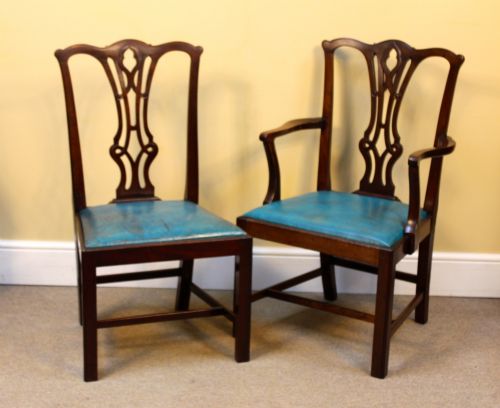
- An armchair designed with open arms, traditionally positioned at the head of a dining table alongside matching side chairs. These often formed part of large dining sets.
- Shield back
- A chair back designed in the silhouette of a shield, popularised by George Hepplewhite and heavily replicated in revival pieces. The frame frequently encloses pierced wooden splats.
- Settee
- A medium-length upholstered wooden seat designed for multiple persons, often featuring carved mahogany frames. They appear across Edwardian and earlier revival contexts.
- Splat
- The vertical central strip of wood within a chair back connecting the crest rail to the seat. Carved splats define the stylistic lineage of Chippendale and George II revival forms.
- Needlepoint
- Stitched canvas embroidery utilised as traditional seat upholstery on period stools and chairs. It adds a textured decorative layer to the timber frame.
Georgian Revival Seating: Frequently Asked Questions
How do I care for mahogany dining chairs?
Keep wooden surfaces away from direct heat sources and strong sunlight to prevent the timber from drying out or fading over time. Regular dusting with a soft cloth helps preserve the polish.
For upholstered sections, gentle vacuuming using a low suction setting prevents dust accumulation within the fabric or velvet. Avoid harsh chemical cleaners on both wood and textile components.
Can I mix these chairs with a modern table?
Pairing these mahogany or walnut chairs with a contemporary dining table creates a striking contrast of eras. The rich dark timber tones anchor the room visually.
Ensure the seat heights match the clearance of the table apron so guests sit comfortably. Maintaining consistent wood finishes elsewhere in the space helps tie the arrangement together.
Where should I place a window seat?
Window seats fit naturally beneath low sills, in hallways, or at the foot of a bed. Their compact proportions allow them to occupy transitional spaces without crowding a room.
Ensure the upholstered top matches the textiles or colour palette of the surrounding interior. They provide convenient perch points while adding formal architectural character.