





Georgian Reading Slope
A georgian reading slope brings adjustable practicality and fine timber to a desk, offering a tailored surface for books and correspondence.
Georgian Reading Slope
When you search for a georgian reading slope, you encounter portable writing boxes, adjustable reading tables, and architects desks designed for functional daily use. These pieces originate across the eighteenth and nineteenth centuries, spanning Georgian, Regency, and Victorian periods.
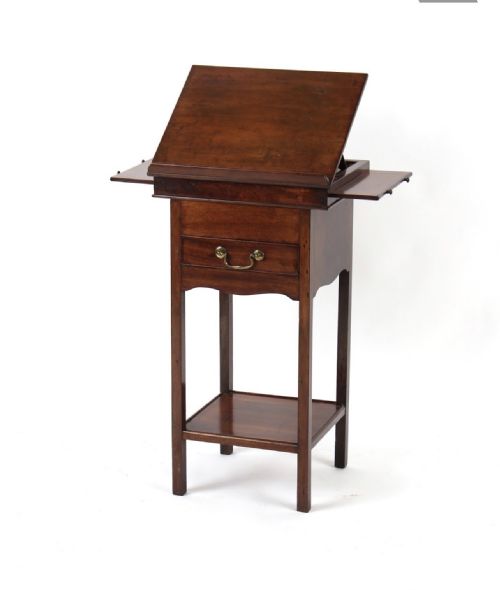
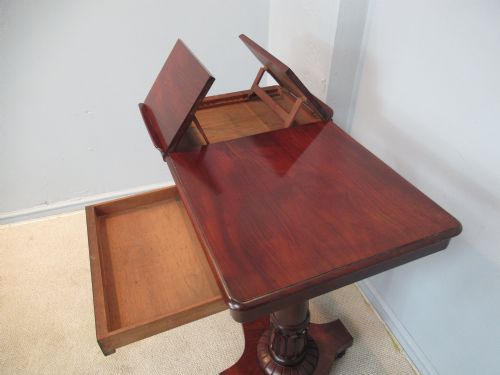
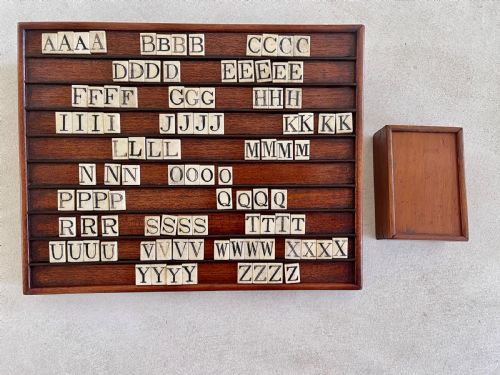
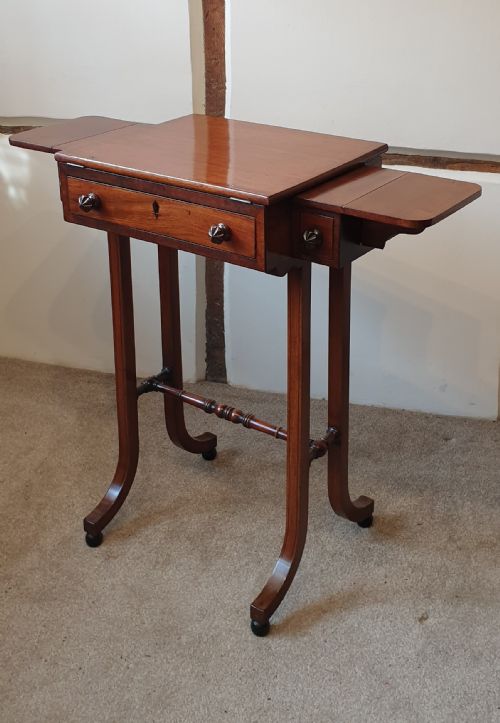
The version you most frequently meet on this page is constructed from mahogany, often featuring brass mounts, leather inserts, and internal compartments for writing implements. Forms range from compact boxes with bone alphabet letters to large standing reading tables and screen writing tables.
Makers and designers of the era produced these objects to serve specific domestic and professional tasks, combining storage and adjustable surfaces in a single piece of furniture.
Materials and construction
Timbers such as mahogany and rosewood form the primary carcass of these pieces, selected for strength and finished with contrasting stringing in satinwood, boxwood, and ebony. Workshops utilised brass for hinges, corner mounts, and adjustable ratchets that support the reading stand.
Writing surfaces frequently incorporate panels of leather, providing a durable plane for ink and paper. Interior compartments rely on precise joinery to house inkwells, pens, and bone accessories securely within the portable boxes.
Georgian Reading Slope Retail Price Guide 2026
Typical asking prices for georgian reading slope among the pieces listed under this phrase on Sellingantiques today, from the lower quarter to the upper quarter. They describe what is for sale here now, not the wider market.
Listings span the eighteenth and nineteenth centuries, including Georgian, Regency, and Victorian periods executed in mahogany, rosewood, and brass.
Distinctions in quality
The standard of a georgian reading slope depends upon the selection of timber and the precision of its secondary woods. Grain alignment across the exterior surfaces and the crispness of brass inlays distinguish superior examples from simpler utilitarian items.
Complexity of internal mechanisms also separates the range, where smooth operation of adjustable ratchets and folding lecterns indicates high workshop competence. The integration of secondary materials, such as bone letter sets or satinwood banding, reflects the ambition of the original commission.
The Georgian Reading Slope Glossary
- Reading slope
- A portable box or table top with an adjustable writing or reading surface. It props books or paper at a comfortable angle.
- Architects table
- A specialised desk featuring a rising centre section supported by a ratchet mechanism. It allows a draughtsman to work standing or sitting.
- Brass bound
- Furniture edged or cornered with brass strips and brackets to protect the timber during travel. This technique is common on campaign pieces.
- Stringing
- Thin inlaid lines of contrasting wood, such as boxwood or ebony, used to outline panels and drawers. It adds decorative definition to mahogany surfaces.
- Writing box
- A lidded box containing a sloping writing surface and internal storage for stationery. Many convert into reading lecterns.
Georgian Reading Slope: Frequently Asked Questions
What is a reading slope?
A reading slope is a portable or table-mounted writing desk with a hinged, angled top designed to hold books or documents securely in place.
These pieces were utilised for study, correspondence, and drafting, allowing the user to read or write without hunching over a flat surface.
How do you adjust the stand?
Most pieces utilise an internal ratchet mechanism made of wood or brass that catches at various notches.
Raising the hinged platform engages the support arm, allowing you to select the desired angle for reading or writing.
Where were they used?
These items belonged in libraries, studies, and drawing rooms, or travelled with owners as portable writing desks.
Compact boxes sat upon larger tables or desks, while dedicated reading tables stood independently in the room.
What woods were used?
Cabinet makers predominantly employed mahogany, complemented by decorative veneers such as rosewood and satinwood.
Details often included stringing in boxwood or ebony, alongside brass hardware and leather inserts.