




Georgian Piano Seat
A georgian piano seat brings practical mechanics and period timber together, offering adjustable comfort alongside a handsome presence at the keyboard.
Georgian Piano Seat
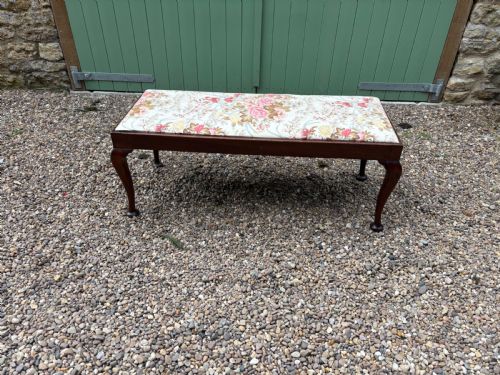
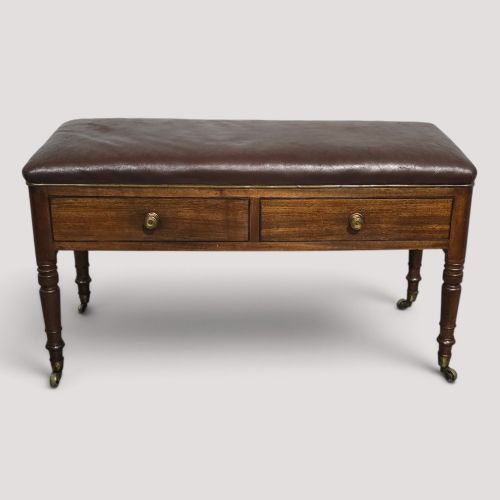
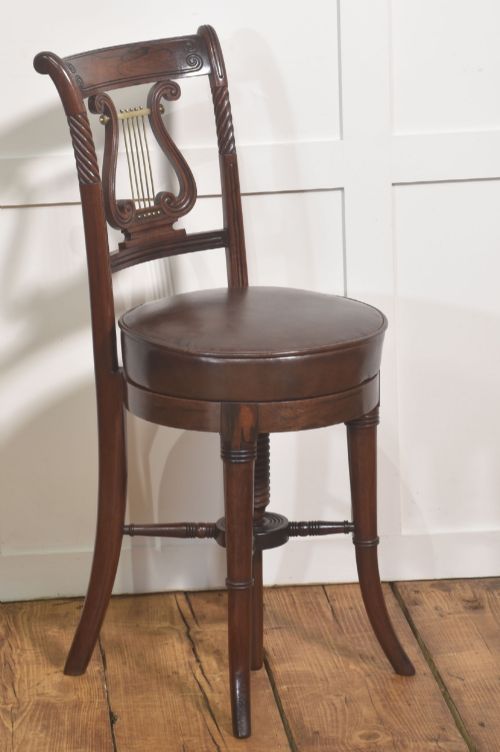
A georgian piano seat comprises sturdy timber frames designed specifically for keyboard players, often appearing as revolving music chairs or adjustable stools. Buyers frequently encounter examples executed in mahogany, walnut, and rosewood, spanning periods from the late eighteenth century through revival interpretations.
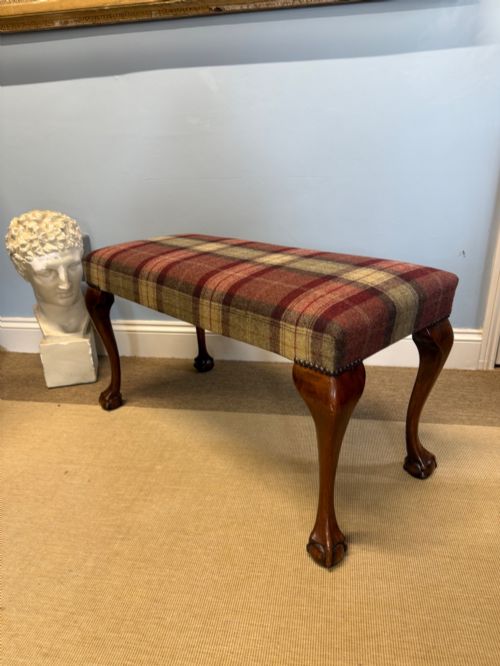
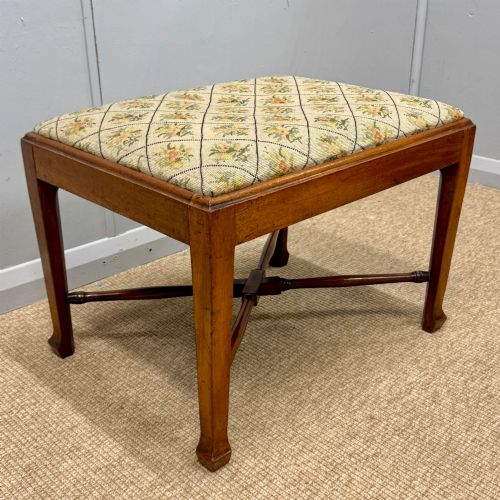
The selections on this page range from authentic Regency revolving mechanisms to later Edwardian and Georgian Revival adaptations. These pieces frequently incorporate practical design elements such as cross stretchers, cabriole legs, and brass inlay.
Object types vary from simple dressing chairs and footstools to dedicated music seats with needlepoint, fabric, leather, or velvet upholstery. Collectors will notice distinct regional influences, including Irish interpretations with carved details.
Materials and construction
Cabinet makers relied primarily on dense hardwoods such as mahogany, walnut, and satinwood to build these seats, ensuring structural stability for frequent height adjustments. Burr maple and rosewood also appear in select pieces, providing striking decorative grain patterns across the frame.
Metal components played a crucial role in functional pieces, with brass utilised for adjustable screw mechanisms, castors, and subtle inlay work. Traditional upholstery techniques finished the seats using horsehair or padding beneath coverings of needlepoint, velvet, damask, leather, and woven fabric.
Listings feature mahogany, walnut, satinwood, and rosewood timbers alongside brass inlay and traditional needlepoint or velvet upholstery across multiple periods.
Judging quality in construction and design
Superior examples distinguish themselves through the crispness of timber carving, particularly on cabriole legs, claw-and-ball feet, or decorative rails. The integrity of the revolving or adjustable mechanism dictates the mechanical success of music chairs and stools.
Material selection and upholstery finish also separate ordinary production from finer output. Dense, well-figured mahogany or satinwood paired with hand-stitched needlepoint or damask upholstery represents the upper echelon of these seating forms.
Gillows
The Georgian Piano Seat Glossary
- Revolving
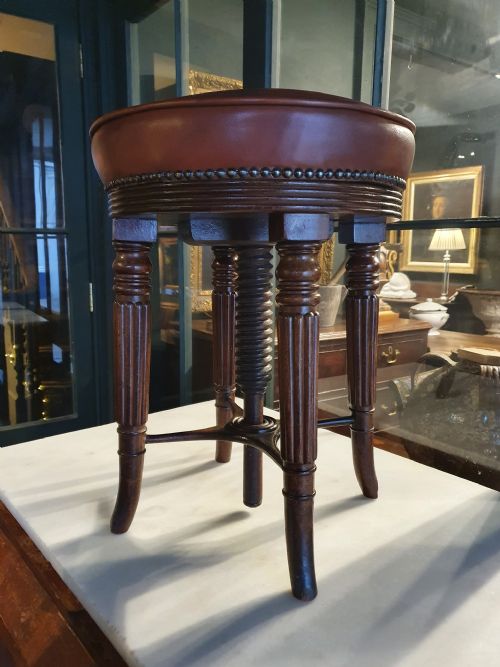
- Describing a seat fitted with a screw mechanism that allows the top to turn and alter the playing height. This function was essential for keyboard players requiring specific posture.
- Cross stretcher
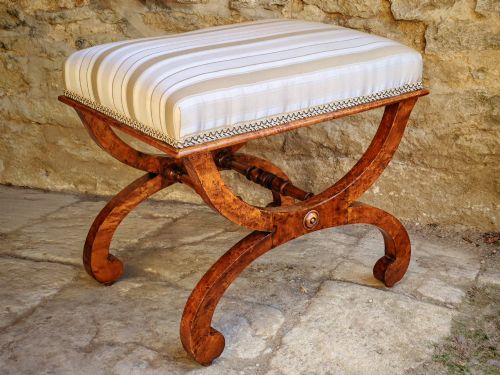
- An intersecting timber brace connecting the legs beneath a stool to provide structural rigidity. These supports frequently feature central finials or carved intersections.
- Cabriole leg
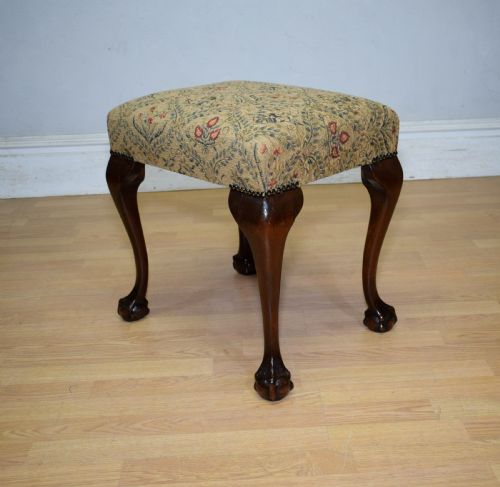
- A furniture leg that curves outward in a convex arc before tapering inward to a concave foot, mimicking animal limbs. This form is common in Georgian and revival seating.
- Needlepoint
- A form of counted thread embroidery traditionally worked on canvas for upholstery. It appears frequently on period stool and bench seats.
- Inlay
- A decorative technique where contrasting materials such as brass are embedded into the wood surface. This ornamentation defines many Regency pieces.
Georgian Piano Seat: Frequently Asked Questions
How do I identify a genuine period seat?
Examine the timber shrinkage, joinery methods, and the wear patterns on the wooden screw mechanisms or stretcher joints. Period pieces display hand-cut joinery and aged patination consistent with centuries of use.
Compare the proportions and carving style against known regional characteristics, such as Irish cabriole legs or Regency brass inlay work. Revival pieces often reveal machine-tooled surfaces or uniform modern hardware beneath the upholstery.
Were these seats only used for pianos?
While specifically engineered with revolving or adjustable heights for keyboard musicians, these forms doubled as dressing table chairs and music room seating. Their compact dimensions made them versatile furnishings in domestic parlours.
Many examples function equally well today as dressing stools, window seats, or occasional low chairs in living spaces.
What maintenance do the adjustment mechanisms require?
Revolving wooden screws and brass height-adjusters benefit from occasional light lubrication with suitable wax or oil to prevent binding. Avoid forcing stiff mechanisms, as the internal wooden threads are vulnerable to stripping.
Periodic inspection of the frame and legs ensures that tension on cross stretchers remains secure under daily use.
How do I care for antique upholstery?
Protect delicate textiles such as needlepoint, silk damask, and velvet from direct sunlight to prevent fading and fibre degradation. Regular gentle vacuuming with a soft brush attachment removes abrasive dust particles.
Original needlepoint and antique leather require specialist cleaning methods rather than standard commercial moisture treatments to preserve the historic material.