

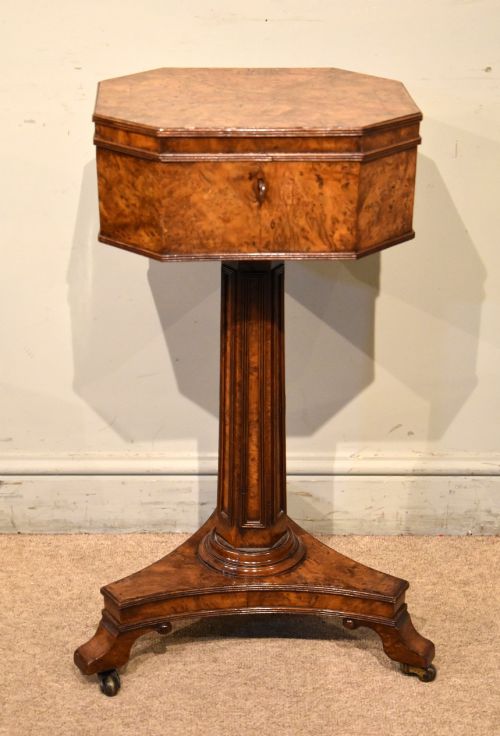
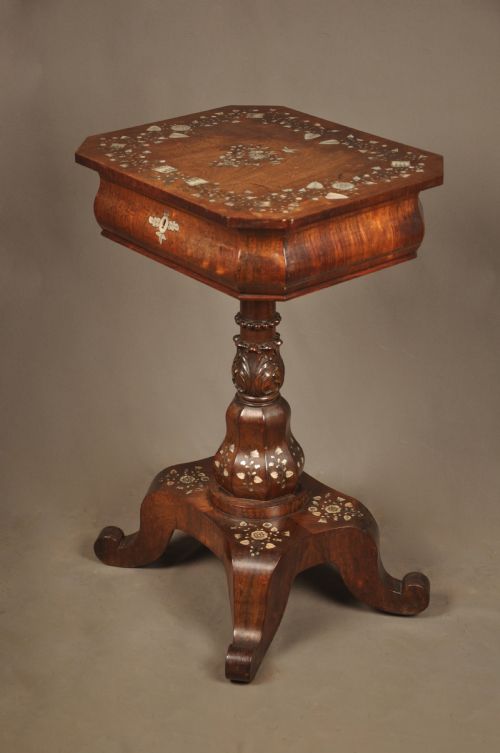
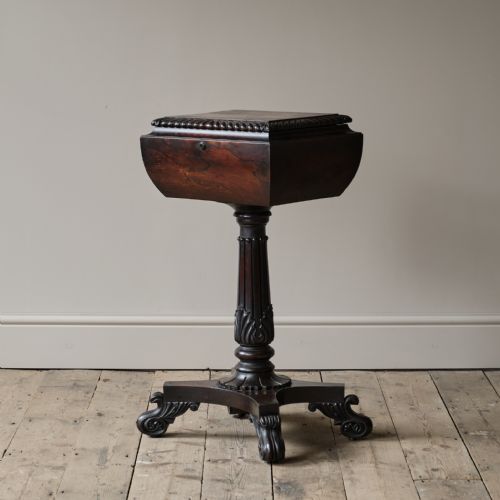
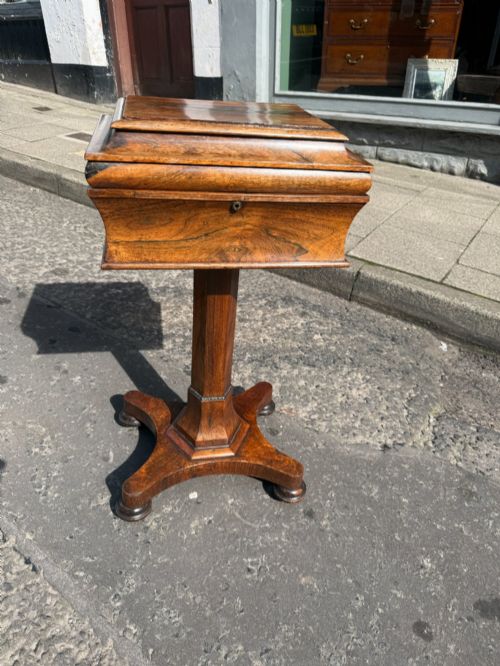


Georgian Pedestal Teapoy
A Georgian pedestal teapoy is a grand tea caddy raised on a single central column, built to hold precious tea leaves securely in the drawing room.
Georgian Pedestal Teapoy
A Georgian pedestal teapoy takes the form of a lidded box designed to store loose tea safely away from damp air and pilfering servants, mounted high upon a stout central pillar and a sturdy base. The examples meeting this description include sarcophagus shapes, tea stoves, and pieces combined with work tables or jardinieres.
Most pieces seen here belong to the Regency and Georgian eras, spanning the early nineteenth century and William IV periods. They sit on carved feet, tripod bases, or platforms, presenting a formal presence suited to elite entertaining.
The form brings together practical storage with decorative display, often featuring internal compartments for blending and canisters for different varieties of tea. Buyers frequently find rosewood and mahogany versions, occasionally embellished with brass inlay or mother of pearl.
How they were made
Cabinetmakers constructed the main boxes from dense timbers like mahogany, rosewood, walnut, and burr yew, often selecting veneers with striking grains. These surfaces received meticulous polishing to bring out the natural depth and colour of the wood.
Fine brass inlay work and delicate glass or mother of pearl details were embedded into the wood on superior examples, demanding precise hand-cutting. Supports often incorporated carved feet and robust central pedestals turned on a lathe to bear the weight of the heavy lidded compartments.
Georgian Pedestal Teapoy Retail Price Guide 2026
Typical asking prices for georgian pedestal teapoy among the pieces listed under this phrase on Sellingantiques today, from the lower quarter to the upper quarter. They describe what is for sale here now, not the wider market.
What varies in quality
Quality depends upon the choice of timber and the complexity of the cabinetwork, from plain mahogany boxes to elaborately figured rosewood with intricate brass inlay. The cohesion of the pedestal structure and the crispness of any carved feet distinguish finer workshops from simpler production.
The interior arrangement also sets pieces apart, as surviving internal canisters, mixing bowls, and original locking mechanisms demonstrate a higher degree of original luxury. Pieces that maintain their structural integrity across the column and base command greater appreciation.
The Georgian Pedestal Teapoy Glossary
- Teapoy
- A small box or chest designed specifically for storing dry tea leaves, usually fitted with internal compartments and raised on a stand.
- Sarcophagus
- A box shape featuring a domed or peaked lid with sloping sides, reminiscent of ancient stone coffins, highly favoured in Regency design.
- Jardiniere
- An ornamental stand or pot, sometimes incorporated into the design of these tables to hold indoor plants.
- Veneer
- A thin layer of finely figured wood applied over a secondary timber foundation to create a decorative exterior surface.
- Regency
- A British design period spanning the early nineteenth century, characterised by classical revival motifs, bold timbers, and brass ornamentation.
Georgian Pedestal Teapoy: Frequently Asked Questions
What is a georgian pedestal teapoy?
A georgian pedestal teapoy is a lidded wooden box supported by a central column and base, built to store expensive tea in the nineteenth century.
These pieces reflect the high social status of tea drinking during the period, often incorporating interior canisters and mixing bowls.
How were teapoys used originally?
Mistresses of the household used them in the drawing room to lock away precious tea leaves and prepare the brew for guests.
The host would mix black and green teas inside the compartments before handing the caddy to servants to brew.
How do I date a teapoy?
Dating relies on observing the timber choices, such as rosewood and mahogany, alongside characteristic shapes like the sarcophagus box.
Stylistic markers point to the Regency, Georgian, and William IV eras of the early nineteenth century.
How do I live with a teapoy?
They function exceptionally well as decorative side tables or display surfaces in drawing rooms and hallways.
Their enclosed compartments also make them practical for storing small modern items out of sight.