


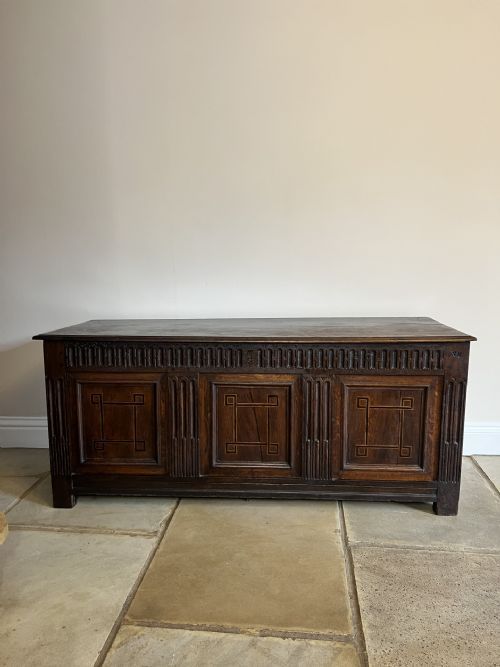

Georgian Panelled Trunk
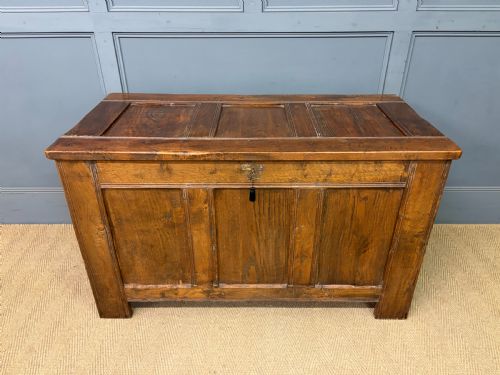
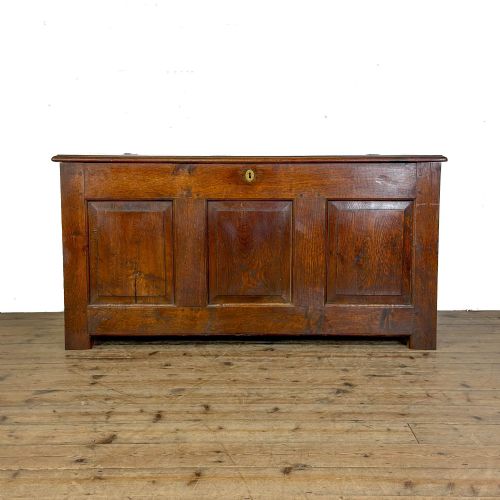
A georgian panelled trunk offers robust historic storage in solid oak, bringing centuries of English and Welsh craftsmanship directly into the home.
Georgian Panelled Trunk
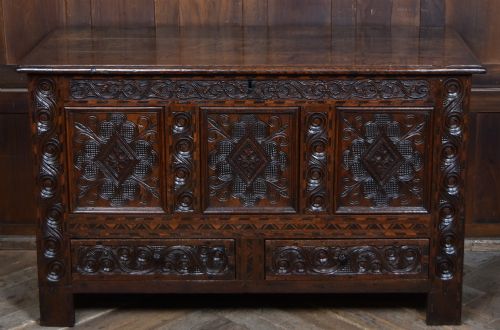
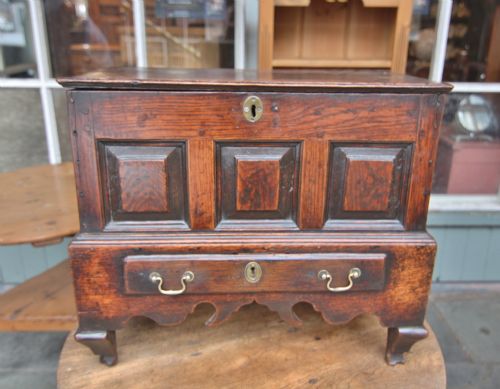
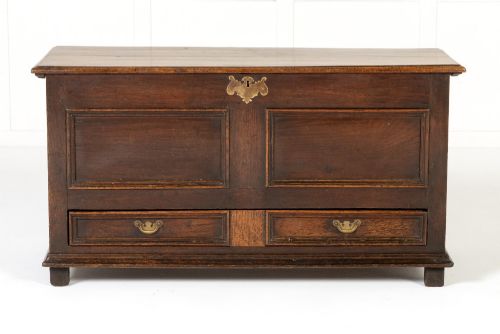
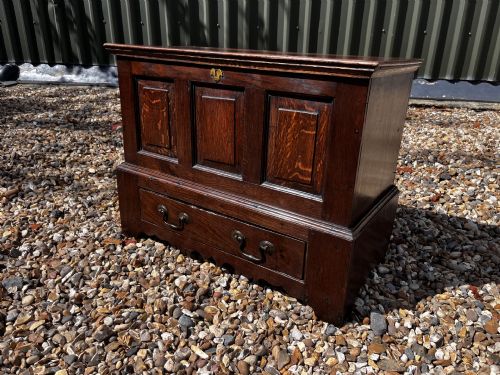
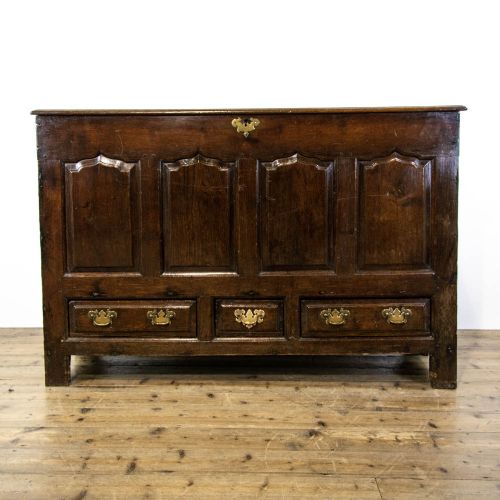
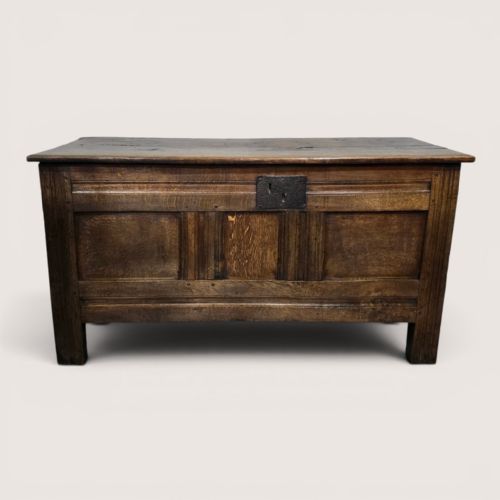
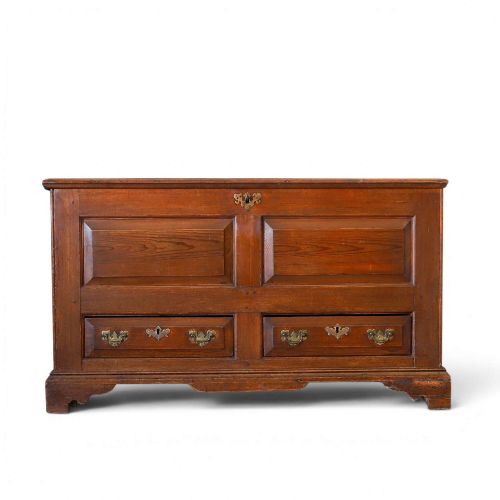
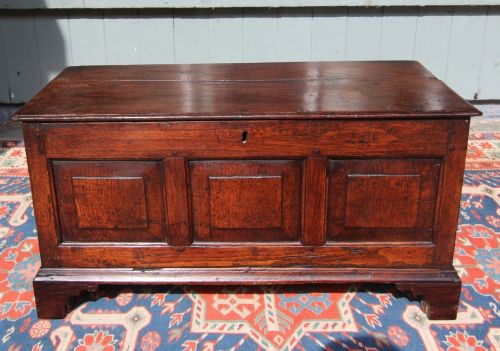
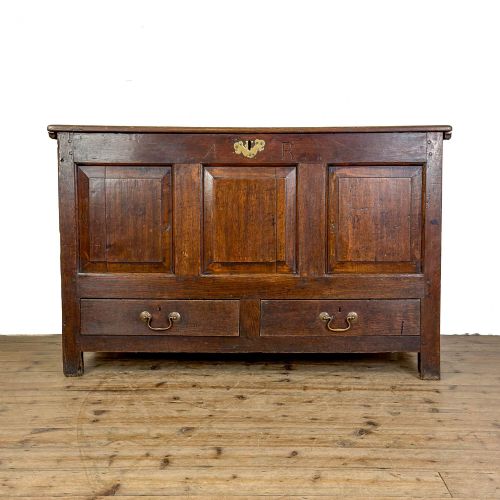
A georgian panelled trunk primarily encompasses traditional storage chests, coffers, and mule chests originating mainly from the 18th century, alongside related regional Welsh pieces and occasional 17th or 19th-century examples. The version most commonly encountered on this page is the joined and panelled oak coffer or mule chest, often fitted with drawers and internal candle boxes.
These items serve dual purposes as practical storage receptacles for blankets and linens, and as substantial furniture pieces doubling as window seats or benches. The vernacular styles range from simple English country designs to distinct regional Welsh expressions including the compact coffer bach.
How they were made
Construction relies heavily on solid English oak, joined and panelled together to form rigid carcases capable of withstanding centuries of use. Secondary materials include pine, burr elm for decorative panels, and functional iron or brass hardware such as hinges and locks.
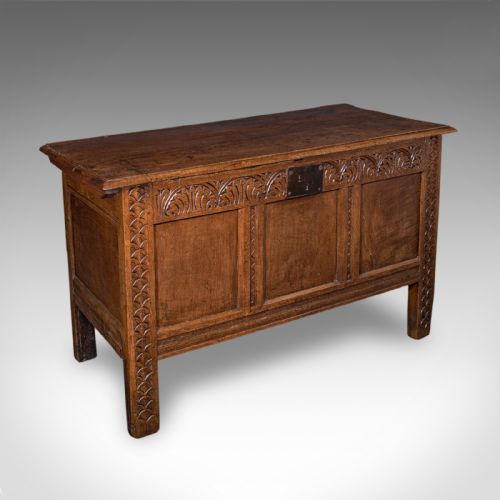
Makers utilised traditional hand-carving techniques, wood inlay, and wax finishes to enhance the grain of the timber. Internal compartments like candle boxes were constructed with simple yet durable pegged joinery.
Many chests still contain their original tiny internal candle boxes, perfect for hiding modern keys.
What varies in quality
Quality is distinguished by the choice of timber and the sophistication of the panel construction, with burr elm highlights or intricate carving elevating certain pieces above plain utilitarian examples. The presence of original brass or iron hardware and integrated lower drawers also sets finer mule chests apart from basic blanket boxes.
Proportion and scale dictate desirability, where smaller regional items like the coffer bach or well-balanced large three-panel chests display superior harmony in design. The integrity of the joined frame and the depth of the patination accumulated through wax polishing further define the upper tier of the range.
The Georgian Panelled Trunk Glossary
- Coffer
- A large wooden chest traditionally used for storing valuables or textiles. Most examples seen here feature robust oak construction.
- Mule chest
- A storage chest characterised by one or more drawers built into the base beneath the main compartment. They bridge the gap between simple coffers and chest of drawers.
- Coffer bach
- A small Welsh tabletop or miniature coffer, translated literally as little coffer. These vernacular pieces were often made as presentation items.
- Candle box
- A small internal compartment fixed inside a chest to hold candles safely away from linens. It usually includes a sliding or hinged lid.
- Joined and panelled
- A method of cabinet making where vertical stiles and horizontal rails frame thinner floating panels. This technique accommodates the natural expansion and contraction of oak.
Georgian Panelled Trunk: Frequently Asked Questions
What is a mule chest?
A mule chest is essentially a coffer with the addition of one or more drawers fitted beneath the main storage compartment. This hybrid design became popular for providing easier access to smaller items without disturbing the linens piled above.
Most variants date from the Georgian period and are constructed from solid oak with traditional panelled sides.
How were these trunks used historically?
Historically, these trunks served as secure storage for valuable textiles, blankets, and household provisions in domestic settings. Their sturdy flat tops also allowed them to double as seating benches or tables in hallways and bedchambers.
In wealthier households, they held bridal dowries, while rural families utilised them for general household storage.
How do you care for an oak coffer?
Maintaining an antique oak coffer involves feeding the wood with traditional wax polish to preserve the finish and prevent the timber from drying out. Keeping the piece away from direct heat sources and damp environments protects the structural integrity of the oak.
Gentle dusting with a dry cloth is sufficient for routine cleaning.