

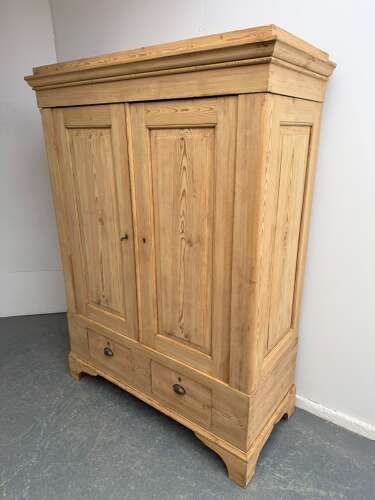
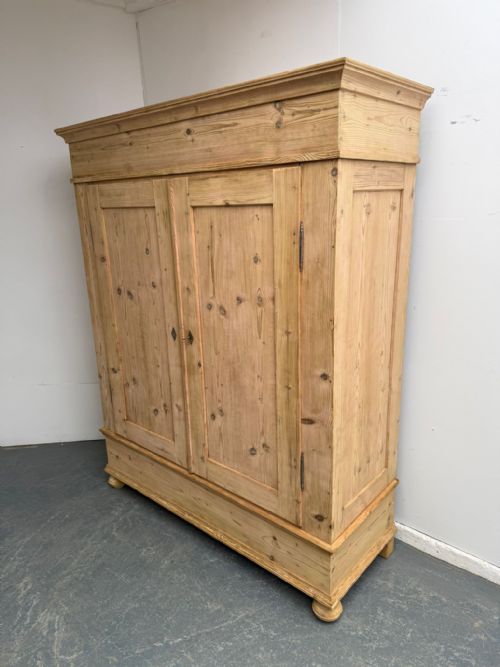
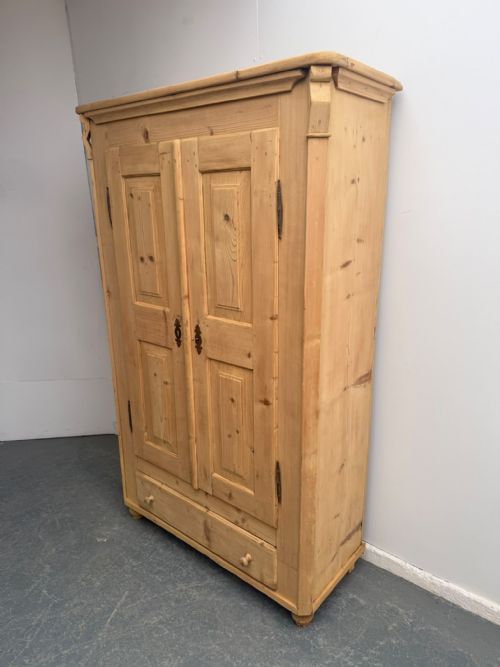

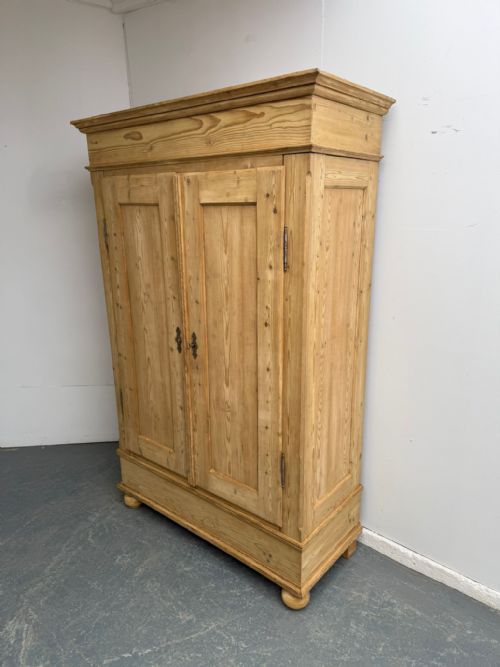


Georgian Painted Armoire
A georgian painted armoire brings robust utility and vernacular charm to a room, offering generous storage housed in historic timber.
Georgian Painted Armoire
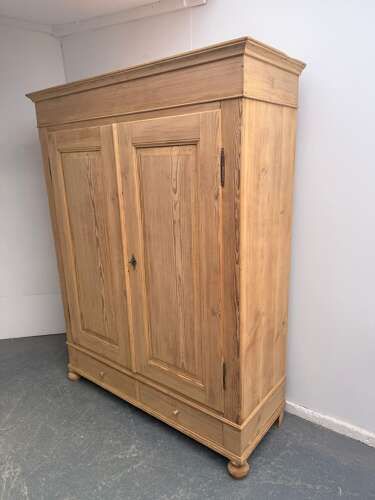
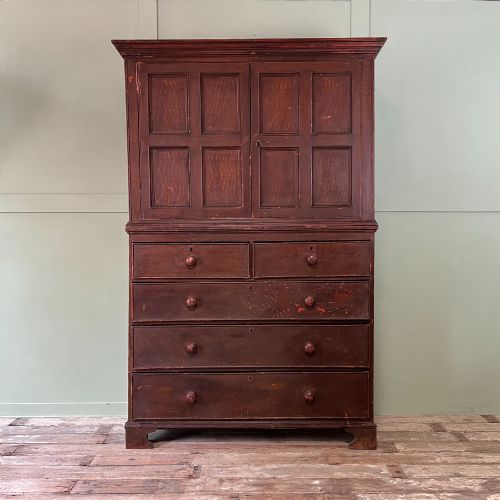
When searching for a georgian painted armoire, buyers encounter a robust variety of large storage furniture, predominantly formed of pine and finished with historic or later painted surfaces. These pieces include tall wardrobes, housekeepers cupboards, and linen presses originating from English, Irish, Welsh, and Swedish country traditions.
The most common examples on this page span the Georgian and nineteenth-century periods, often built as knockdown wardrobes or large two-door storage cupboards designed for domestic linen and clothing. Many display regional vernacular styles, moving away from formal urban cabinetmaking toward simpler, utilitarian room architecture.
How they were made
Construction relies heavily on solid pine timbers, often joined with pegged framing, panelled doors, and robust internal shelving designed to hold heavy household textiles. Iron and brass hardware, including traditional hinges and latches, secure the heavy doors of these large storage pieces.
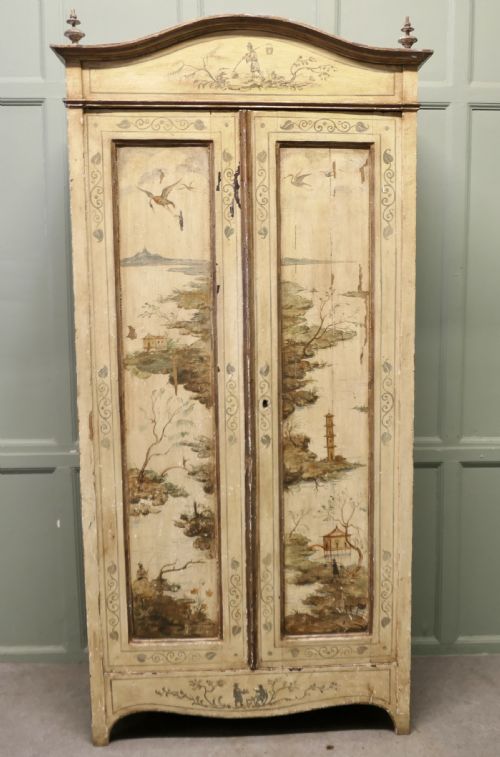
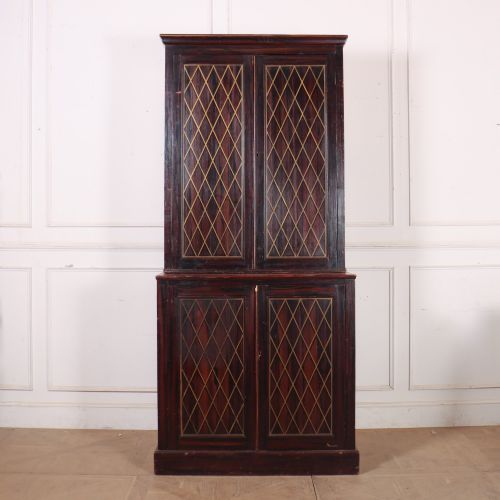
Surfaces are treated with paint, lacquer, or gilt, sometimes featuring later green or grey coats applied over older timber, or specific decorative schemes such as outdoor Chinoiserie scenes. Many pieces survive in forms originally intended to accept wax or paint finishing.
Georgian Painted Armoire Retail Price Guide 2026
Typical asking prices for georgian painted armoire among the pieces listed under this phrase on Sellingantiques today, from the lower quarter to the upper quarter. They describe what is for sale here now, not the wider market.
Listings feature pine and painted wood constructions spanning the eighteenth and nineteenth centuries, including Irish, Welsh, and Swedish regional variations.
What varies in quality
The architectural presence of the piece depends heavily on its proportions, whether it stands as a low cottage wardrobe or a massive, multi-door knockdown structure with fielded panels. Finer examples retain balanced proportions and original regional joinery that maintains structural integrity across large expanses of timber.
Surface preservation dictates much of the character, distinguishing between pieces with original painted finishes, later decorative coats, and raw timber surfaces intended for finishing. The sophistication of regional details, from Welsh hanging cupboards to Swedish hall wardrobes, separates standard utility cabinets from more distinctive country examples.
The Georgian Painted Armoire Glossary
- Knockdown wardrobe
- A large wardrobe constructed to be taken apart into modular sections for ease of transport and placement in historic homes.
- Housekeepers cupboard
- A large storage cabinet traditionally used in country houses to store household linen, provisions, and tableware.
- Linen press
- A tall piece of furniture featuring upper doors enclosing sliding trays for linen and lower drawers for bulkier garments.
- Fielded panel
- A wooden panel with bevelled edges set into a recessed frame, adding depth and structural stability to large cabinet doors.
- Vernacular style
- Furniture built by local makers using regional traditions and readily available native timbers rather than following strict metropolitan designs.
Georgian Painted Armoire: Frequently Asked Questions
How were these large cupboards used originally?
These large cabinets served as the primary storage units in historic homes, housing household linens, blankets, and everyday clothing before built-in closets became standard in domestic architecture.
Housekeepers and domestic staff utilised the deep shelves and hanging space to keep household textiles organised and protected from dust and dampness.
How do I fit a tall armoire into a modern bedroom?
Many period armoires were constructed as knockdown wardrobes precisely to navigate narrow corridors and low historic doorways during delivery and installation.
Their substantial footprint requires careful measurement of ceiling height and wall space, but their generous interior volume reduces the need for additional modern bedroom furniture.
How do I tell an earlier Georgian piece from a later nineteenth-century one?
Examining the timber preparation, joinery methods, and hardware style helps distinguish eighteenth-century construction from later nineteenth-century interpretations.
Earlier pieces often display hand-sawn pine planks, pegged joints, and simpler iron fixings, whereas later examples may show more uniform machine milling and different surface layering.
What is the difference between a linen press and a wardrobe?
A linen press traditionally combines upper doors enclosing sliding trays specifically designed for flat linen storage with a chest of drawers in the lower section.
A wardrobe focuses primarily on vertical hanging space or adjustable shelving for full-length garments rather than internal sliding trays.