
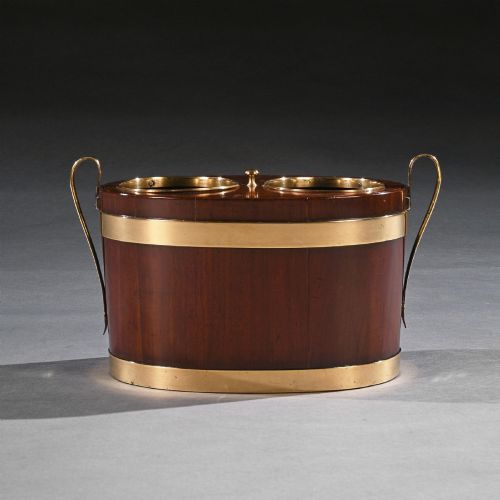
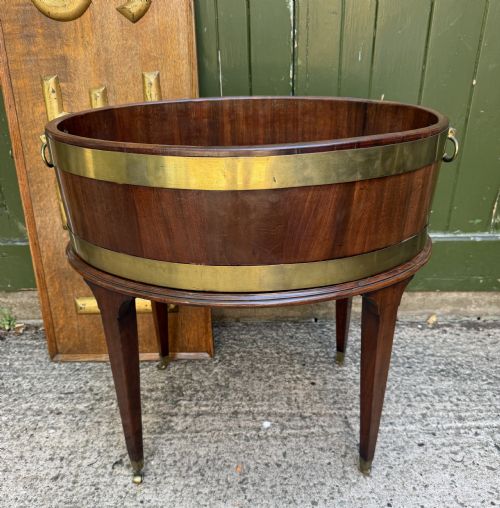

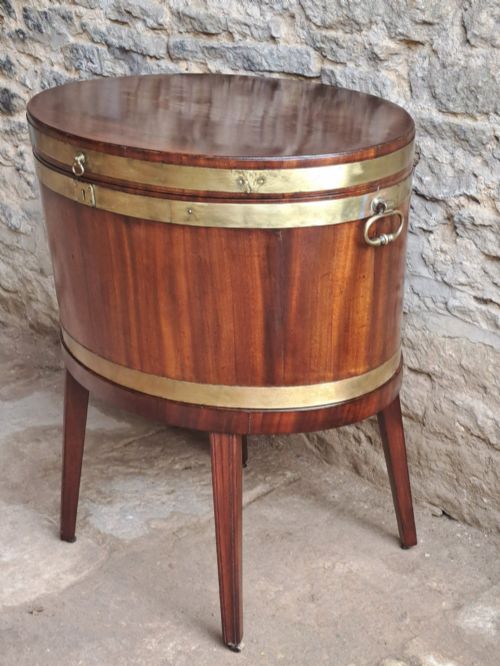
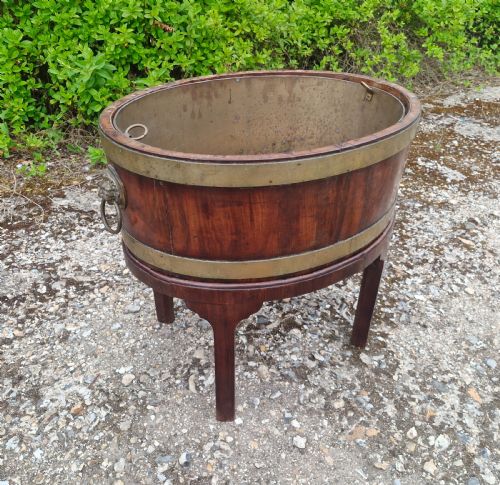



Georgian Oval Cellarette
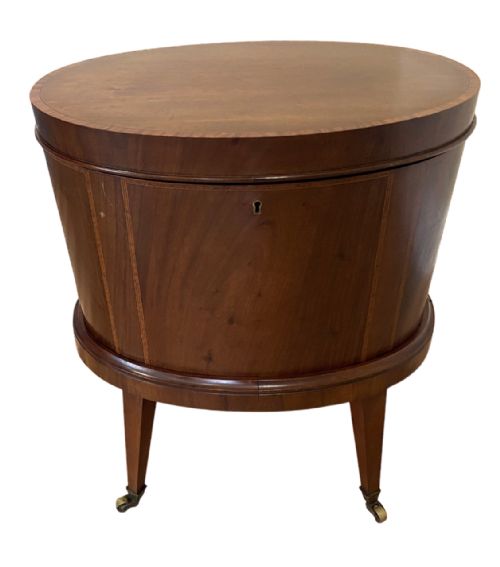
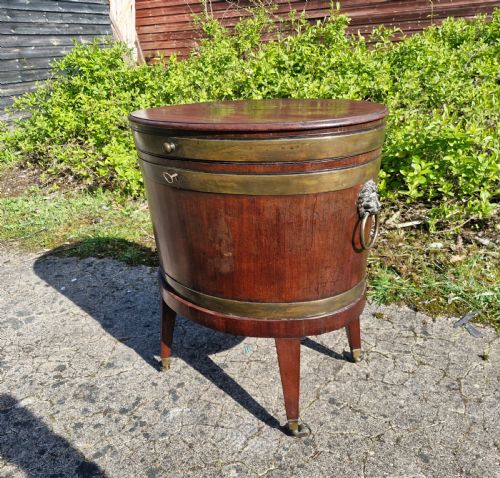
A georgian oval cellarette is a capacious timber vessel built to cool bottles at the dining table, offering striking grain and metalwork.
Georgian Oval Cellarette
A georgian oval cellarette takes the form of a coopered or joined wooden tub designed to hold wine bottles and ice during formal dining. Most examples seen here date to the eighteenth century or the reign of George III, constructed with deep oval bodies that sit either on the floor or upon dedicated stands.
Beyond standard cooling vessels, the category encompasses related forms such as wine coolers, champagne buckets, and jardinières or plant holders. Makers shaped these pieces to function flexibly, meaning many survivors transition comfortably from historic dining service to contemporary display.
The tradition extends from the eighteenth century into nineteenth-century revivals, including Regency interpretations alongside later Sheraton and Georgian Revival pieces. Buyers encounter both plain timber bodies and elaborately banded examples bearing handles and spigots.
Construction and materials
Cabinetmakers built the primary body of a georgian oval cellarette using dense hardwoods, predominantly mahogany, supplemented occasionally by walnut, figured elm, or satinwood. Many examples employ traditional coopering techniques with vertical staves bound securely by heavy brass or bronze bands.
Surface enrichment frequently involves boxwood inlay or delicate stringing to define the oval profile and highlight the figured grain of the timber. Interior arrangements often incorporate lead linings or zinc inserts designed to hold melting ice and bottles safely.
Listings feature woods spanning mahogany, walnut, satinwood, boxwood inlay, and figured elm.
Judging quality and proportion
Quality in a georgian oval cellarette rests upon the selection of timber figure, the tightness of the coopered joints, and the integrity of the original metal mounts and handles. Pieces retaining their original stands or fitted internal compartments command particular attention for their completeness.
Proportion and scale dictate visual success, separating robust dining room vessels from later decorative copies. Finer examples display crisp brass binding, well-chosen mahogany grain, and undisturbed patination developed over centuries of use.
The Georgian Oval Cellarette Glossary
- Cellarette
- A lockable container or tub used in the dining room to store and chill wine before service. These vessels sat beneath the sideboard until needed.
- Coopering
- The method of building hollow cylindrical or oval containers from curved wooden staves held together by metal hoops. This technique ensured watertight integrity for ice and bottles.
- Jardinière
- An ornamental stand or container designed to hold potted plants or flowers. Many historic wine coolers found a second life in this role.
- Stringing
- Thin inlay work of contrasting wood, such as boxwood, used to outline panels and borders on cabinet furniture. It adds linear definition to curved surfaces.
- Patina
- The deep surface sheen and mellow colour developed by aged wood through handling, waxing, and exposure to light over generations.
Georgian Oval Cellarette: Frequently Asked Questions
What is a georgian oval cellarette used for?
These vessels were originally manufactured to chill wine bottles at the dining table using ice and water. Servants filled the lined interior with ice so guests could enjoy properly cooled wine throughout the meal.
Today, owners frequently repurpose them as planters, log bins, or decorative storage containers for living spaces. Their generous proportions make them practical for holding larger household items.
How do I tell an original from a revival piece?
Original eighteenth-century pieces display authentic timber shrinkage, hand-forged or early brass fittings, and aged interior linings consistent with active use. The patination on the wood develops a soft lustre that modern reproductions struggle to replicate accurately.
Revival pieces, such as those from the Victorian era or later, often use machine-cut elements and standardised hardware. Examining the construction methods inside the tub reveals the age of the woodwork.
Did these pieces always have stands?
Not all cellarettes were made with stands, as many rested directly on the floor beneath a sideboard or dining table. Surviving examples on original stands tend to be distinct matched units designed as a single ensemble.
When a stand is present, it often echoes the leg style of the period, ranging from simple tapered supports to framed bracket feet.
Can I use an antique wine cooler for plants?
Many historic cellarettes and coolers served as jardinières historically, and their waterproof metal linings make them well suited for potted plants today. Using a protective liner inside the vessel prevents moisture damage to the antique timber.
Their substantial size accommodates large ferns or floral arrangements, bringing historic craftsmanship into functional contemporary garden displays.