

Georgian Ottoman
A georgian ottoman provides low, cushioned seating rooted in classic design, offering both comfort and traditional proportion for a sitting room.
Georgian Ottoman
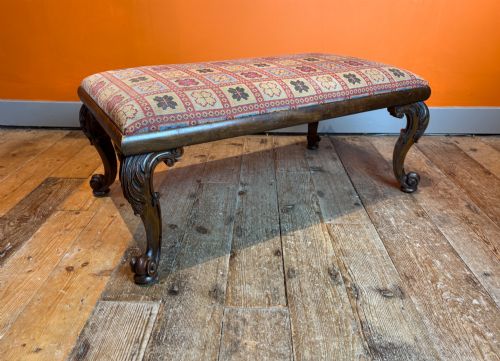
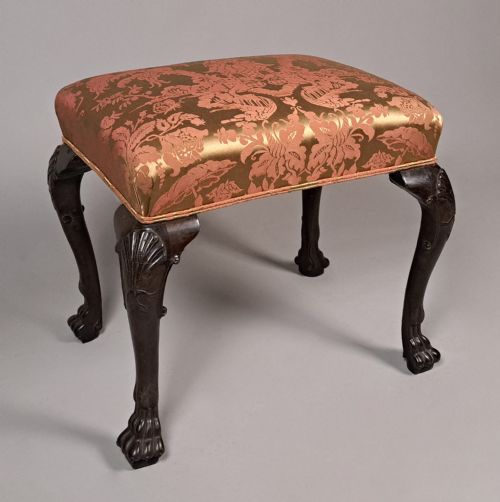
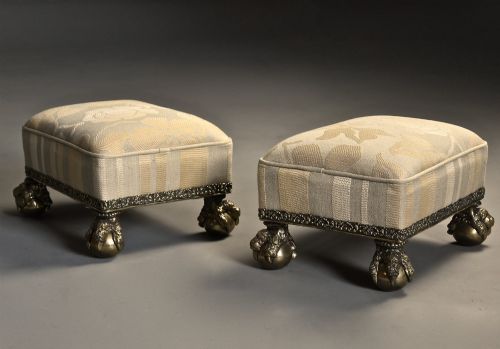
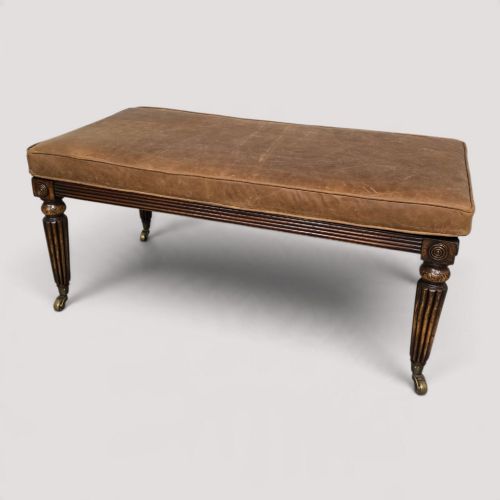
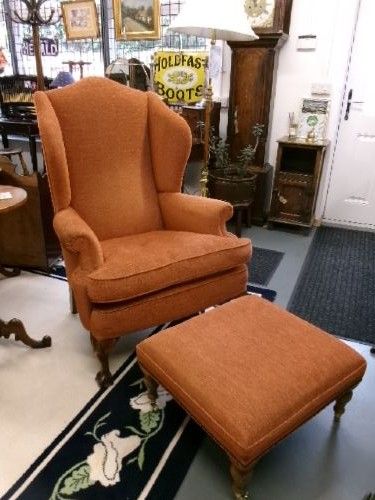
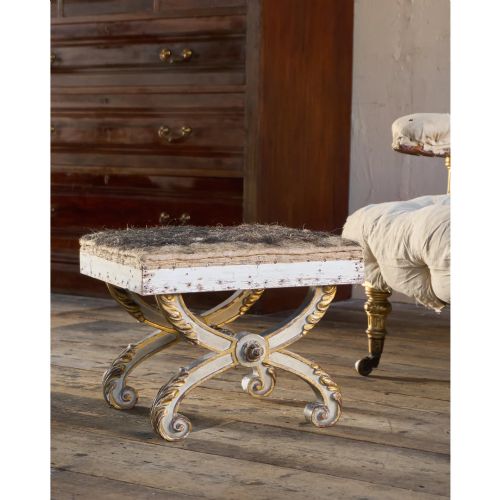
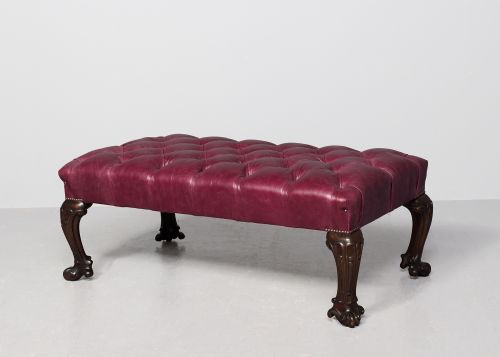
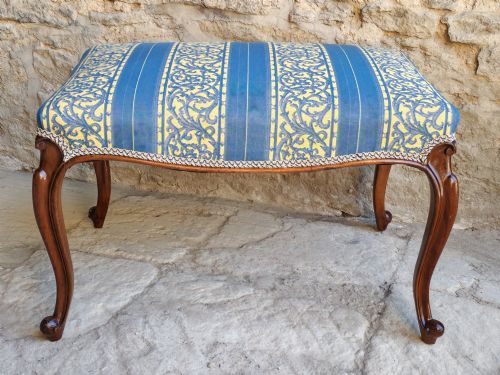
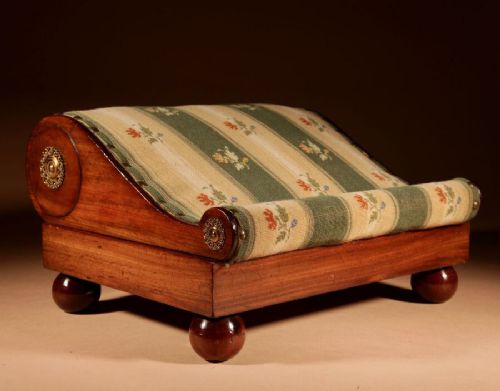
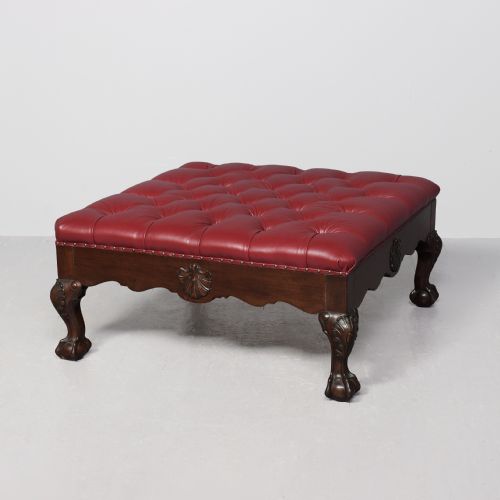
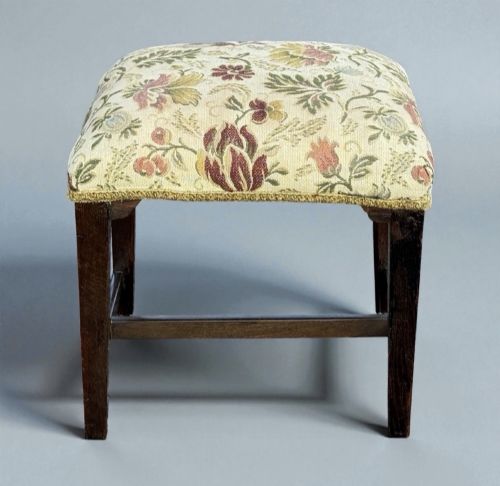
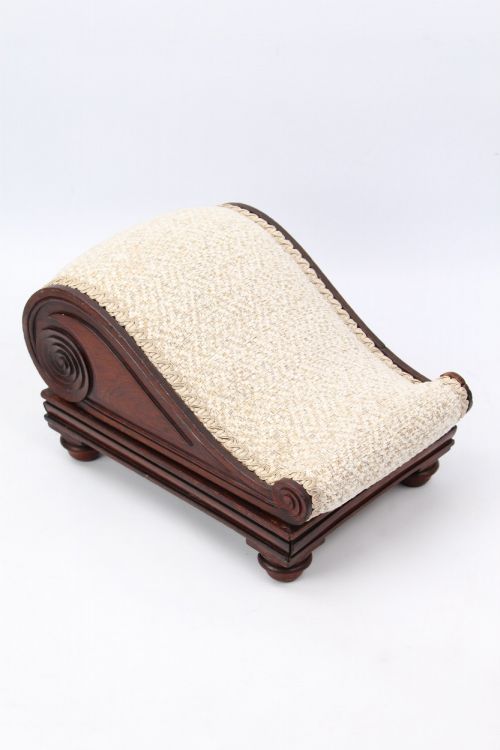
A georgian ottoman encompasses low footstools, long stools, and X-frame forms constructed across the eighteenth and nineteenth centuries, alongside later revival pieces. Buyers seeking a georgian ottoman encounter mahogany and walnut frames upholstered in leather, velvet, wool, or textile, often reflecting Regency or Chippendale styles.
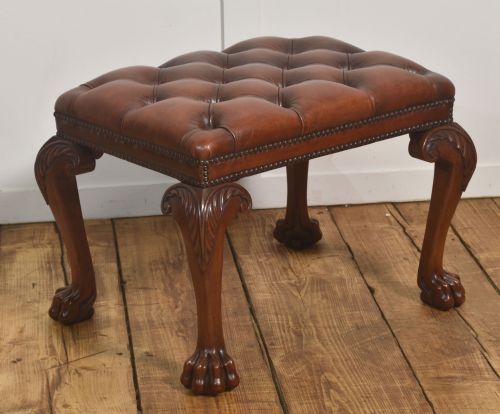
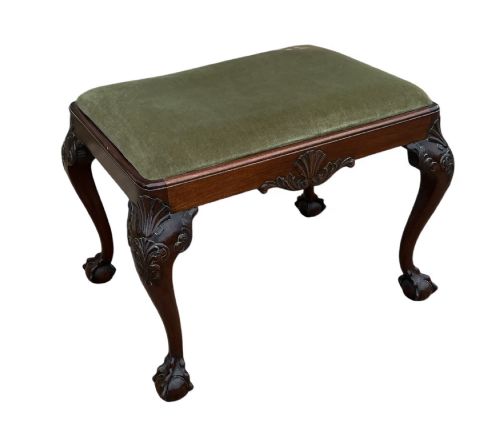
The selection ranges from George II Irish mahogany footstools to later revival stools and specific forms like the Regency mahogany ottoman with lions paw feet. These pieces serve primarily as footstools, dressing stools, and low seats, bridging domestic utility and formal cabinet-making traditions.
Materials and construction
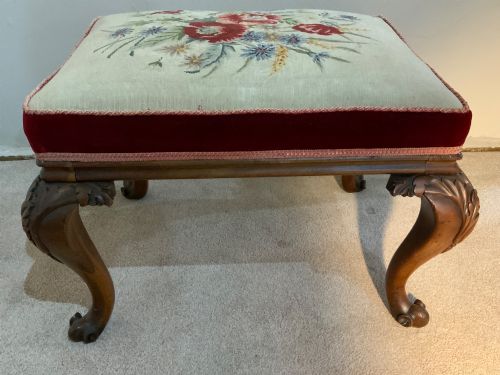
Frames are built predominantly from solid timbers including mahogany, walnut, rosewood, and beechwood, frequently shaped with carved cabriole legs or X-frame curule supports. Joinery is paired with traditional upholstery methods, securing fabric, needlepoint, chenille, or hide over padding.
Detailing involves brass studding, buttoned leather, and carved giltwood highlights that reflect the aesthetic priorities of the period. These elements demonstrate the mechanical and decorative techniques utilised by makers to achieve structural balance and tactile finish.
Georgian Ottoman Retail Price Guide 2026
Typical asking prices for georgian ottoman among the pieces listed under this phrase on Sellingantiques today, from the lower quarter to the upper quarter. They describe what is for sale here now, not the wider market.
Among the stately mahogany and velvet stools sits a flintlock pistol with a French lock, proving that historical storage furniture occasionally kept unexpected company.
The spectrum of quality
Distinctions in quality rest upon the crispness of the timber carving, the integrity of the frame construction, and the fidelity of the period style. Pieces featuring substantial mahogany or walnut timbers with refined proportions and original upholstery materials sit at the upper end of the range.
Miles and Edwards
The Georgian Ottoman Glossary
- Bergere
- An enclosed upholstered armchair with wooden framing around the sides and back, appearing in Regency pieces alongside related low seating.
- Curule
- An ancient X-shaped structural form adapted for footstools and folding seats, noted for its cross-frame geometry.
- Giltwood
- Timber treated with a thin layer of gold leaf or metallic powder, utilised on decorative mouldings and frame accents.
- Needlepoint
- A counted-thread embroidery technique worked on canvas mesh, frequently employed for period upholstery.
- Cabriole
- A furniture leg featuring a double curve, typically arching outward at the knee and tapering inward toward the foot.
Georgian Ottoman: Frequently Asked Questions
What is a georgian ottoman?
A georgian ottoman or related low stool is a traditional piece of upholstered seating designed to support the feet or serve as a low seat. These items utilise timber frames such as mahogany and walnut.
They reflect aesthetic movements spanning the eighteenth century through later revival periods, incorporating textiles like leather, velvet, and needlepoint.
How were these stools used?
These forms served primarily as footstools before armchairs or as dressing stools in private chambers. Long stools provided extended seating in larger drawing rooms.
Their sturdy timber frames and cushioned surfaces accommodated both functional repose and formal interior arrangement.
How do I style an ottoman?
Placing a footstool or long stool before an armchair or sofa anchors the seating arrangement while introducing period texture. Leather and wood tones complement traditional and eclectic interiors alike.
Lower profiles allow these pieces to sit unobtrusively at the centre of a room or beneath window spaces.
How to tell periods apart?
Dating relies on timber selection, leg forms such as cabriole or X-frame geometry, and the style of carving present on the frame. George II and Georgian pieces display specific classical proportions distinct from later Victorian or 1920s revival interpretations.
Upholstery materials and fastening methods, including brass studding, also offer clues to the era of manufacture.