
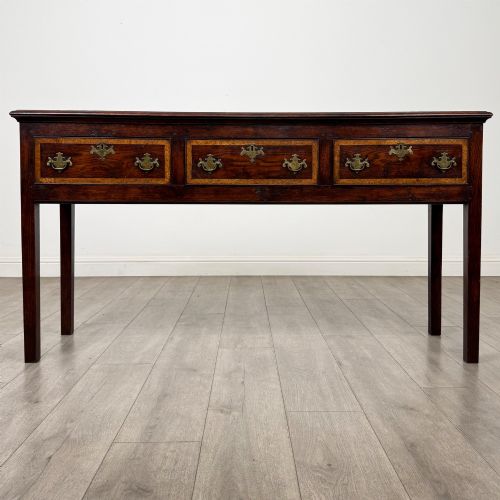
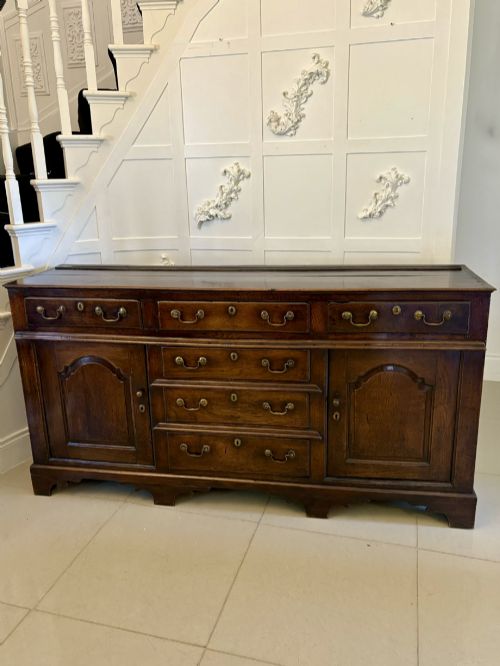
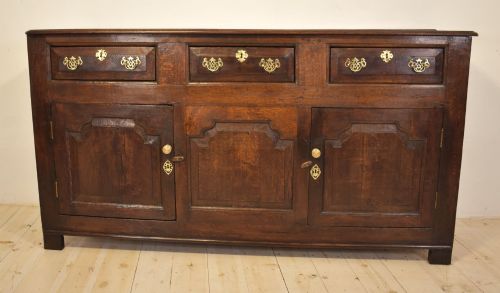
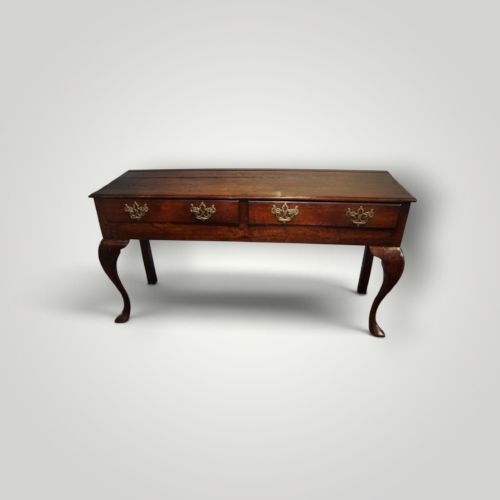
Georgian Oak Sideboard Server
A georgian oak sideboard server brings honest country timber and sturdy proportions to a dining room or hallway.
Georgian Oak Sideboard Server
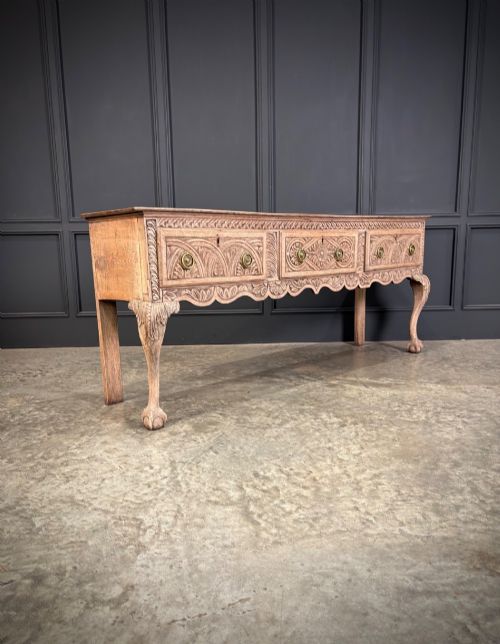
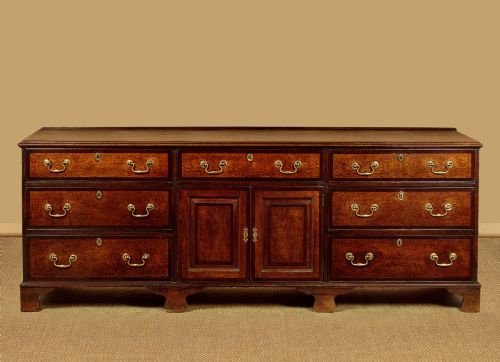
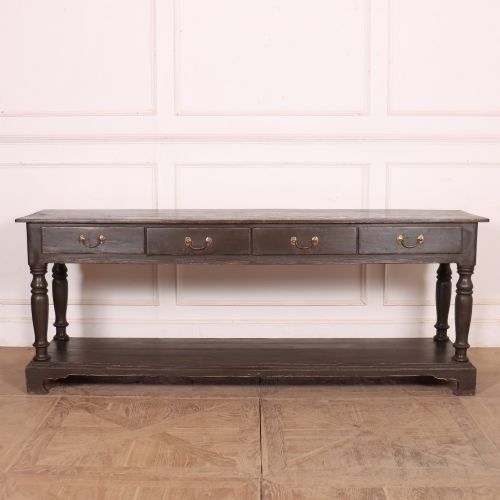
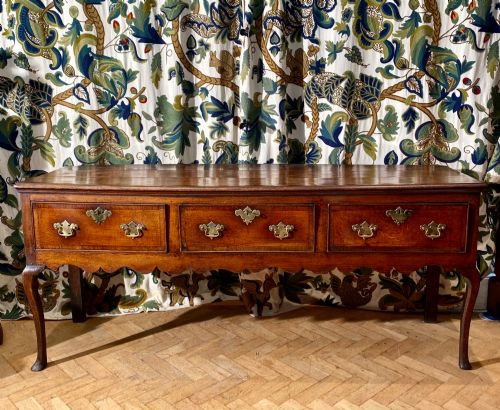
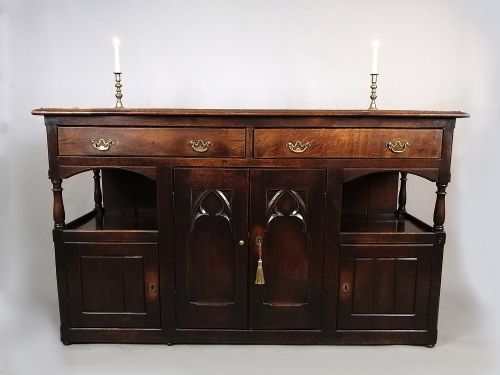
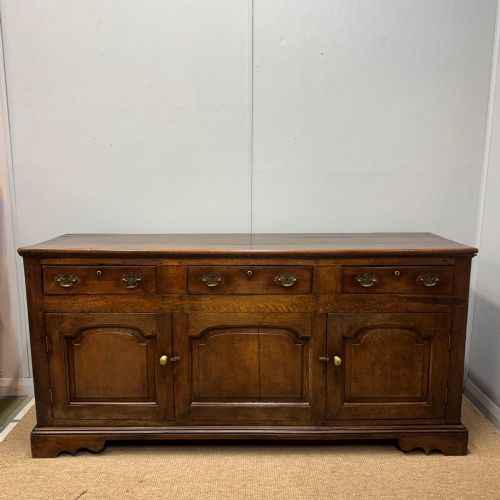
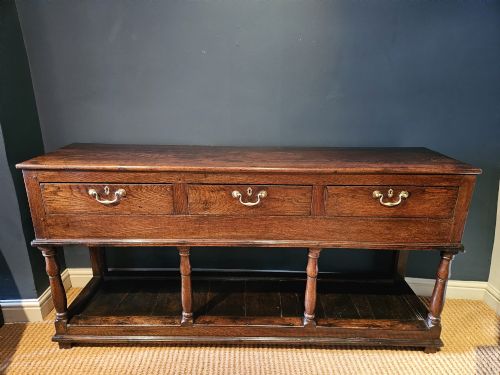
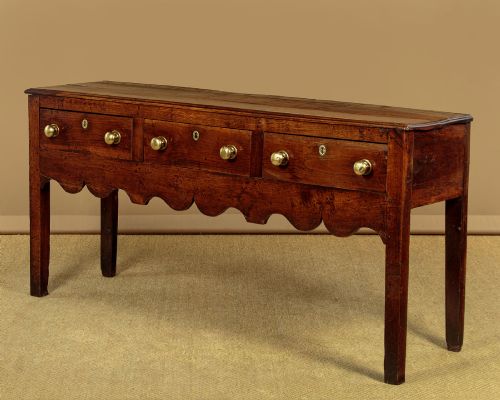
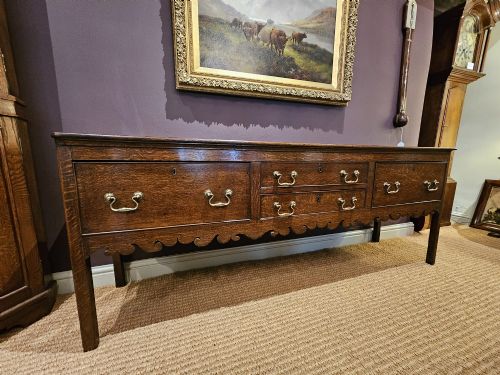
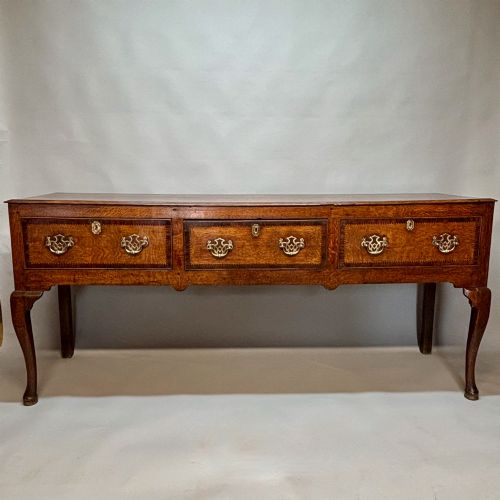
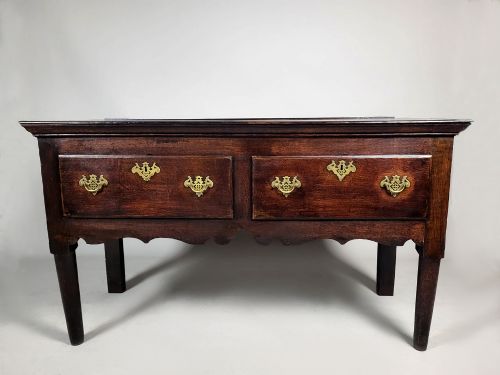
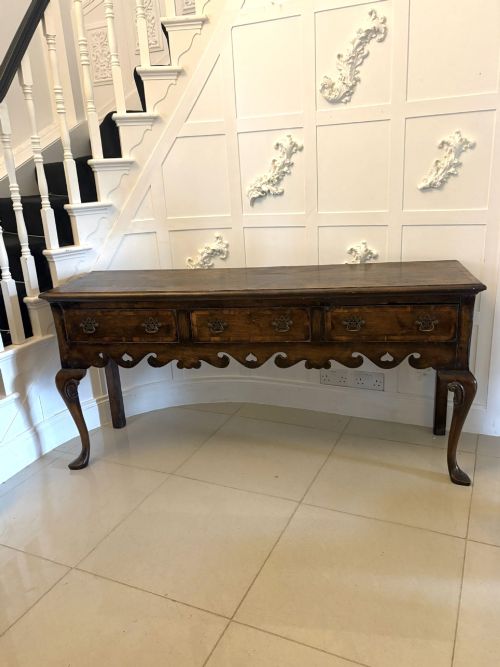
A georgian oak sideboard server typically takes the form of a low dresser base or serving table intended for domestic service and storage. These pieces combine drawers and sometimes an open lower potboard shelf beneath the main surface.
The pieces seen on this page span the eighteenth century and the georgian period, alongside later revival interpretations from the early twentieth century. Regional variations such as welsh vernacular and lancashire designs appear regularly among the offerings.
Makers often utilised secondary timbers like elm or fruitwood alongside primary oak, creating robust furniture suited to country houses and provincial interiors.
Materials and Construction
Carpenters constructed these serving tables primarily from solid oak, sometimes incorporating elm or fruitwood for drawer linings and secondary elements. Timber was selected for durability and joined using traditional peg and frame methods.
Surface treatments range from waxed and polished natural timber to painted finishes and subtle inlay work. Original brass drop handles and escutcheons frequently complete the construction.
Some servers feature sneaky hidden drawers tucked away beneath the main moulding for storing family silverware.
Proportion and Authenticity
Quality rests in the integrity of the timber, the crispness of any moulding, and the presence of original brass hardware. Period examples show honest wear and natural patination accumulated over centuries.
Later revival pieces from the edwardian era and the nineteen-twenties vary according to how closely they follow eighteenth-century proportions and joinery standards.
The Georgian Oak Sideboard Server Glossary
- Potboard
- An open lower shelf incorporated into the base of a dresser or server, traditionally used for storing pots and serving dishes.
- Dresser base
- The lower portion of a traditional kitchen or dining dresser, functioning independently as a sideboard or serving table.
- Cabriole leg
- A furniture leg that curves outward and then tapers inward, terminating in a pad or foot, seen on several georgian examples.
- Geometric moulded
- A style of drawer front decoration featuring applied raised moulding arranged in rectilinear patterns, common in early periods.
- Welsh vernacular
- Regional furniture design originating from wales, often characterised by sturdy proportions and local timber choices.
Georgian Oak Sideboard Server: Frequently Asked Questions
What is a georgian oak sideboard server used for?
These pieces served as practical tables for food preparation and the arrangement of serving dishes in dining rooms and kitchens. Today they function well as sideboards, console tables, or media units.
Their substantial top surfaces and drawer storage make them useful additions to modern living spaces needing character and utility.
How do I tell an eighteenth-century piece from a revival?
Eighteenth-century examples display authentic timber patination, hand-cut joinery marks, and wear patterns consistent with prolonged domestic use. Revival pieces from the twentieth century often present more uniform surfaces and machine-cut elements.
Examining the drawer construction and timber shrinkage helps clarify the age of the piece.
Did these servers come with upper shelves?
Many items listed as dresser bases or servers were built solely as lower tables without the superstructure plate racks associated with full dressers. Regional styles varied across the country, influencing whether a piece included upper shelving.
Standalone bases functioned effectively as serving tables on their own.
What woods were used alongside oak?
Carpenters frequently incorporated elm, fruitwood, and other local hardwoods for internal framing, drawer linings, or secondary structural components. Painted finishes also appear on select vernacular pieces from the period.
These mixed material choices reflect the available timber resources in provincial workshops.