
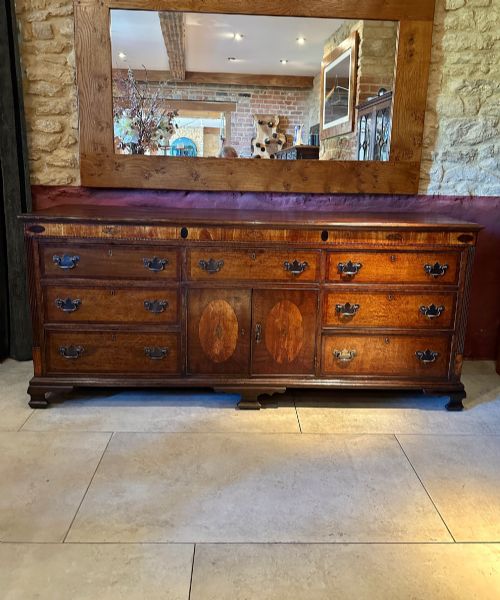


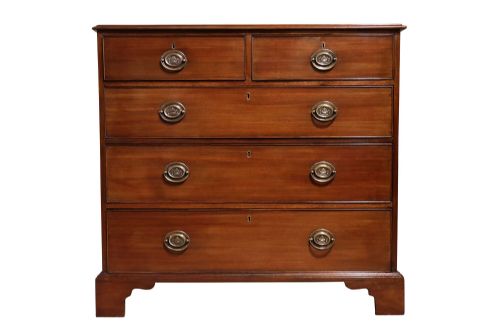


Georgian Oak Mahogany Drawers
Georgian oak mahogany drawers unite structural oak carcases with rich mahogany drawer fronts, offering durable utility and refined timber contrast.
Georgian Oak Mahogany Drawers
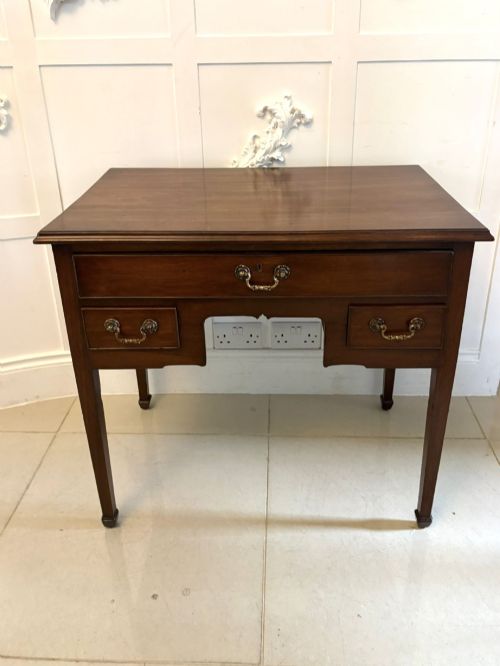
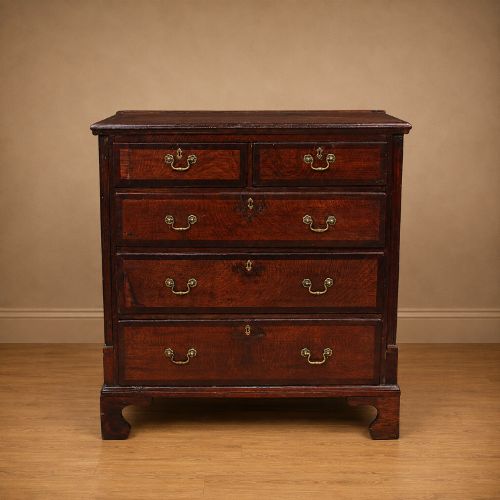
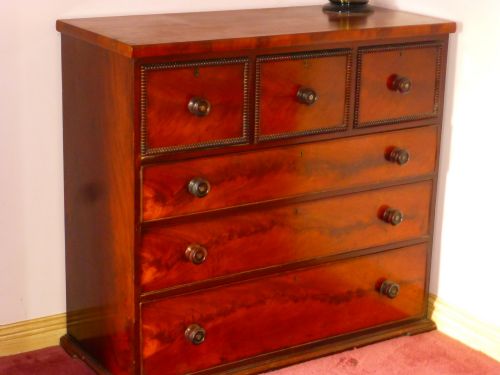
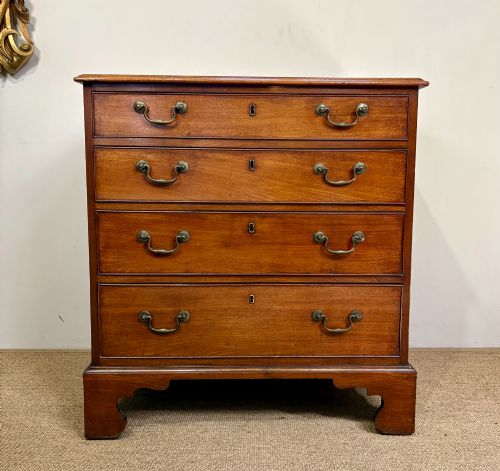
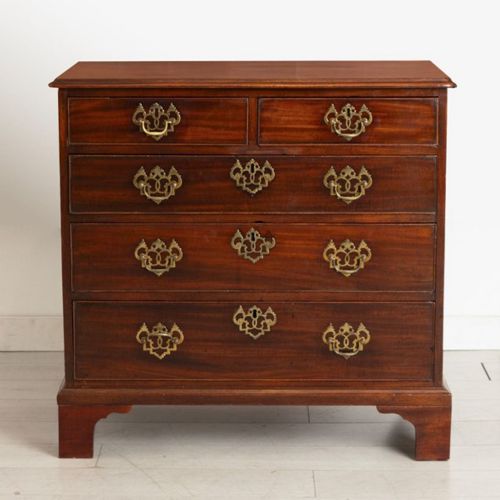
When buyers search for georgian oak mahogany drawers, they find functional storage furniture produced primarily during the eighteenth and early nineteenth centuries. The predominant form on this page is the chest of drawers, often featuring contrasting timber treatments.
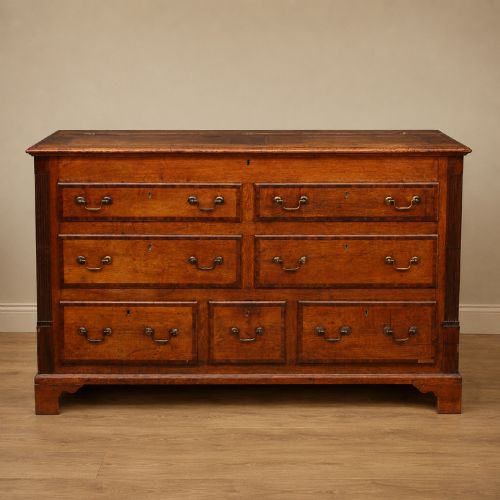
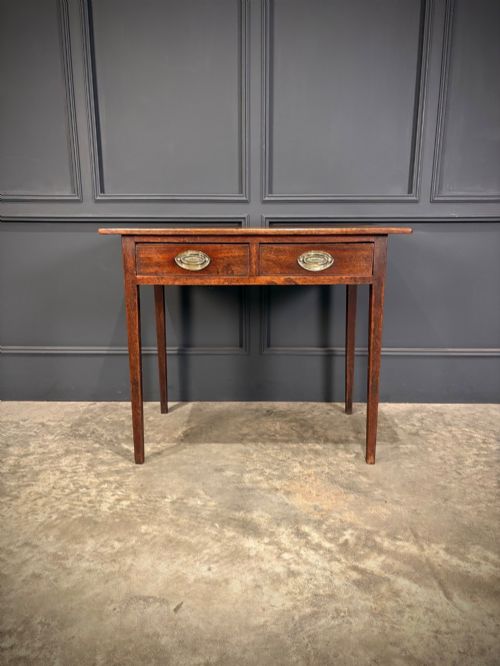
Beyond standard chests, the selection encompasses bachelor pieces with sliding writing surfaces, tallboys, mule chests combining drawer and cupboard space, and smaller side tables. These domestic items originate from provincial workshops as well as more formal urban settings.
The combination of native English oak for primary framing and imported mahogany for visual highlights defines the visual character of these pieces. Cabinetmakers utilised this pairing to balance structural strength with fashionable dark timber aesthetics.
How they were made
Makers constructed the carcases and internal drawer boxes using solid oak, prized for its durability and stability. Drawer interiors commonly feature handmade dovetail joints securing the sides to the fronts and backs.
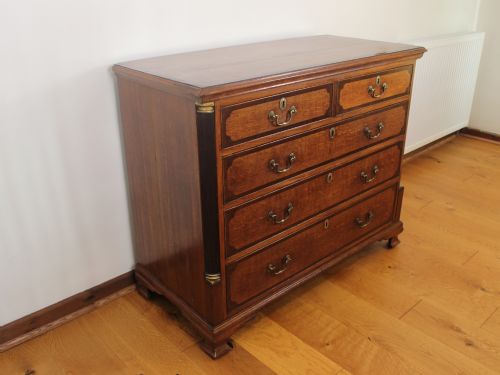
Mahogany appeared predominantly as drawer fronts, sometimes applied as solid panels or arranged as decorative crossbanding around oak fields. Craftsmen secured brass hardware, including swan neck handles and drop handles, using original mounting techniques.
Form variations on this page include miniature apprentice chests, linen presses, mule chests, and bureau desks.
What varies in quality
The precision of the timber matching and the subtlety of the crossbanding separate standard examples from finer outputs. Superior items exhibit carefully chosen grain patterns on the mahogany drawer faces alongside precise oak linings.
Survival of original brass furniture mounts, functional bracket or ogee feet, and untouched secondary timber surfaces heavily influence the integrity of a piece. Well-preserved interior construction without extensive modern replacement parts indicates higher cabinetmaking standards.
The Georgian Oak Mahogany Drawers Glossary
- Crossbanding
- A decorative border technique where thin strips of veneer are laid with the grain running perpendicular to the surrounding timber. This method creates a framed visual effect on drawer fronts.
- Oak lined
- Refers to internal drawer boxes constructed entirely from solid oak timber. This detail indicates traditional eighteenth and early nineteenth century craftsmanship.
- Mule chest
- A storage form combining a chest of drawers in the base with a blanket box compartment above. These hybrid items often incorporate both oak and mahogany elements.
- Bracket feet
- Simple architectural supports extending from the lower corners of a chest. They provide elevated stability in various eighteenth century furniture styles.
- Swan neck handle
- A traditional brass furniture pull shaped like a curved bird neck, attached via backplates. These mounts appear frequently on period drawer fronts.
Georgian Oak Mahogany Drawers: Frequently Asked Questions
How do I identify oak lined drawers?
Inspect the interior walls and baseboards of the sliding drawer boxes to check for visible oak grain. Traditional pieces typically reveal hand-cut dovetails joining these internal oak components.
Secondary woods like deal or pine occasionally appear in later or more provincial utility items, making timber identification essential for dating.
What is crossbanding on furniture?
Crossbanding involves applying narrow borders of decorative timber veneer around the perimeter of a drawer front. This technique frames the central grain and adds visual contrast.
Mahogany veneer was frequently laid across an oak drawer front to achieve this distinctive eighteenth century aesthetic.
Where were these chests used?
These storage pieces served primary utility functions in bedrooms, dressing rooms, and parlours across domestic Georgian households. Compact formats like bachelor chests provided dual functionality for writing and storage.
Larger tallboys and mule chests accommodated bulkier textiles, linens, and personal apparel in larger homes.
How do I care for antique timber?
Maintain stable indoor humidity levels and protect the surfaces from direct sunlight to prevent timber warping or veneer separation. Avoid silicone-based polishes and instead use traditional wax sparingly to nourish the wood.
Gentle dusting with a soft dry cloth preserves the historical patina accumulated over centuries of use.