
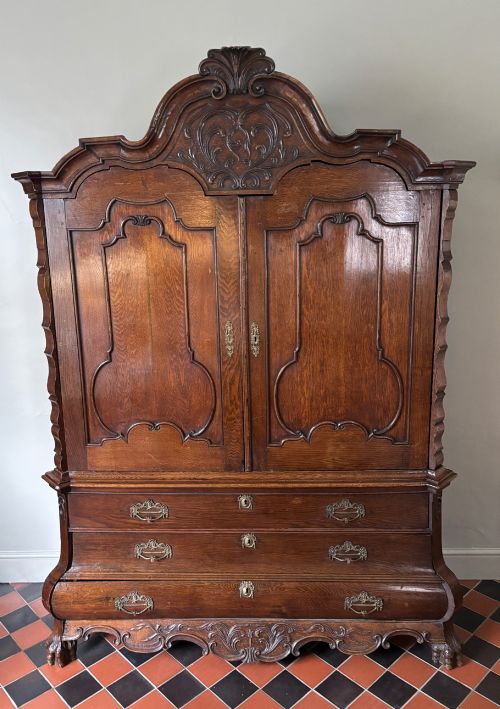
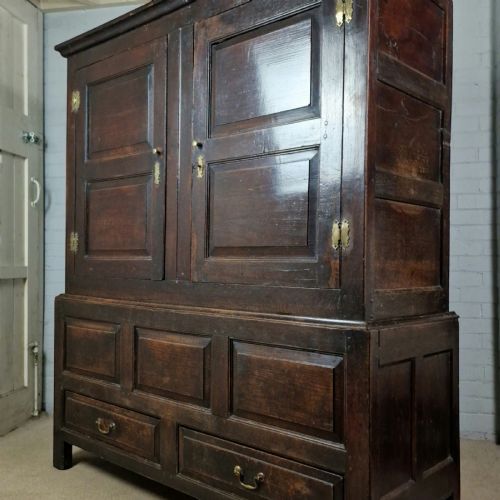
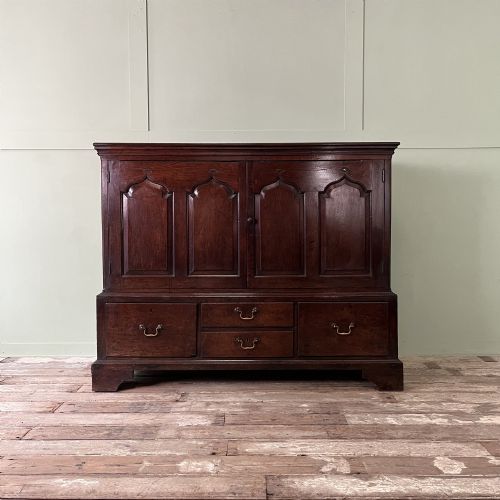
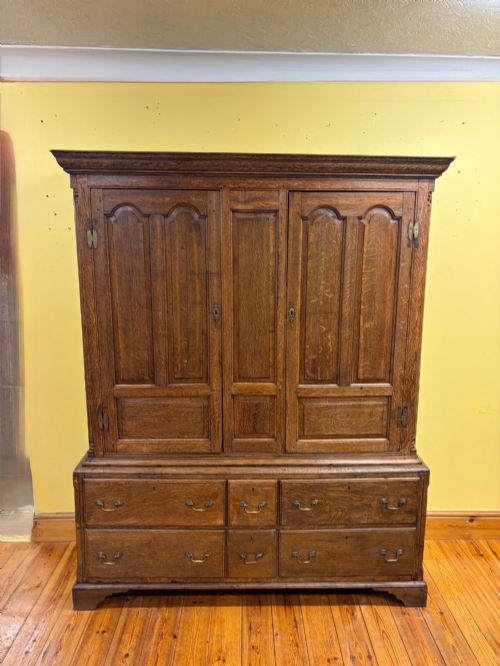
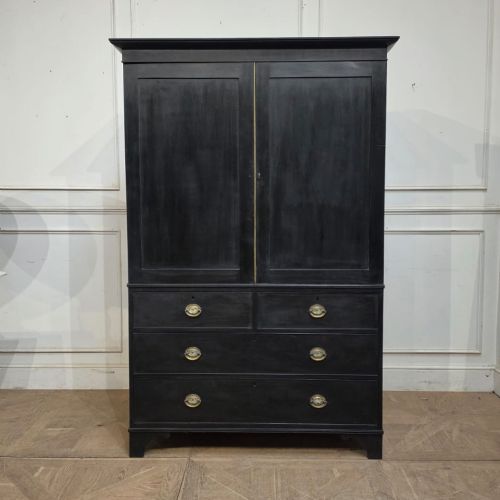
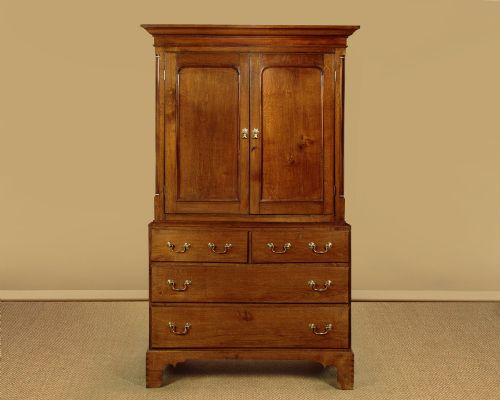
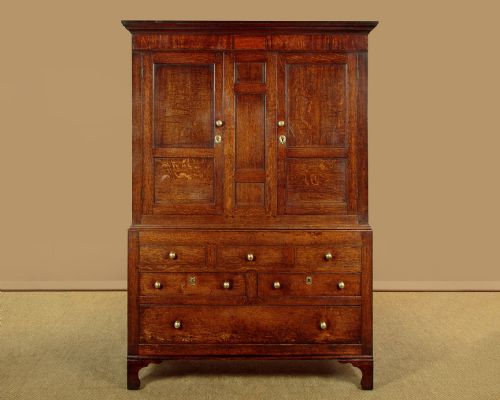
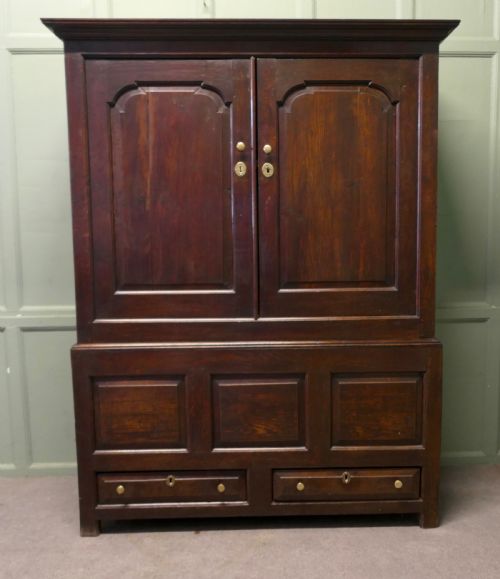


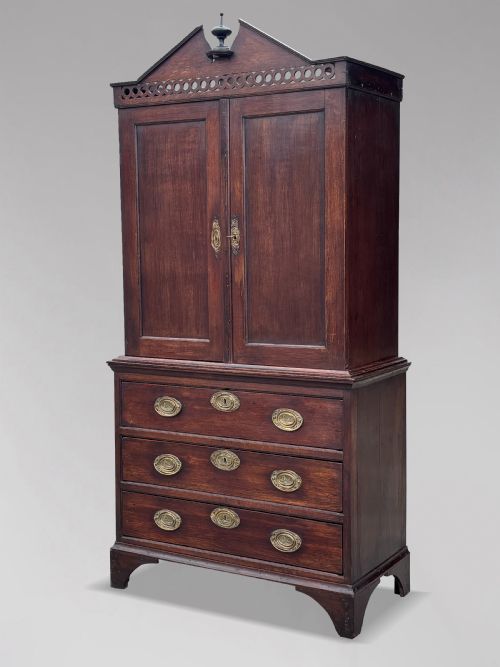


Georgian Oak Clothes Cupboard
A georgian oak clothes cupboard offers robust storage built from sturdy native timber, giving your home historic character and practical everyday utility.
Georgian Oak Clothes Cupboard
A georgian oak clothes cupboard bridges the gap between utilitarian storage and traditional regional cabinet-making, spanning forms such as livery cupboards, housekeeping presses, and low linen cupboards. These pieces predominantly date from the eighteenth and nineteenth centuries, reflecting domestic storage needs across English and Welsh rural workshops.
You will frequently meet two-stage press cupboards and hanging cupboards on this page, often bearing regional characteristics from areas like Cardiganshire. They serve to store linens, garments, and household supplies within substantial timber frames that anchor a room's interior.
How they were made
Cabinet-makers relied primarily on solid oak planks, sometimes enhanced with ebonised detailing, paint, or marquetry inlay to articulate panelled doors and cornices. Iron hinges and brass handles secure the heavy doors, while structural elements frequently incorporate secondary timbers like pine.
Construction techniques combine pegged mortise and tenon joints with panel-in-frame construction, allowing the dense timber to move naturally with seasonal humidity changes. Regional pieces display straightforward hand-planing and custom joinery characteristic of English and Welsh country workshops.
Listings include pieces featuring marquetry inlay, ebonised oak, and hand-painted finishes alongside plain timber.
What varies in quality
The sophistication of the joinery and the selection of the timber dictate where a piece sits in the hierarchy of quality. Finer examples display carefully matched grain patterns, subtle cross-banding, and well-proportioned cornices that elevate plain utility into considered design.
Proportion and originality also govern value, separating unaltered country pieces with their original brass and iron hardware from those heavily modified over centuries of domestic use. The crispness of carved details and the survival of early painted or golden finishes further distinguish superior specimens.
The Georgian Oak Clothes Cupboard Glossary
- Livery cupboard
- A traditional storage piece originally used for food or clothing, featuring ventilated doors or louvres in earlier iterations.
- Press cupboard
- A dual-section storage item with an upper cupboard or linen press and lower drawers or additional shelving.
- Cross-banded
- A decorative framing technique where veneer strips are applied perpendicularly to the grain of the primary panel.
- Welsh vernacular
- Regional furniture building styles originating from Welsh country workshops, typically marked by honest construction and local timber use.
Georgian Oak Clothes Cupboard: Frequently Asked Questions
What is a georgian oak clothes cupboard?
It is a heavy timber storage unit built during the eighteenth or early nineteenth century for garments and household linens. These pieces reflect the sturdy construction methods of regional English and Welsh cabinet-makers.
They combine hanging space, shelving, and drawers within substantial panelled frames designed to last generations.
How do I date an oak press cupboard?
Dating relies on observing construction methods, hardware types, and stylistic details such as cornices and panel thickness. Eighteenth-century examples often feature pegged joinery and hand-carved elements.
Nineteenth-century variants introduce machine-sawn components and different interior configurations while maintaining the traditional oak exterior.
Where were these cupboards made?
Many originate from rural English workshops and Welsh counties like Cardiganshire, where local oak was readily available. Regional cabinet-makers adapted standard forms to suit local domestic requirements.
This regional variation produces distinct proportions and decorative choices unique to specific geographic areas.
How should I care for historic oak?
Keep the timber away from direct heat sources and sudden humidity shifts to prevent warping and splitting. Apply natural beeswax sparingly to nourish the grain and maintain the surface sheen.
Avoid modern silicon-based polishes that can build up and dull the historic patina over time.