

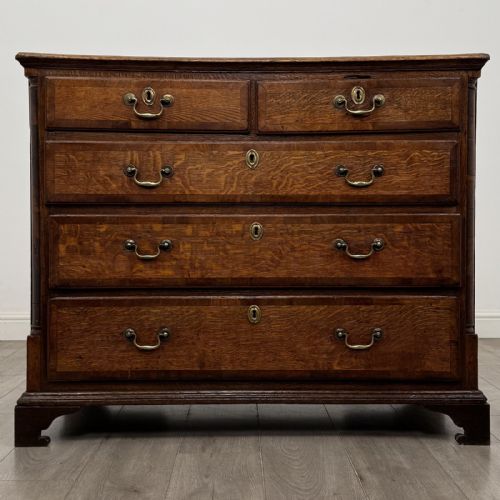
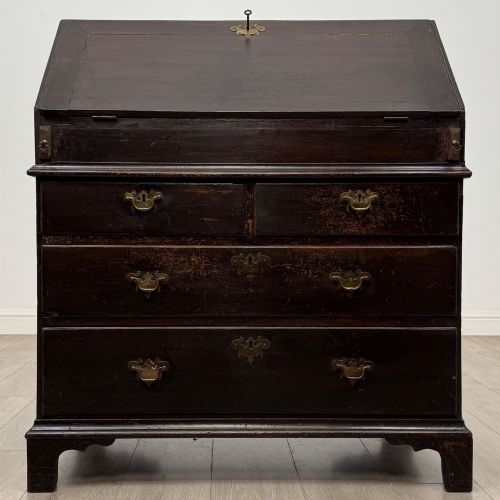
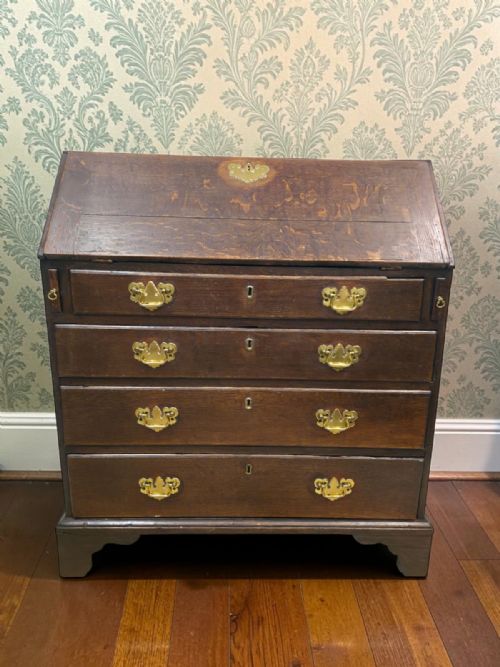
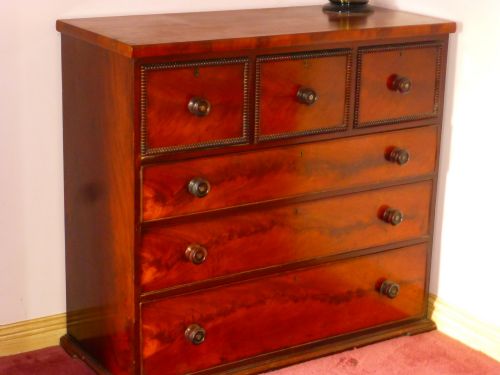
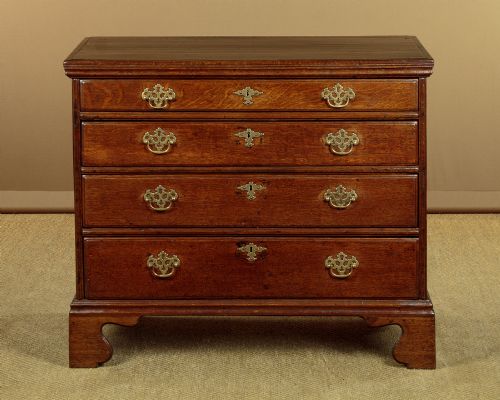

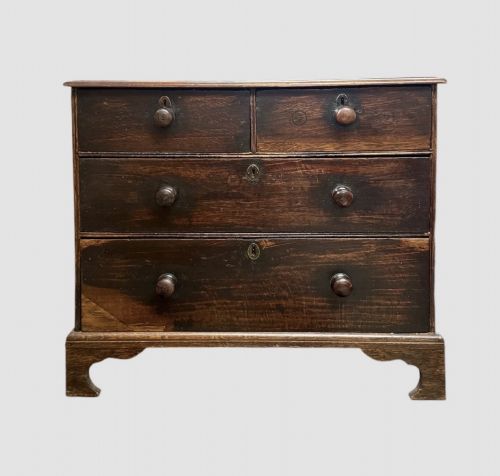

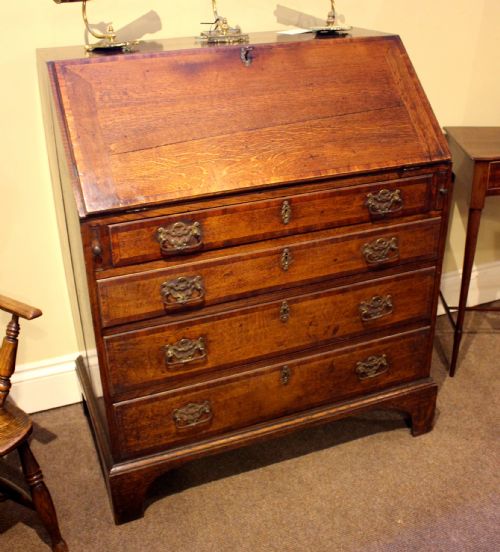
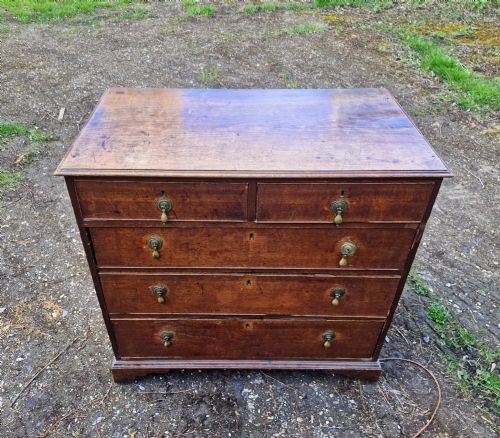


Georgian Oak Bureau Chest
A georgian oak bureau chest brings sturdy timber and a fitted writing compartment together in a practical domestic piece.
Georgian Oak Bureau Chest
The georgian oak bureau chest combines a drawer base with a fall front writing flap that conceals small compartments and pigeonholes. Buyers examining this page encounter pieces originating primarily from the eighteenth and early nineteenth centuries.
Many examples span related forms such as simple chests of drawers, writing desks, and taller bureau bookcases. Oak predominates as the primary timber, occasionally accompanied by secondary woods or walnut and mahogany elements.
Country pieces display straightforward joinery and simple surfaces, while formal urban versions incorporate refined mouldings and fitted interiors. Most items reflect the Georgian and Regency eras, alongside later Edwardian and reproduction interpretations.
Materials and construction methods
Cabinet makers built these pieces using solid oak planks, often framing drawer interiors in secondary timbers and lining compartments with smaller quarter-sawn boards. Brass handles, escutcheons, and hinges secure the moving parts and drop fronts.
Joinery relies on hand-cut dovetails for drawer construction and pegged mortise and tenon frames for structural integrity. Selected items feature wood veneer, wood inlay, or glass panels on associated bookcase upper sections.
Georgian Oak Bureau Chest Retail Price Guide 2026
Typical asking prices for georgian oak bureau chest among the pieces listed under this phrase on Sellingantiques today, from the lower quarter to the upper quarter. They describe what is for sale here now, not the wider market.
Current listings feature oak alongside mahogany, walnut, and pollard oak, spanning the Georgian, Regency, and Edwardian periods.
Distinctions in craftsmanship and condition
Quality rests on the selection of timber grain, the tightness of the dovetail joints, and the retention of original brass hardware. Pieces with thick, solid oak boards and intact interior fittings command higher regard than heavily restored examples.
Proportion and surface finish separate utilitarian country furniture from finer formal workshop output. Original backboards, undisturbed interior wells, and smooth drawer operation indicate superior preservation.
The Georgian Oak Bureau Chest Glossary
- Fall front
- A hinged writing flap that drops down to provide a horizontal desk surface. When closed, it conceals the interior pigeonholes and small drawers of a bureau.
- Bureau bookcase
- A dual-purpose tall furniture form uniting a writing bureau base with an upper glazed shelving cabinet. These pieces provide both desk space and enclosed storage for books.
- Dovetail
- An interlocking joint used at the corners of drawers, formed by interlocking wedge-shaped fingers. Hand-cut versions help distinguish older pieces from later machine-made furniture.
- Escutcheon
- A protective metal plate surrounding a keyhole. Brass examples on these pieces often assist in dating the hardware to specific periods.
- Pigeonhole
- A small, open compartment nestled inside the writing section of a bureau. These spaces organise letters and documents.
Georgian Oak Bureau Chest: Frequently Asked Questions
What is a bureau chest?
A bureau chest combines a chest of drawers base with an angled or fold-down writing flap at the front. Opening the flap reveals a collection of small drawers and partitions for correspondence.
This form served as a compact writing desk and storage unit in domestic interiors. It kept writing materials tidy while offering substantial drawer space below.
How do I date an oak bureau?
Dating relies on examining the construction methods, timber characteristics, and hardware styles. Hand-cut dovetails, pegged joints, and simple mouldings often point towards the eighteenth century.
Later nineteenth-century and Edwardian pieces tend to show machine assistance or different secondary woods. Comparing the interior drawer linings provides further clues to the age.
Where should I place it?
These pieces suit living rooms, studies, or bedrooms where floor space allows for the drop front to open fully. Ensure the placement avoids direct heat sources and strong sunlight to protect the timber.
Allow enough clearance in front of the unit to pull out the writing flap and sit comfortably. The flat top surface also accommodates lamps or small decorative objects.
How do I care for antique oak?
Maintain the timber by dusting regularly with a soft, dry cloth and avoiding silicone-based polishes. Occasional application of quality beeswax feeds the dry wood and preserves the finish.
Keep the room at a stable humidity level to prevent the oak planks from splitting or warping. Lift the piece rather than dragging it when moving rooms to protect the joints.