

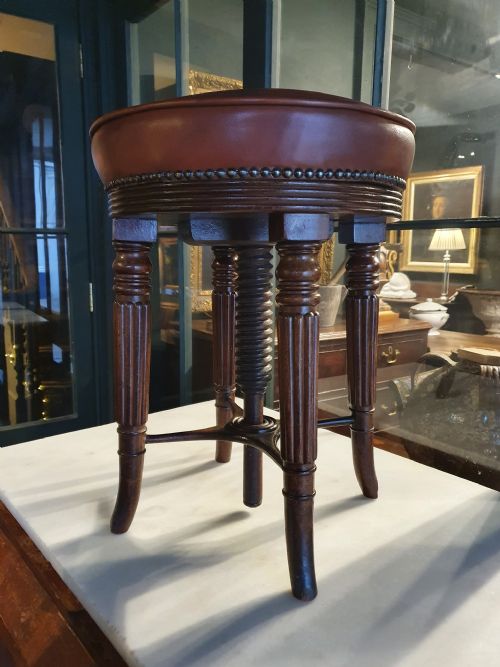
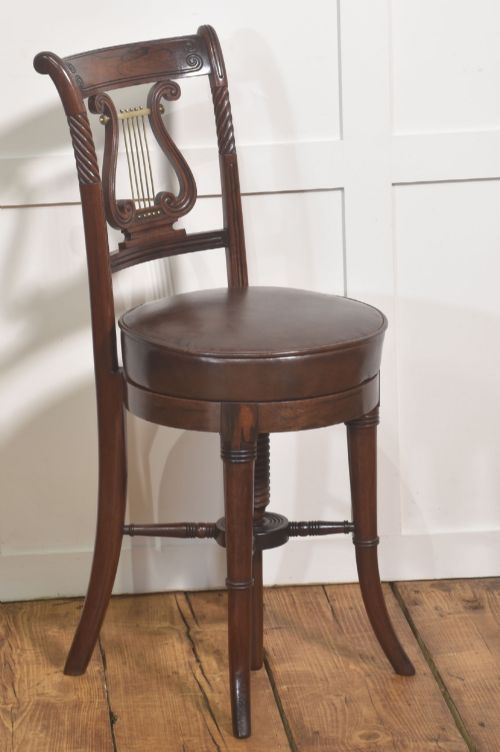


Georgian Music Stool
A georgian music stool offers a sturdy seat designed for the piano or dressing table, prized for its adjustable height and classic timber frame.
Georgian Music Stool
A georgian music stool brings practical seating to the piano or dressing table, often featuring a revolving top or height adjustment mechanism. You will frequently encounter examples from the Regency and nineteenth-century periods, alongside pieces executed in the Georgian style.
How they were made
Cabinet makers utilised dense timbers like mahogany, satinwood, and beech, frequently shaping them to achieve the clean lines associated with the period. Brass mounts and inlay provide structural detail and decorative contrast on finer examples.
Upholstery techniques varied from simple drop-in pads to complex sprung seats covered in fabric, leather, or velvet, designed to support the musician or dresser during long periods of use.
Georgian Music Stool Retail Price Guide 2026
Typical asking prices for georgian music stool among the pieces listed under this phrase on Sellingantiques today, from the lower quarter to the upper quarter. They describe what is for sale here now, not the wider market.
Some pianists discovered too late that an overly enthusiastic spin on a revolving stool unscrewed the top entirely.
What varies in quality
The sophistication of the turning and the crispness of the timber carving separate standard workshop output from exceptional cabinet work. Heavier gauge brass mechanisms and robust screw-action height adjusters indicate superior original construction.
The choice of primary timber and secondary framing woods dictates the structural integrity of the stool over centuries of adjustment and sitting. Selection of dense mahogany or figured satinwood points to a higher workshop tier.
Gillows
The Georgian Music Stool Glossary
- Regency
- A style spanning the early nineteenth century defined by classical restraint and influences from ancient Greece and Rome. This period produced many of the revolving and adjustable music seats seen today.
- Simulated rosewood
- A painted or stained finish applied to a lighter timber to imitate the rich grain and deep colour of genuine rosewood. Cabinet makers utilised this technique to achieve an expensive look at a lower cost.
- Revolving
- A top mechanism that turns on a central screw or spindle to alter the seating height for the player. This allowed musicians to find a comfortable posture at the keyboard.
- Chippendale manner
- A design influence derived from the pattern books of Thomas Chippendale, characterised by elaborate fretwork and sturdy proportions. Stools in this manner reflect mid-eighteenth-century aesthetic principles.
Georgian Music Stool: Frequently Asked Questions
Can I use a music stool at a modern piano?
These historical stools function well with modern pianos provided the height range suits the player. The revolving action allows for precise vertical adjustment to achieve a comfortable arm angle.
Keep in mind that vintage seats tend to be firmer than modern padded benches. Placing them in a music room or living space also offers a practical place to store sheet music or simply sit.
How do I care for the timber frame?
Maintain the mahogany, satinwood, or beech frame by dusting regularly with a soft, dry cloth. Avoid applying modern silicone polishes, which build up a film over the traditional wax or polish finish.
Keep the timber away from direct heat sources and strong sunlight to prevent the wood from drying out or splitting. An occasional application of a quality beeswax feed will nourish the grain.
How do I distinguish Regency from Victorian examples?
Regency pieces typically display cleaner classical lines, restrained brass inlay, and geometric reeding inspired by ancient forms. They date from the early nineteenth century and prioritise structural simplicity.
Victorian and later nineteenth-century interpretations often feature heavier proportions, bolder carving, and revivalist detailing such as William IV or Sheraton motifs. Examining the turning style and timber selection helps clarify the period of manufacture.