


Georgian Maritime Artwork
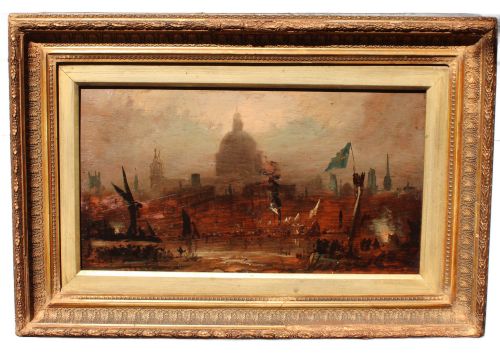
Georgian maritime artwork captures naval engagements, bustling harbours and coastal scenes in oil and watercolour from the eighteenth and nineteenth centuries.
Georgian Maritime Artwork
Georgian maritime artwork encompasses oil paintings, watercolours, prints, engravings and framed mirrors depicting ships, sea battles and coastal views. These pieces record naval history and coastal life from the 18th century through the Regency period and into the 19th century.
The version you are most likely to meet on this page is an oil painting on canvas showing warships, merchant vessels or harbour scenes. Works often focus on specific historic vessels, naval officers or notable maritime engagements.
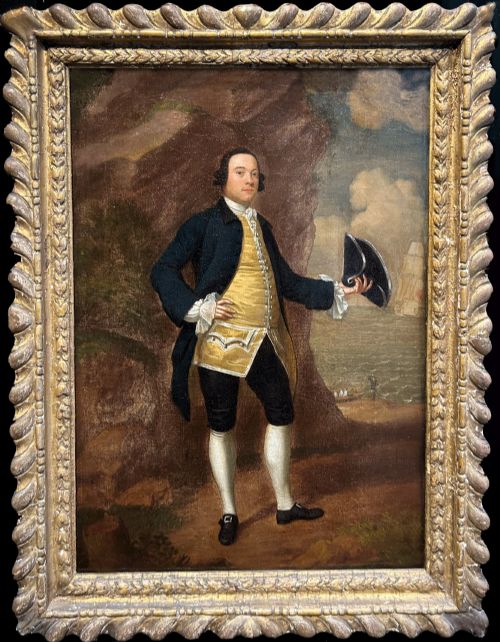
Portraits of commanders and studies of river processions sit alongside detailed depictions of galleons, frigates and fishing boats. Together they form a varied record of Britain's maritime past executed in period styles.
Materials and construction
Artists painted primarily with oil paint on canvas, or applied watercolours and inks to paper. Enamel plaques and reverse glass prints also appear, alongside aquatints and engravings.
Frames play a significant role, utilising wood, gesso and giltwood to house the canvas or paper securely. Some pieces incorporate maple framing or divided mirror sections.
Listings feature works spanning the 18th and 19th centuries, including Regency and Victorian periods, executed in oil on canvas, watercolour and giltwood.
Distinctions in quality
Quality rests on the precision of the vessel rigging, the handling of sea and sky, and the strength of attribution to known artists. Finer works display accurate technical knowledge of ship architecture and atmospheric weather conditions.
The framing contributes to the overall character, with period giltwood or maple surrounds enhancing the visual impact of the artwork. Condition of the canvas, paint surface and paper also distinguishes better-preserved examples.
Francis Hayman·John Simmons·George Morland·W J Huggins·Samuel Owen·Francis Holman·R I Barrow
The Georgian Maritime Artwork Glossary
- Aquatint
- A printmaking technique that produces tonal effects similar to watercolour washes. It was frequently used for nautical prints and coastal scenes.
- Giltwood
- Wood carved and coated with gold leaf or a gilt finish. This material is typical for period picture frames.
- Man-of-war
- A powerful warship or frigate belonging to a royal navy during the sail era. These vessels feature prominently in naval battle scenes.
- Reverse glass print
- An image applied to the back of a piece of glass to be viewed from the front. They often appear in combination with mirrors.
Georgian Maritime Artwork: Frequently Asked Questions
What subjects do these maritime artworks show?
The artworks depict naval battles, warships, merchant vessels, river processions and coastal landscapes. Subjects range from historic engagements to portraits of naval officers and privateers.
Scenes often capture specific locations such as Portsmouth harbour, the Thames or coastal forts, reflecting Britain's maritime connections during the Georgian period.
How should I display a framed oil painting?
Hang oil paintings away from direct sunlight and fluctuating heat sources to protect the canvas and paint layers. Adequate wall space allows giltwood or wood frames to sit comfortably.
Ensure the hanging fixings match the weight of the frame and canvas. Regular gentle dusting helps maintain the surface of the painting.
How do I distinguish an 18th-century piece from a 19th-century one?
Stylistic shifts and framing materials offer clues to the period of creation. 18th-century works often reflect earlier portrait conventions and ship designs, while Regency and 19th-century pieces incorporate Romantic influences.
Examining the canvas preparation, stretcher frames and backboards provides further indicators of age. Signatures, inscriptions and attributions also help date the work.
What is the difference between an oil painting and a watercolour?
Oil paintings use pigments bound in oil applied to stretched canvas or wooden panels, offering rich textures and deep colour layering. Watercolours use water-soluble pigments on paper, creating translucent and luminous effects.
Watercolours require glass protection to prevent moisture damage, whereas oil paintings on canvas remain exposed to the air.