

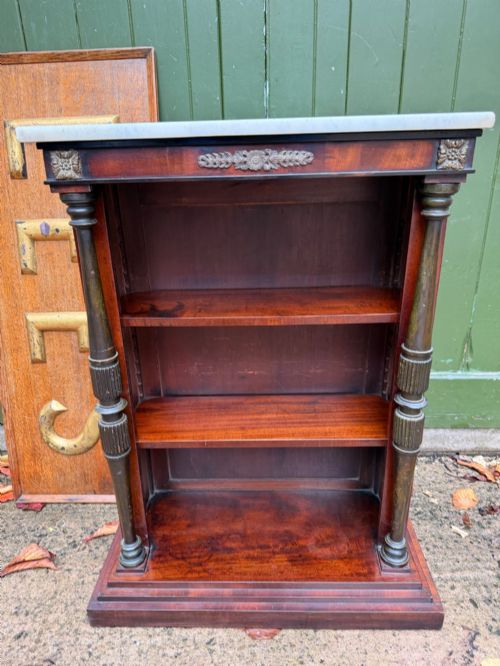
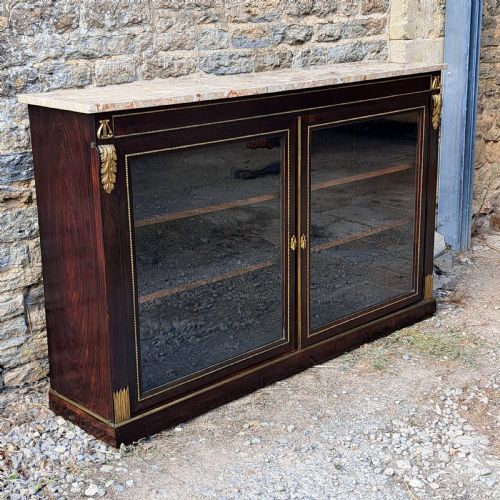


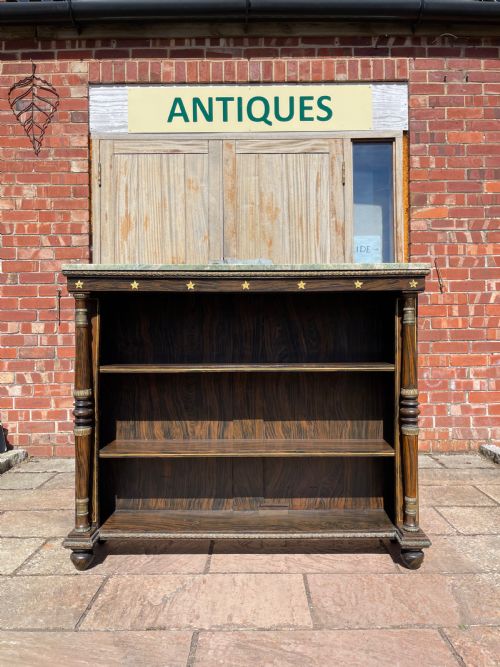
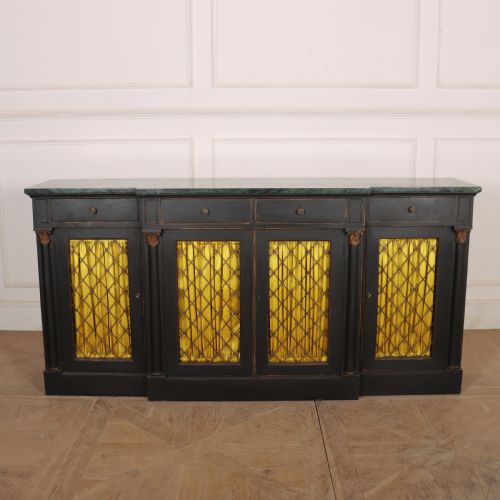

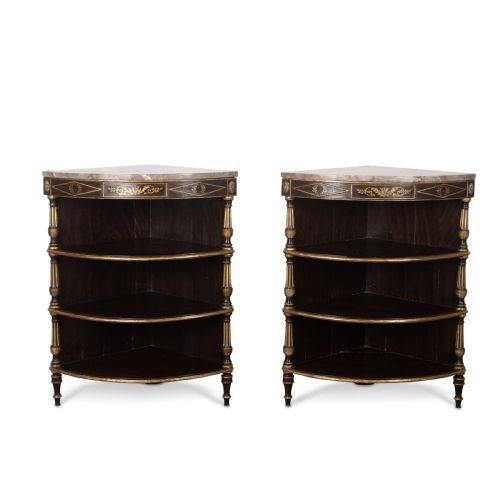

Georgian Marble Top Cabinet
A georgian marble top cabinet brings classical stone and fine timber together in a room.
Georgian Marble Top Cabinet
A georgian marble top cabinet combines fitted stone slabs with cabinetwork in mahogany, rosewood, or painted finishes. Buyers searching for a georgian marble top cabinet typically encounter side cabinets, bookcases, and corner pieces originating from the nineteenth century.
The forms range from breakfront designs and demi-lune shapes to paired cabinets and open bookcases. Regency examples frequently incorporate classical detailing alongside native and exotic timbers.
Makers drew on Louis sixteenth style, French empire, and neoclassical influences to shape these pieces. Simulated paint finishes and fiddle back mahogany appear alongside standard cabinet woods.
Materials and construction
Makers constructed these cabinets using solid and veneered mahogany, rosewood, and painted wood, mounting heavy marble slabs to the upper surfaces. Brass mounts, gilt details, and leather elements completed the decorative scheme.
Glazed doors, silk linings, and brass grilles appear on bookcase and cabinet interiors. Joinery relied on traditional carcase construction paired with flame mahogany veneers and parcel gilt work.
Georgian Marble Top Cabinet Retail Price Guide 2026
Typical asking prices for georgian marble top cabinet among the pieces listed under this phrase on Sellingantiques today, from the lower quarter to the upper quarter. They describe what is for sale here now, not the wider market.
Current listings feature nineteenth-century pieces in rosewood, mahogany, and painted wood with marble and brass elements.
Judging quality in design and execution
Quality rests in the selection of timbers like flame mahogany or fiddle back veneers and the precision of the stone cutting. Finer pieces demonstrate careful matching of grain patterns across doors and drawer fronts.
The integration of brass mounts, gilt work, and auxiliary materials distinguishes standard cabinetwork from exceptional execution. Proportions and the crispness of neoclassical or French empire carving drive the standing of a piece.
The Georgian Marble Top Cabinet Glossary
- Breakfront
- A piece of furniture where the central section projects forward from the flanking sides. This layout creates depth and visual rhythm across large bookcases and dressers.
- Demi-lune
- A half-moon shape used for table and cabinet tops. This curved profile fits snugly against walls in smaller rooms.
- Parcel gilt
- Partially gilded woodwork where gold leaf highlights specific carved details or mouldings. It contrasts sharply against dark woods like rosewood and mahogany.
- Fiddle back
- A figure in mahogany timber showing rippled grain patterns resembling the back of a violin. Cabinetmakers prized this figure for prominent surfaces.
Georgian Marble Top Cabinet: Frequently Asked Questions
What rooms suit a marble top cabinet?
These cabinets suit drawing rooms, dining spaces, and hallways where a durable stone surface withstands daily use.
The enclosed shelving also provides practical storage for books, tableware, or display collections.
How do I identify a Regency period piece?
Regency pieces often display classical neoclassical motifs, brass inlay, and rosewood veneers inspired by French empire design.
Proportions tend to be architectural, referencing ancient Greek and Roman forms.
Are marble top cabinets purely decorative?
While the stone top provides a decorative finish, the cabinets offer functional shelving and enclosed storage.
Bookcases, sideboards, and commodes combine display space with practical utility.
What woods were used in these cabinets?
Mahogany and rosewood dominate the construction, often enhanced by flame veneers and fiddle back figuring.
Some examples feature painted finishes or simulated wood grain.