
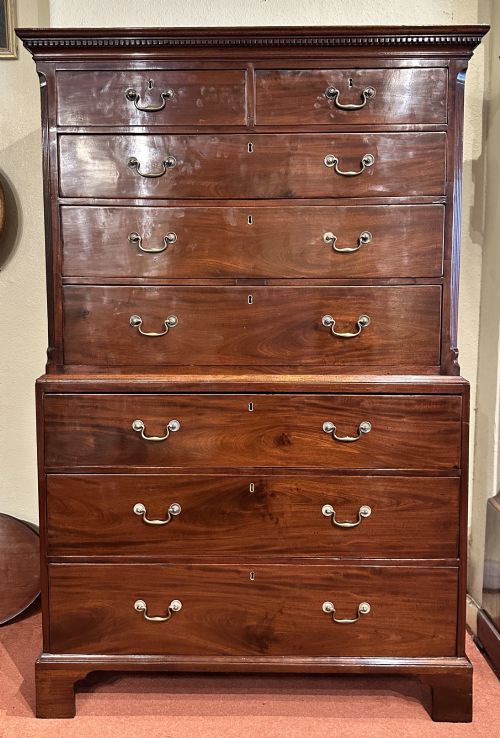
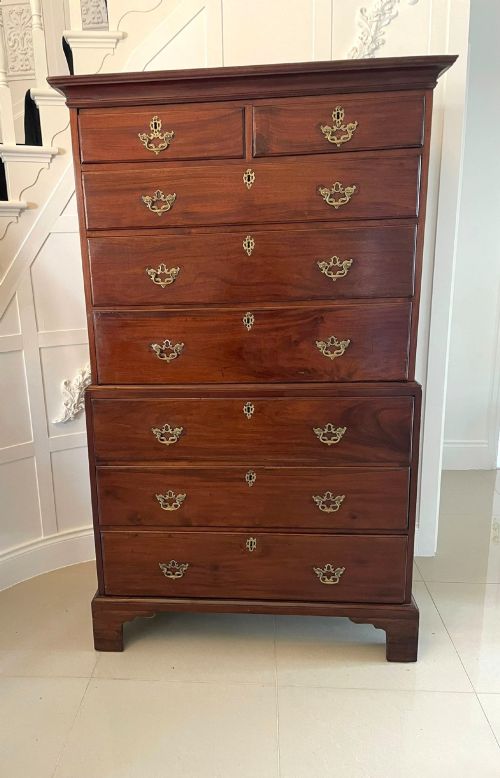
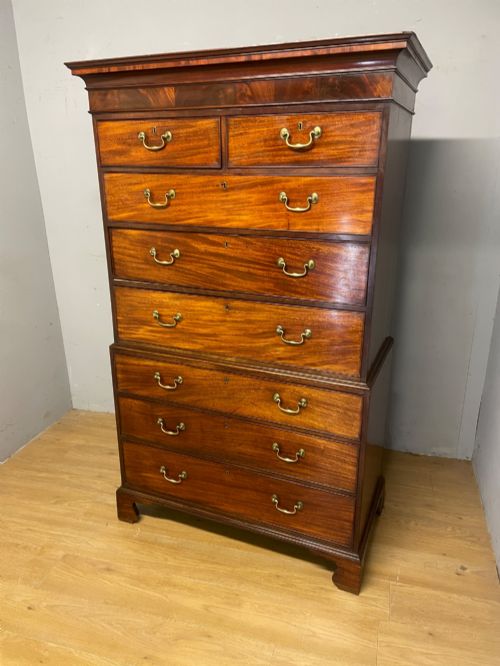
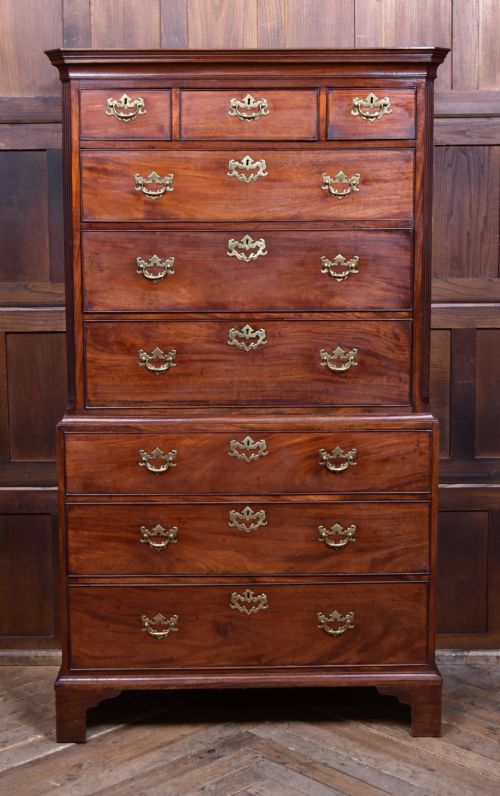

Georgian Mahogany Tall Chest
A georgian mahogany tall chest provides commanding vertical storage while displaying the rich grain and deep colour prized in period furniture.
Georgian Mahogany Tall Chest
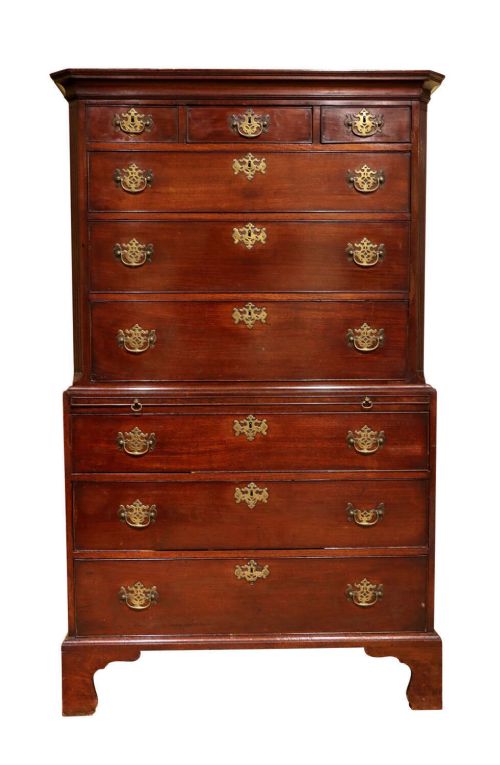
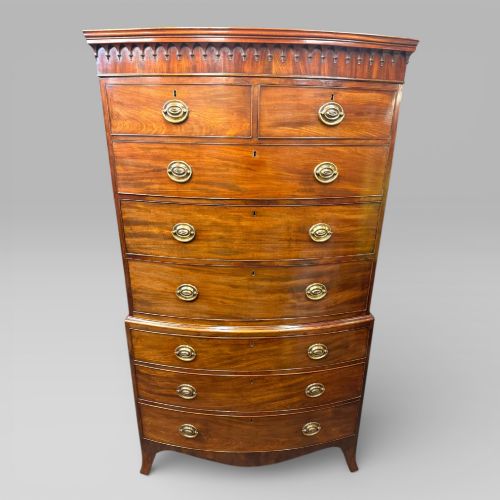
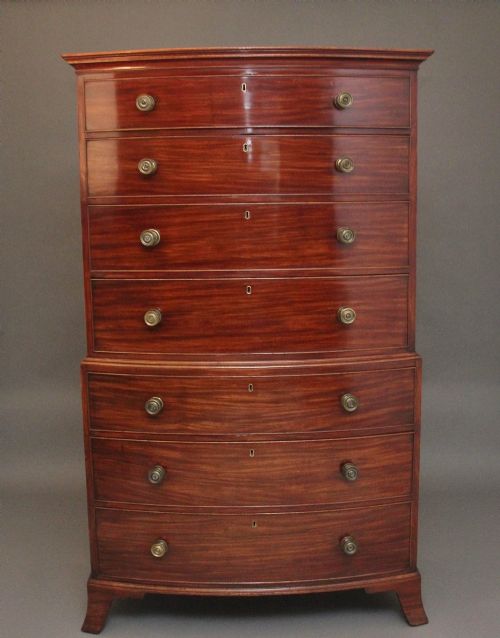
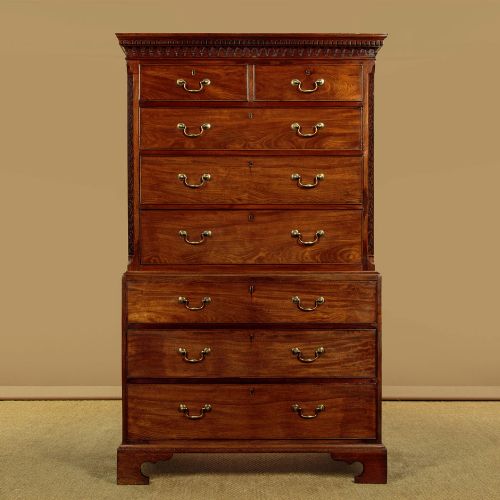
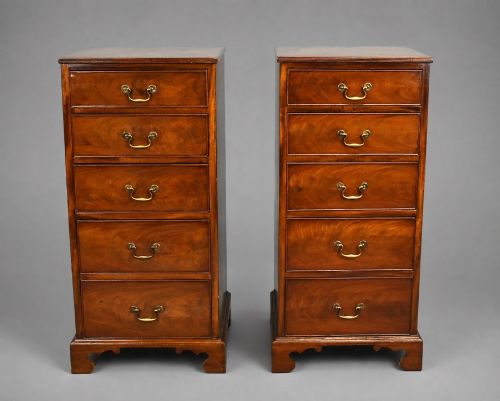
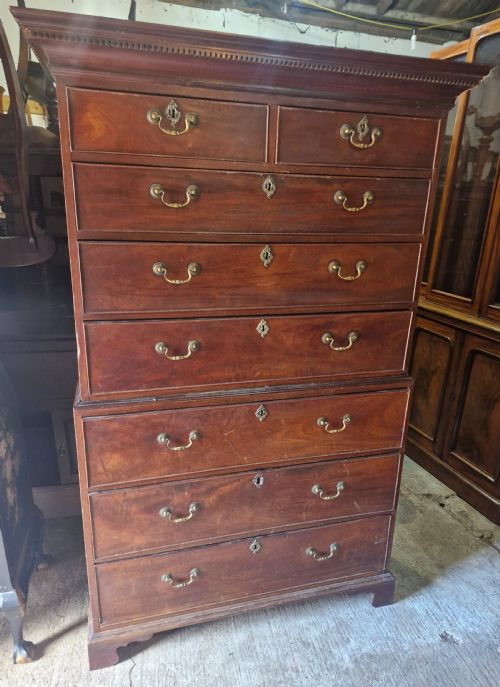
A georgian mahogany tall chest stands as a significant form of domestic storage, historically designed to maximise floor space by building upwards rather than outwards. These pieces include towering chest on chest designs, also known as tallboys, which stack one case of drawers directly upon another.
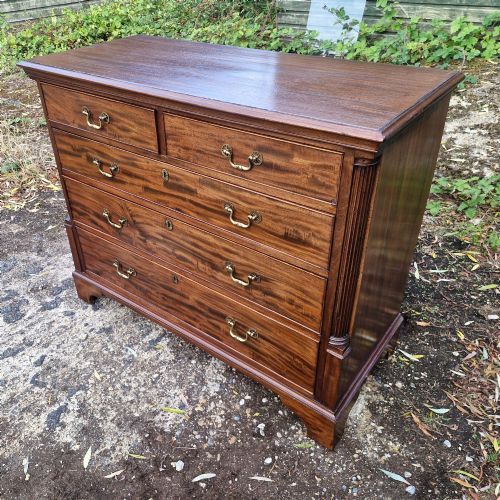
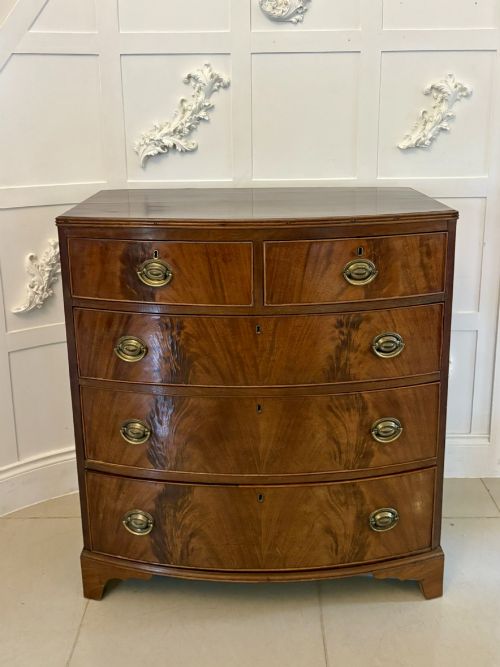
The versions most commonly met on this page date from the eighteenth and nineteenth centuries, alongside later revival pieces from the twentieth century. Forms range from straight fronts to bow fronts and serpentine profiles, occasionally incorporating brushing slides or secretaire drawers.
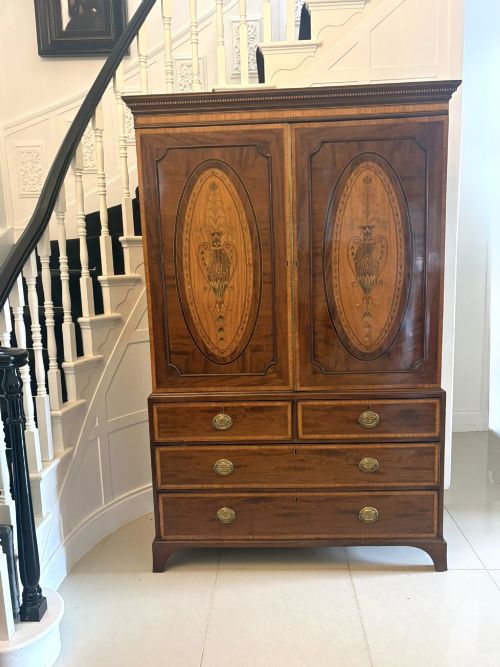
Origins stretch across English workshops, with occasional Scottish and Irish examples appearing in the record. Collectors encounter variations spanning plain timber carcasses to pieces enriched with satinwood inlay and original brass hardware.
Evaluating quality and proportion
Quality separates pieces by the crispness of their mouldings, the figuration of the mahogany veneer, and the retention of original brasses and surface patination. Superior examples display thoughtful proportions where the upper and lower sections balance harmoniously.
The integrity of the timber and the smoothness of the drawer action indicate fine workshop execution. Unaltered surfaces with deep, warm wax finishes command greater appreciation than heavily restored or stripped alternatives.
Some tall chests require a ladder to reach the top drawer unless you happen to possess Georgian-era vertical ambitions.
Thomas Chippendale·Gillows
The Georgian Mahogany Tall Chest Glossary
- Tallboy
- A tall chest of drawers consisting of two sections, where a larger base supports a slightly narrower upper chest. This form originated in the late seventeenth century and gained immense popularity throughout the Georgian period.
- Chest on chest
- An alternative term for a tallboy, describing the specific architectural construction of one chest stacked directly upon another. These pieces often feature a cornice top that may be plain, dentilled or broken-scrolled.
- Brushing slide
- A pull-out wooden shelf integrated between drawer tiers, historically used as a writing surface or for brushing clothes. It slides flush into the frame when not in use.
- Secretaire drawer
- A top drawer fitted with a drop-front that opens to reveal small pigeonholes and small drawers for writing letters. This clever concealment combines a desk with standard drawer storage.
- Flame mahogany
- A veneer cut from timber where the grain creates a distinctive flickering, flame-like pattern. Cabinetmakers reserved this striking material for primary surfaces like drawer fronts.
Georgian Mahogany Tall Chest: Frequently Asked Questions
What is the difference between a tallboy and a chest on chest?
The terms are generally used interchangeably to describe a two-part vertical storage chest.
Historical records and cabinetmaker terminology treat both names as references to the same stacked form.
How do I use a brushing slide?
The slide pulls out smoothly from the upper section of the furniture.
It provides a convenient temporary surface for folding garments or writing correspondence without needing a separate table.
How do I distinguish eighteenth-century pieces from later revivals?
Examination of the secondary woods, hand-cut dovetails, and timber shrinkage patterns reveals the age of the construction.
Twentieth-century revival pieces often display machine-made elements and different internal construction methods despite styling themselves after earlier eras.
Where should I place a tall chest in my home?
These vertical chests suit bedrooms, hallways or studies where floor space is limited.
Their substantial height draws the eye upward while offering deep capacity for linens and garments.