

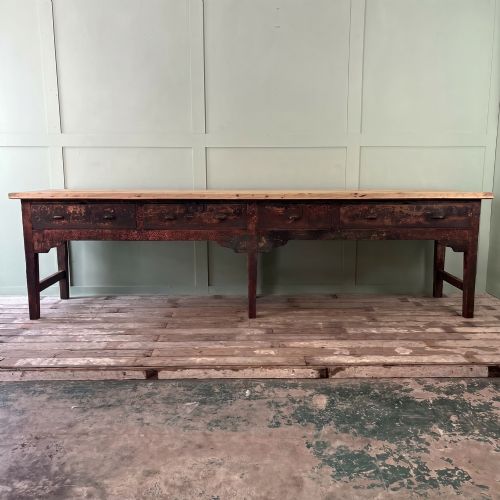


Georgian Long Bench
A georgian long bench is a robust wooden seating form built for long halls and grand rooms, prized for architectural presence.
Georgian Long Bench
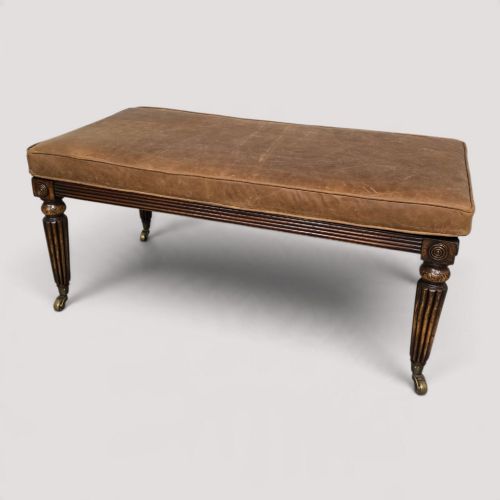
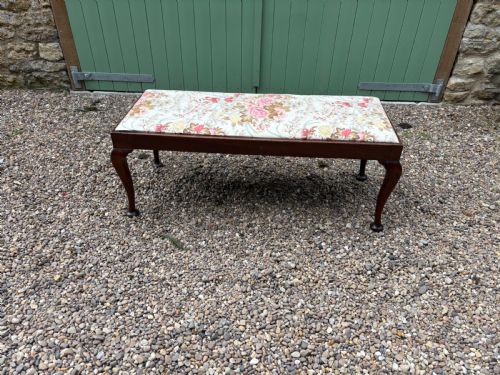
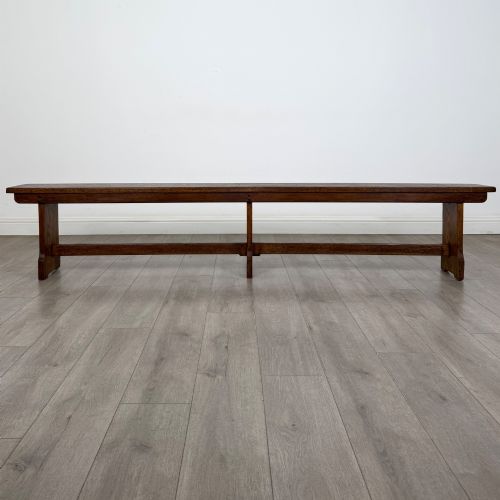
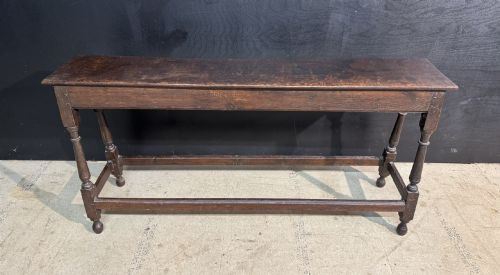
The georgian long bench encompasses substantial seating forms designed in oak, mahogany, and pine across the eighteenth and nineteenth centuries. Buyers frequently encounter vernacular oak tavern benches alongside refined mahogany window seats and hall benches bearing stylistic cues from the George III and Regency periods.
These items function equally well as window seats, long footstools, or narrow hallway furniture. Surviving examples range from plain country joint stools to grand upholstered pieces covered in leather, wool, velvet, or kilim.
Makers often drew upon Adam and neoclassical design idioms, producing elongated forms that bridged the gap between domestic utility and formal reception spaces. The pieces appearing on this page reflect this broad domestic and public heritage.
Materials and construction
Joiners relied heavily on native hardwoods like oak and pine for country vernacular furniture, utilising traditional pegged joinery to ensure structural rigidity. Mahogany emerged as the preferred timber for formal urban seating, allowing craftsmen to carve delicate lines and decorative details.
Upholstered variants incorporate traditional stuffing materials beneath coverings of wool, velvet, leather, or tweed, secured frequently with brass-studded detailing. Frames display varying degrees of refinement, from simple turned legs to sophisticated fluted supports reminiscent of Gillows.
Georgian Long Bench Retail Price Guide 2026
Typical asking prices for georgian long bench among the pieces listed under this phrase on Sellingantiques today, from the lower quarter to the upper quarter. They describe what is for sale here now, not the wider market.
Several substantial oak benches on record carried institutional provenance straight from Bishopthorpe Palace in York.
Quality and proportion
The distinction between ordinary and exceptional examples rests upon the harmony of proportions and the integrity of the timber. Well-drawn frames with confident lines and crisp carving sit at the apex of the market, while utilitarian variants prioritise sturdy function over visual elegance.
Surface treatment and timber selection dictate long-term desirability, with dense, deeply patinated hardwoods commanding greater appreciation. Original upholstery materials or sympathetic reupholstery preserve the historical character of the seat.
The Georgian Long Bench Glossary
- Joint stool
- A sturdy wooden seat constructed with mortise and tenon joints rather than turned legs. These pieces represent early domestic seating before upholstered forms gained widespread popularity.
- Window seat
- An elongated stool designed specifically to fit within a window recess. They often share stylistic details with formal chairs of the same period.
- Hall bench
- A narrow seating form intended for entrance halls and passageways. These pieces frequently utilise robust timbers to withstand heavy daily use.
- Kilim
- A flat-woven textile used traditionally as a floor covering or wall hanging. Occasionally, these rugs are repurposed as durable and decorative upholstery for footstools.
Georgian Long Bench: Frequently Asked Questions
Where were long benches used?
These long seating forms were traditionally positioned in grand hallways, tavern taprooms, and large reception rooms to accommodate multiple sitters at once.
They also served domestic purposes in long galleries and beside fireplaces where flexible seating arrangements were required.
How do I clean wooden frames?
Maintenance requires only a soft cloth and occasional application of traditional beeswax to nourish the timber.
Harsh chemical cleaners strip the historic patina and should be avoided entirely on antique surfaces.
Are these benches comfortable?
Comfort varies significantly depending on whether the bench is an unyielding wooden board or an upholstered model.
Upholstered variants featuring wool, leather, or tweed provide softer seating suitable for extended periods.
How do I distinguish oak from mahogany?
Oak exhibits a coarse, open grain with visible medullary rays, common in earlier country pieces.
Mahogany displays a smoother, denser grain with a reddish-brown tone, favoured in formal urban furniture.