


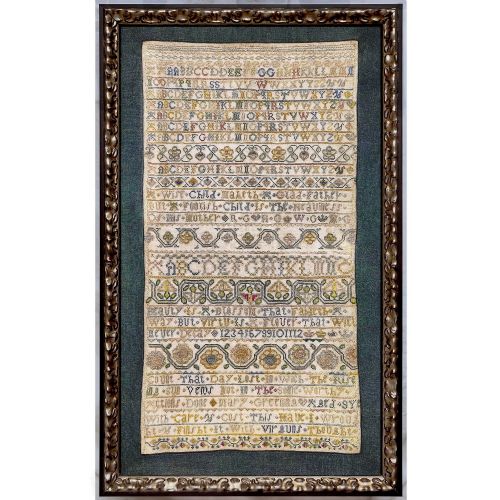


Georgian Linen Sampler
A georgian linen sampler is a needlework textile worked by hand, offering a glimpse into domestic education and needle skills from past centuries.
Georgian Linen Sampler
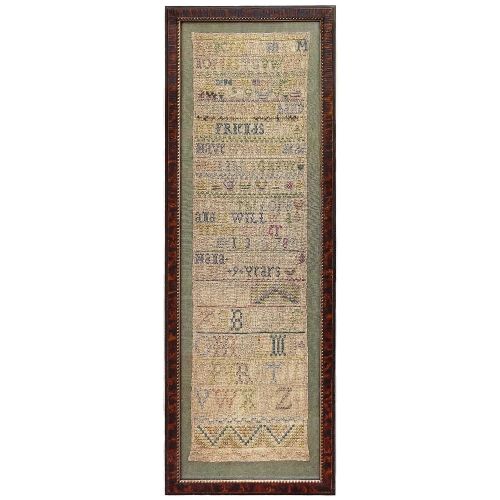
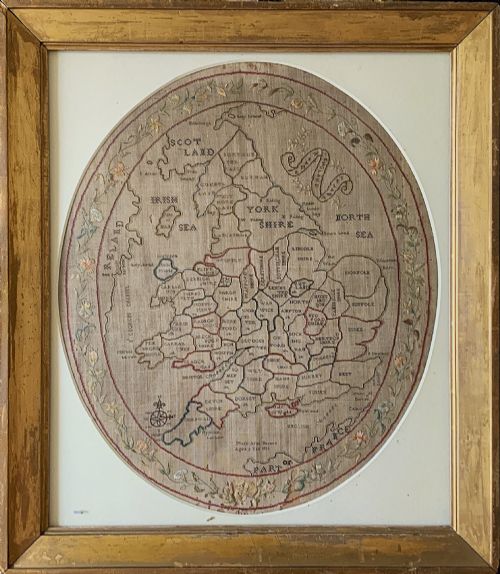
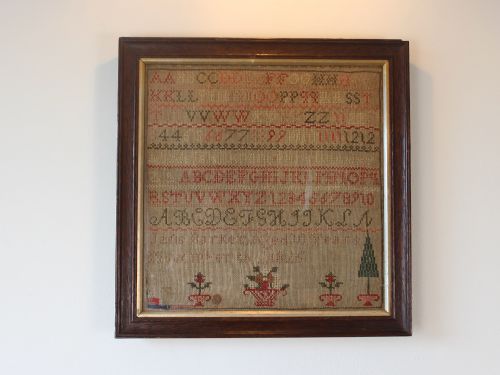
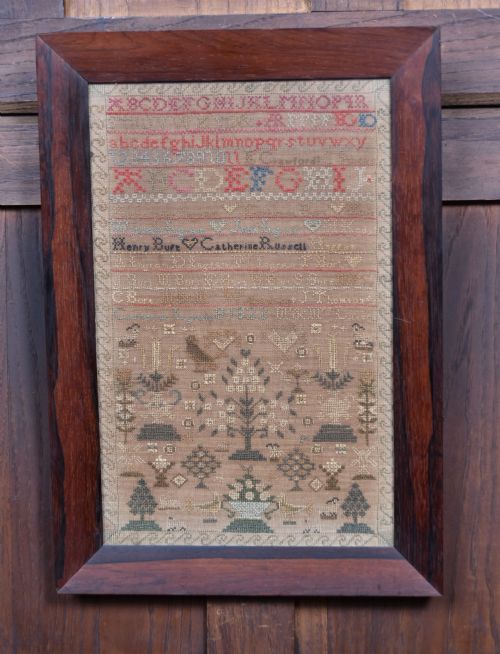
When you search for a georgian linen sampler, you encounter historical needlework panels created primarily by girls and young women to demonstrate proficiency in various stitches, alphabets, and numbers. These textiles often take the form of alphabet samplers, verse panels, religious texts such as the Lord's Prayer or Commandments, and detailed map samplers.
The pieces appearing on this page span several decades and periods, predominantly originating from the Georgian era through to the 19th century and Victorian times, alongside earlier examples from the late 17th and early 18th centuries. Makers recorded on the textiles range from young children like nine-year-old Mary Banion to older pupils such as Mary Pinfold and Susan Mary Williams.
Most examples survive mounted behind glass within wooden frames, occasionally in gilt wood, preserving the delicate embroidery from atmospheric damage. Forms include framed wall art, textile wall art, and embroidered panels that reflect regional British needlework traditions, including Scottish schools.
How They Were Made
Makers worked primarily on a base of plain linen cloth, utilising threads of silk and silk floss to stitch alphabets, numerals, borders, and pictorial motifs. The ground fabric provides a stable grid structure that allowed meticulous counting of threads for precise geometric and figurative designs.
Needlework techniques encompassed various embroidery stitches, needlepoint, and tapestry work executed by hand. Stitchers incorporated silk thread alongside standard thread to create varied textures and visual depth within maps, lettering, and pictorial scenes.
Georgian Linen Sampler Retail Price Guide 2026
Typical asking prices for georgian linen sampler among the pieces listed under this phrase on Sellingantiques today, from the lower quarter to the upper quarter. They describe what is for sale here now, not the wider market.
Young makers proudly stitched their exact ages alongside their names, immortalising twelve-year-old needleworkers in silk thread forever.
What Varies In Quality
Quality in a georgian linen sampler rests upon the technical execution of the stitches, the complexity of the design, and the clarity of the lettering or cartography. Map samplers and detailed pictorial compositions demand greater skill than basic alphabet rows, distinguishing accomplished schoolgirl needlework from simpler practice pieces.
The preservation of the materials also influences the character of the piece, particularly the retention of colour in the silk threads and the intact survival of the linen ground. Framing choices, such as period wood or gilt wood surrounds with glass protection, contribute to the overall preservation and presentation of the textile.
The Georgian Linen Sampler Glossary
- Band sampler
- An early form of sampler featuring horizontal bands of diverse decorative patterns and stitch examples. These narrow strips showcase the maker's repertoire of stitches before pictorial designs became common.
- Alphabet sampler
- A textile panel dedicated primarily to rows of letters in upper and lower case, often accompanied by numerals. These were essential exercises for young girls learning literacy alongside needle skills.
- Map sampler
- An embroidered geographical representation, frequently depicting England and Wales with county boundaries and town names. These combined geography lessons with advanced needlework proficiency.
- Needlepoint
- A form of canvas or linen work where yarn or thread is stitched through the ground fabric to cover the foundation entirely. It creates a dense, durable surface suitable for pictorial and cartographic details.
- Silk floss
- An untwisted or lightly twisted silk thread used for embroidery to achieve a smooth, glossy finish. It reflects light differently than standard spun thread, adding luminosity to specific motifs.
Georgian Linen Sampler: Frequently Asked Questions
What is a georgian linen sampler?
A georgian linen sampler is a piece of hand-worked textile art created by girls and young women during the 18th and early 19th centuries. They served as proof of a maker's domestic accomplishments, education, and skill with the needle.
These textiles frequently feature alphabets, religious verses, moral teachings, and maps worked in silk thread upon a woven linen ground. Surviving examples offer direct documentation of individual makers, often recording names and ages.
Who made these needlework pieces?
The majority of these samplers were stitched by young girls, often while attending schools or under private instruction at home. Inscriptions on the textiles frequently record the maker's name, age, and occasionally the specific institution or date.
Examples range from the work of young children, such as nine-year-olds, to teenagers completing advanced educational pieces. School establishments and domestic settings provided the environment for these needlework exercises.
How were samplers used historically?
Historically, samplers functioned primarily as educational exercises and test pieces for girls learning the domestic arts. They recorded a repertoire of stitches, lettering styles, and motifs that the maker could reference in later household sewing.
Once completed, many of these textile panels were framed and displayed in domestic interiors as evidence of a young woman's accomplishments. Religious texts and maps also served to reinforce moral instruction and geographical knowledge within the home.
How should I display a textile sampler?
Samplers require protection from direct sunlight and excessive moisture to prevent the linen ground from weakening and the silk threads from fading. Keeping them behind glass within a secure frame helps shield the delicate fibres from atmospheric dust and handling.
Displaying them on interior walls away from direct heat sources ensures the longevity of both the fabric and any historic wood or gilt frames. Environmental stability remains key to preserving these fragile historic textiles.