

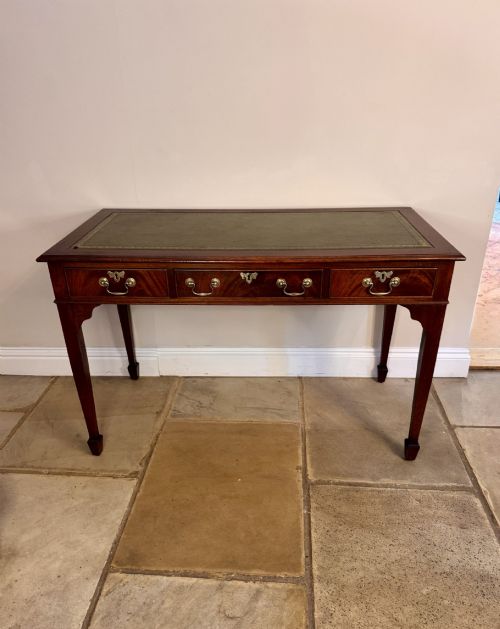
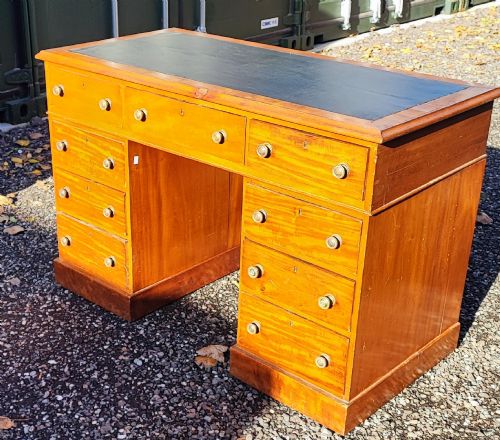
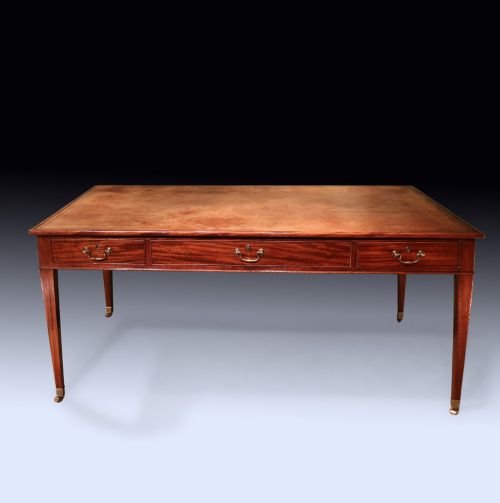
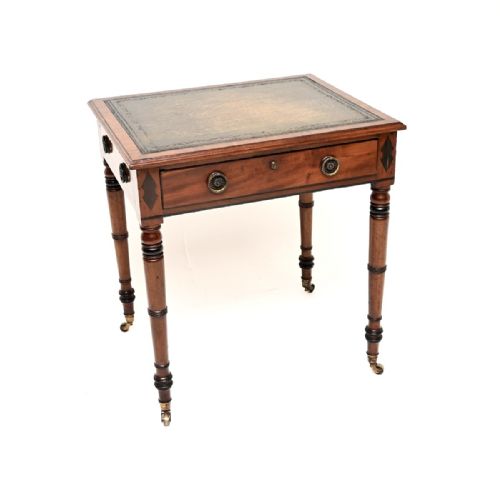




Georgian Leather Inset Desk
A georgian leather inset desk brings functional grace to a room, offering a smooth writing surface bordered by rich leather.
Georgian Leather Inset Desk
A georgian leather inset desk combines a sturdy wooden frame with a contrasting writing surface set into the top. These pieces serve primarily as writing tables, library tables, and pedestal desks designed for daily study or correspondence.
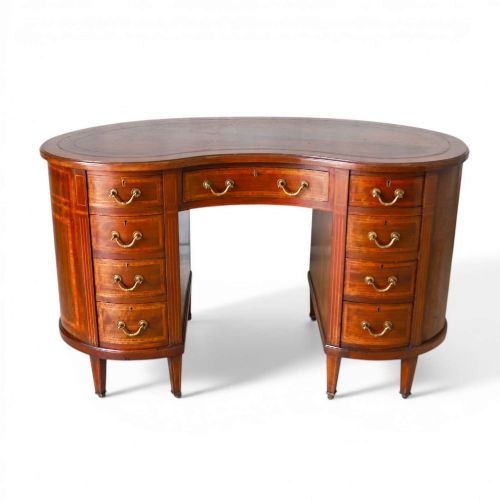
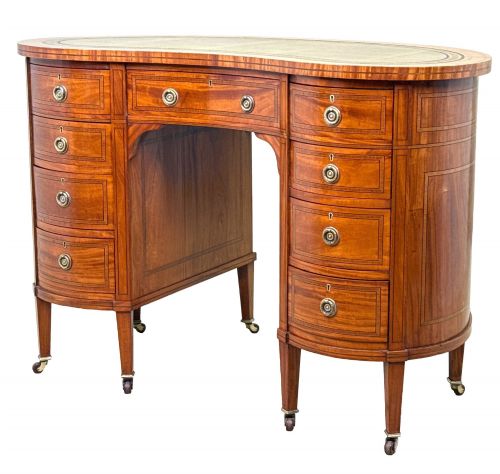
Most examples found on this page date from the eighteenth and nineteenth centuries, spanning actual Georgian periods through to later revival styles. Forms range from twin pedestal kneehole desks to oval drum tables and kidney shaped writing surfaces.
Makers utilised woods such as mahogany, oak, and walnut, often embellished with satinwood inlay or brass details. The integration of leather provides a durable and tactile writing plane that defines the character of each desk.
Materials and construction
Cabinet makers constructed the foundational carcase from dense hardwoods like mahogany and oak, ensuring structural stability for daily use. Drawer linings and secondary timbers often reveal the traditional joinery methods of the period.
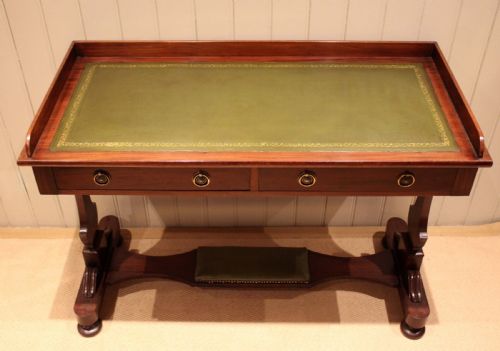
The writing surface is inset with treated leather, which is frequently tooled with gold leaf borders around the perimeter. Brass handles, key escutcheons, and castors complete the construction, combining utility with decorative finish.
Georgian Leather Inset Desk Retail Price Guide 2026
Typical asking prices for georgian leather inset desk among the pieces listed under this phrase on Sellingantiques today, from the lower quarter to the upper quarter. They describe what is for sale here now, not the wider market.
The furniture forms include twin pedestal kneehole desks, oval drum tables, kidney shaped desks, and library tables.
Assessing quality and craftsmanship
Quality rests in the selection of timber, visible in the grain of figured walnut and curl mahogany surfaces. Finer desks display careful matching of veneers and restrained inlay work that enhances the overall proportion.
Structural integrity and the retention of original brass hardware and leather inserts distinguish superior pieces. The smoothness of drawer operation and the crispness of carved details reflect the skill of the original workshop.
The Georgian Leather Inset Desk Glossary
- Leather inset
- A writing surface formed by embedding a panel of treated leather into a recessed wooden top. This provides a soft plane for penwork while protecting the timber underneath.
- Pedestal desk
- A form comprising two banks of drawers supporting a top, often configured as a kneehole desk. These offer substantial storage capacity and a formal presence.
- Drum table
- A circular table with a deep frieze containing drawers, revolving on a central pillar with spreading feet. They provide all-round access and a distinctive silhouette.
- Partners desk
- A large double-sided desk designed for two people to work opposite each other, featuring drawers on both faces. These frequently incorporate numerous small drawers and cupboards.
- Satinwood inlay
- A decorative technique using contrasting lighter wood veneers to create geometric or floral patterns within the mahogany carcase. This adds brightness and visual complexity to the piece.
Georgian Leather Inset Desk: Frequently Asked Questions
How do I care for the leather top?
Clean the leather gently with a dry or slightly damp cloth, avoiding harsh chemical cleaners that strip the finish. Regular application of a suitable leather dressing helps maintain flexibility and prevents drying.
Keep the desk away from direct sunlight and heat sources to protect both the leather insert and the underlying timber from warping or fading.
What is the difference between a writing table and a pedestal desk?
A writing table typically stands on four legs with one or more drawers beneath the top, offering an open and lighter appearance. They suit smaller spaces and occasional correspondence.
A pedestal desk rests on two banks of drawers or cupboards, providing a heavier silhouette and extensive built-in storage. These are designed for continuous administrative work.
Are these desks suitable for daily computer use?
Many people use these desks for modern work by placing laptops and accessories on the leather surface. The generous proportions of writing tables and pedestal desks accommodate contemporary equipment.
Care should be taken with heavy or hot items on older leather surfaces to avoid marking the material or the timber beneath.
How can I distinguish an original eighteenth-century desk from a later revival piece?
Examination of construction methods, timber shrinkage, and secondary woods reveals clues about age. Eighteenth-century pieces exhibit hand-cut dovetails and timber characteristics consistent with period workshops.
Revival pieces from later periods often show uniform machine-cut elements and different internal construction details while mimicking earlier stylistic forms.