

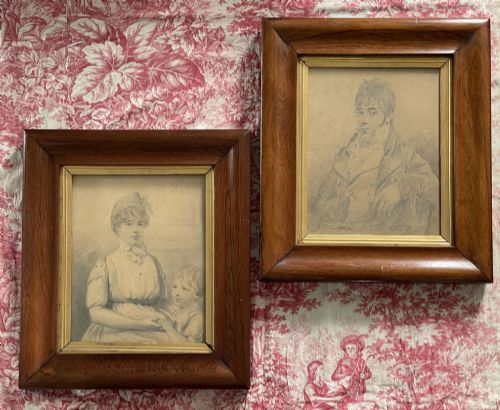

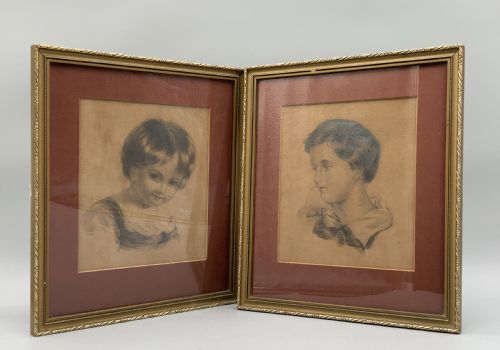


Georgian Graphite Portrait Drawing
Georgian graphite portrait drawing brings immediate character into a room through delicate monochrome lines and skilled shading.
Georgian Graphite Portrait Drawing
A georgian graphite portrait drawing captures the likeness of sitters from the eighteenth and nineteenth centuries using simple lead or plumbago on paper. These works range from intimate miniature studies to larger framed sheets depicting couples, children, and notable historical figures.
The pieces on this page span the georgian, regency, and victorian periods, reflecting changing fashions in portraiture over time. Framed art forms dominate the selection, often preserved behind glass within wooden or gilded frames.
How they were made
Artists relied primarily on graphite and pencil on paper to build form through fine hatching and tonal shading. Plumbago, an early form of black lead, was frequently utilised for highly finished miniature works.
Framing often involved mahogany, gilt, and gold leaf on wood to protect the delicate works on paper. Glazing with glass was essential to shield the graphite and watercolour elements from atmospheric damage.
Georgian Graphite Portrait Drawing Retail Price Guide 2026
Typical asking prices for georgian graphite portrait drawing among the pieces listed under this phrase on Sellingantiques today, from the lower quarter to the upper quarter. They describe what is for sale here now, not the wider market.
Look closely for the stray thumbprint of an eighteenth-century artist left behind in the graphite dust.
What varies in quality
Quality rests upon the precision of the draughtsmanship and the psychological depth captured in the sitter's expression. Masterful handling of light and shadow distinguishes accomplished portrait drawings from routine sketches.
The integrity of the original framing, including period wood and gold leaf components, contributes significantly to the overall standing of the piece. Attribution to a recorded hand further elevates the distinction of the work.
John Taylor·James Ferguson·Ozias Humphry·Sir Nathaniel Dance-Holland
The Georgian Graphite Portrait Drawing Glossary
- Plumbago
- An early term for graphite used as a drawing medium, particularly popular for finely detailed miniature portraits in the eighteenth century. It produces a distinctive silvery-grey metallic sheen.
- Regency
- The period in British history spanning the early nineteenth century, known for neoclassical elegance in portraiture and furnishings. Works from this era often show refined linear control.
- Gilt
- A thin layer of gold applied to wood or metal surfaces to create a decorative finish. Antique frames frequently utilise this technique around portrait drawings.
- Miniature
- A small-scale portrait designed for intimate viewing, often framed closely for desk or wall display. These require immense skill due to their restricted dimensions.
Georgian Graphite Portrait Drawing: Frequently Asked Questions
How should I hang graphite drawings?
Keep works on paper away from direct sunlight to prevent the graphite and paper support from fading over time.
Ensure rooms maintain stable humidity levels to protect both the antique paper and the original wooden frames.
What is plumbago?
Plumbago is an early name for graphite, derived from the Latin for lead ore, used extensively in the eighteenth century.
Artists favoured it for creating highly detailed, monochromatic portrait miniatures with subtle tonal gradations.
How do I identify a Regency drawing?
Regency drawings typically date from the early nineteenth century and reflect neoclassical tastes in clothing and hairstyle.
The line work is often crisp and assured, capturing sitters with a directness characteristic of the period.
Are these drawings original?
The selections listed comprise period works created during the eighteenth and nineteenth centuries.
They utilise historic materials such as handmade paper and period framing appropriate to their dates.