






Georgian Glassware Pair
A georgian glassware pair brings drinking vessels, decanters and salts into a room with the weight and clarity of lead metal.
Georgian Glassware Pair
A georgian glassware pair comprises matching drinking vessels, decanters, apothecary jars and table salts made during the Georgian era and closely related periods. The listings here present ale glasses, wine glasses, dram glasses, rummers, and decanters alongside blue and turquoise pieces and salt cellars.
Most items on this page date from the eighteenth and early nineteenth centuries, spanning Georgian, Regency, and William IV styles, with occasional later nineteenth-century interpretations. Buyers encounter clear lead crystal, flint glass, and coloured vessels such as Bristol blue and turquoise.
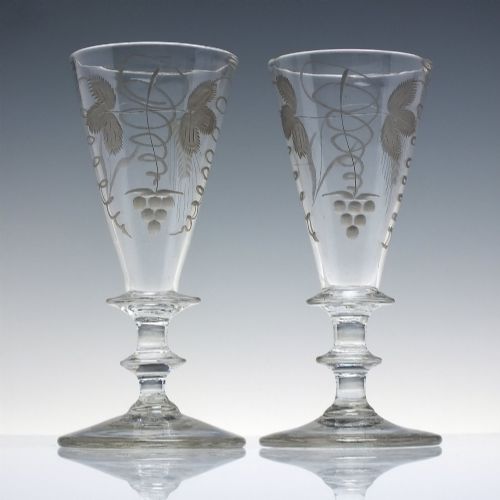
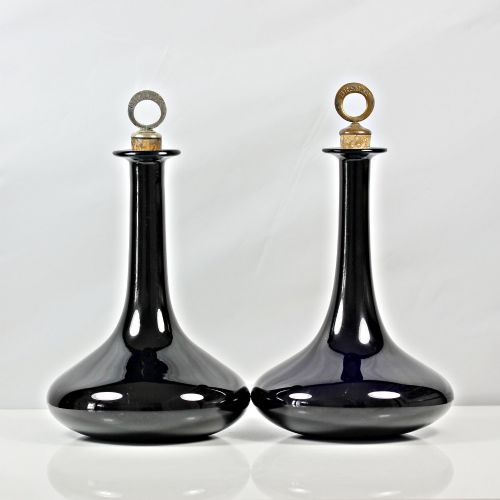
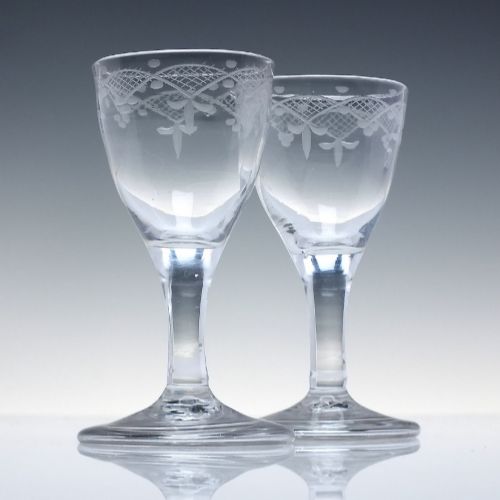
Forms range from tall pillar-cut decanters and etched spirit bottles to small folded-foot dram glasses and engraved barley wine glasses. Each pair displays the symmetry and hand-finished character expected of table glass from these periods.
How they were made
These items rely principally on lead crystal, lead glass, and flint glass, shaped by hand-blowing into moulds or free-blowing at the furnace. Makers then applied wheel-engraving, etching, and deep cutting to create facets, pillars, and draped swag designs on the surface.
Details such as folded feet on dram glasses and matching stoppers on decanters demonstrate traditional hot-glass manipulation. The heavy lead content gives the metal its characteristic refractive brilliance and substantial weight in the hand.
Georgian Glassware Pair Retail Price Guide 2026
Typical asking prices for georgian glassware pair among the pieces listed under this phrase on Sellingantiques today, from the lower quarter to the upper quarter. They describe what is for sale here now, not the wider market.
Even apothecary jars found a second life serving spirits once the medicines were gone.
What varies in quality
Quality rests upon the crispness of the wheel-cut facets and the depth of the engraving, which distinguishes a master glasscutter's work from a simpler production piece. Clarity of the metal, freedom from excessive bubbles, and precise matching between the two items of a pair govern desirability.
The weight of the lead glass and the proportion of the stem to the bowl dictate the structural harmony of drinking vessels. Original stoppers fitting securely into matching decanter necks preserve the integrity of the pair.
The Georgian Glassware Pair Glossary
- Lead crystal
- Glass containing a high proportion of lead oxide, increasing weight, brilliance, and softness for cutting. This material allows for deep, sharp facets that catch the light.
- Rummer
- A large, heavy drinking glass popular in the eighteenth and nineteenth centuries, typically used for ale, wine, or punch. These sturdy vessels often feature bucket bowls and short stems.
- Folded foot
- A rim turned under the base of a drinking glass to create a smoother, stronger edge. This technique adds stability to eighteenth-century drinking vessels.
- Pillar cut
- A style of linear vertical facet cutting running down the body of decanters or glassware. The technique creates strong optical reflections and a tactile grip.
- Bristol blue
- A deep cobalt blue glass traditionally associated with West Country production centres. It was widely utilised for decanters, finger bowls, and finger-handled items.
Georgian Glassware Pair: Frequently Asked Questions
What is a georgian glassware pair?
A georgian glassware pair consists of two matching vessels made for the table or sideboard, such as decanters, wine glasses, or salts.
They share materials, decorative motifs, and manufacturing techniques characteristic of the eighteenth and early nineteenth centuries.
How were these glasses used originally?
These vessels served drinks like ale, wine, spirits, and drams during formal dining and social gatherings in period homes.
Decanters held wine for the table, while apothecary bottles stored tinctures and small salts held condiments.
How do I live with antique glass pairs?
Display them on wooden sideboards, in glazed cabinets, or use them carefully for dining where lighting catches the cut facets.
Hand washing in lukewarm water preserves the fragile lead glass and prevents chemical damage from modern dishwashers.
How can I tell the period of the glass?
Examine the weight of the metal, the presence of pontil marks on the base, and the style of the wheel engraving or cutting.
Georgian and Regency pieces often show heavier lead crystal, folded feet on earlier items, and distinct pontil scars from hand-snapping.