




Georgian Gemstone Jewellery
Georgian gemstone jewellery brings together hand-cut stones, warm gold and silver settings, and centuries of wearable history.
Georgian Gemstone Jewellery
Georgian gemstone jewellery encompasses rings, brooches, pendants, earrings, and necklaces created during the eighteenth and early nineteenth centuries. These pieces reflect the intricate ornamentation and classical motifs popular across the period, spanning from the mid-eighteenth century into the early Victorian era.
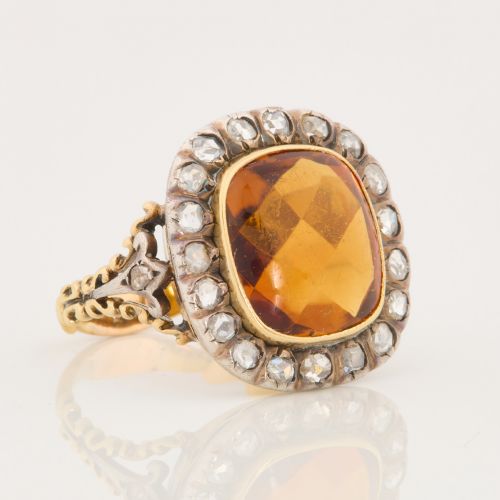
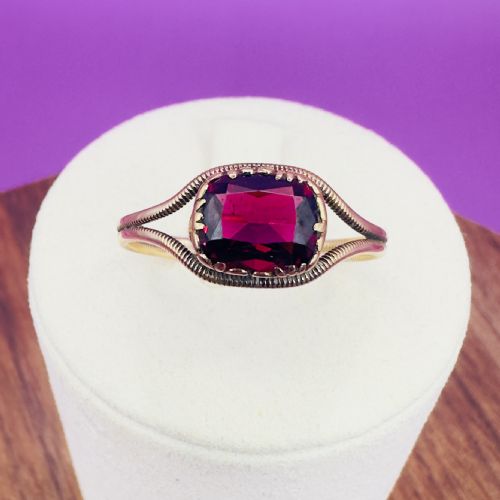
The selections available here showcase notable stones such as amethyst, carnelian, diamond, emerald, ruby, and topaz set within gold and silver. Rings and fobs predominate, alongside statement crosses, brooches, and substantial necklaces featuring deeply coloured gems.
Materials and construction
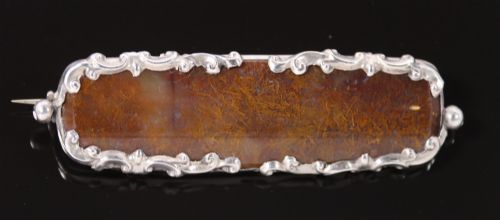
Goldsmiths worked extensively in various gold purities alongside silver, frequently combining metals in a single piece to enhance the brilliance of mounted stones. Silver mounts often held diamonds and other colourless gems to maintain a bright white reflection against darker clothing.
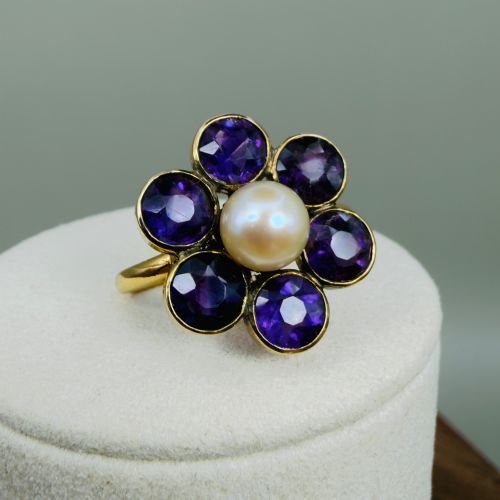
Gemstones received hand-cut facets, including old mine cuts and flat cuts, designed to capture candlelight rather than modern electric illumination. Lapidaries also employed foil backings beneath transparent stones like amethysts to intensify colour and luminosity within closed-back settings.
Georgian Gemstone Jewellery Retail Price Guide 2026
Typical asking prices for georgian gemstone jewellery among the pieces listed under this phrase on Sellingantiques today, from the lower quarter to the upper quarter. They describe what is for sale here now, not the wider market.
Listings feature items from the Georgian, Victorian, and Edwardian periods, utilising gold, silver, amethyst, carnelian, diamond, emerald, ruby, and topaz.
Assessing quality in early pieces
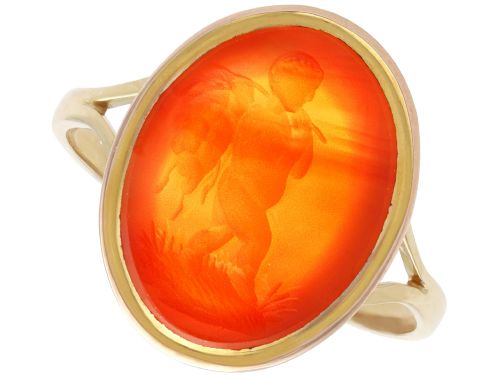
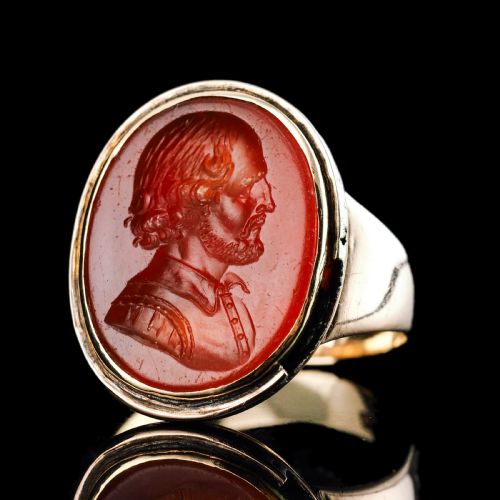
Quality rests upon the skill of the hand-cutting, the depth of colour in the stones, and the integrity of the original metal mountings. Superior examples display finely detailed intaglio carvings, secure claw or collet settings, and minimal alteration over time.
The refinement of the gold and silver work dictates overall distinction, where delicate granulation, repoussé detailing, or precise cluster arrangements elevate a piece above standard workshop output.
The Georgian Gemstone Jewellery Glossary
- Intaglio
- A gemstone carved beneath the surface so that a raised impression results when pressed into sealing wax. These carved motifs often depict classical figures, portraits, or allegorical scenes.
- Foil back
- A thin layer of coloured metal sheet placed behind a gemstone within a closed setting to boost its optical radiance. This traditional technique is common in eighteenth-century jewellers' work.
- Old mine cut
- An early diamond or gemstone cut featuring a roughly square or cushion shape with a high crown and small table. This shape was fashioned entirely by hand before the advent of modern machinery.
- Collet
- A flat band of metal that encircles the girdle of a gemstone to hold it securely in place. It represents one of the earliest methods of securing stones in antique metalwork.
- Fob
- A short chain or pendant attached to a pocket watch, frequently mounted with a carved carnelian or agate stone used as a personal seal. They were widely carried by gentlemen and ladies alike.
Georgian Gemstone Jewellery: Frequently Asked Questions
How do I care for Georgian gemstone jewellery?
These antique pieces require gentle handling because closed-back settings and foils can be damaged by water or harsh cleaning solutions. Use a soft, dry cloth for maintenance and store items separately to protect delicate metals and softer stones.
Avoid wearing them during rigorous physical activities or exposing them to chemical sprays, as the historical solders and ancient settings are more fragile than modern manufactured jewellery.
Were these pieces worn every day?
Many items, such as intaglio rings and fob pendants, served practical daily functions as personal signets for sealing correspondence. Other elaborate cluster rings and necklaces were reserved for evening gatherings and formal social occasions.
Their survival demonstrates that owners prized them deeply, passing them down through generations while occasionally adapting the mounts to follow changing tastes.
How can I tell a Georgian ring from a Victorian one?
Georgian pieces often utilise closed-back settings, foiled stones, and hand-carved details that reflect eighteenth-century neoclassical or Georgian aesthetics. The gold work tends to show distinct hand-tooling marks rather than the uniform machine stamping seen in later eras.
Victorian pieces frequently introduce different claw configurations and varied gold alloys as industrial techniques advanced following the coronation of Queen Victoria.
What are foiled gemstones?
Foiled gemstones have a reflective metallic sheet inserted behind the stone inside a closed metal backing. This historical method was designed to maximise the vibrancy and internal fire of coloured gems under dim lighting.
Because the foil can tarnish or degrade if moisture enters the setting, keeping these pieces away from water is essential for preserving their original appearance.