


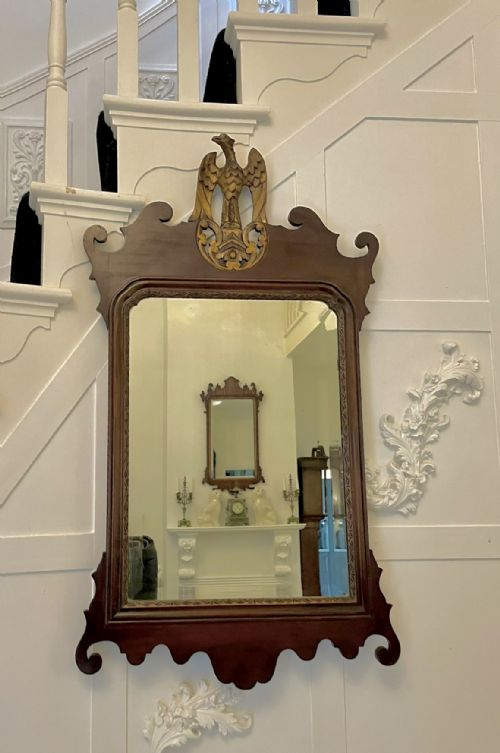
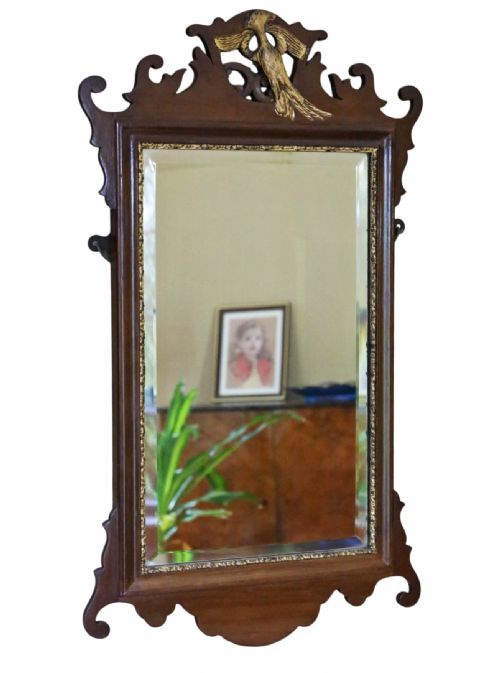


Georgian Fret Mirror
A georgian fret mirror brings crisp mahogany outlines and scrolling crests to a hallway, carrying the crisp fretwork traditions of the eighteenth century into modern spaces.
Georgian Fret Mirror
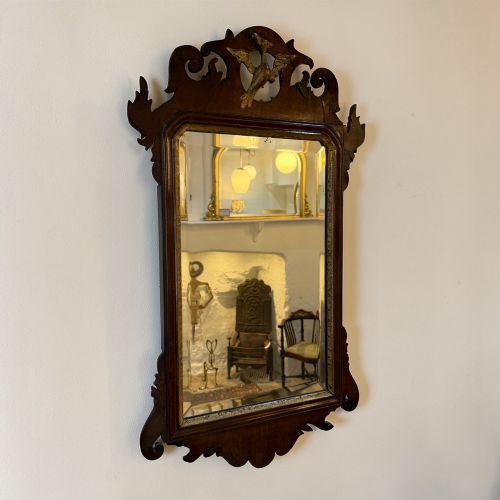
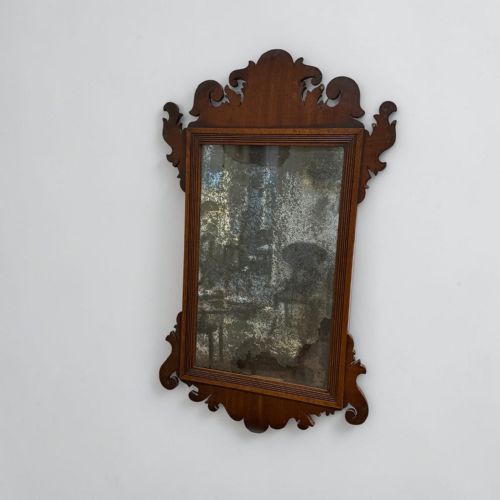
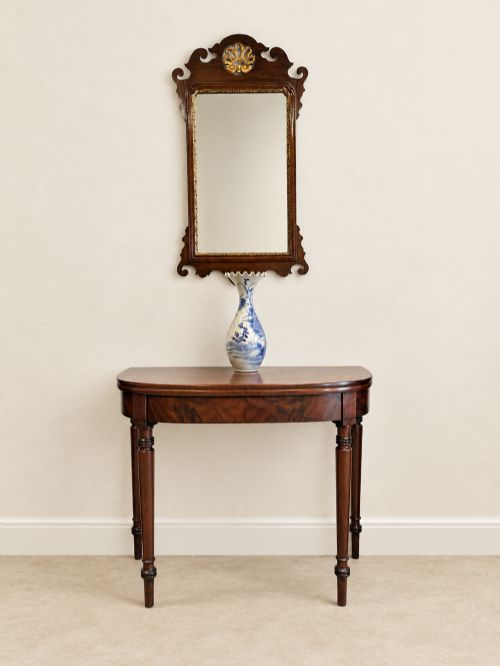
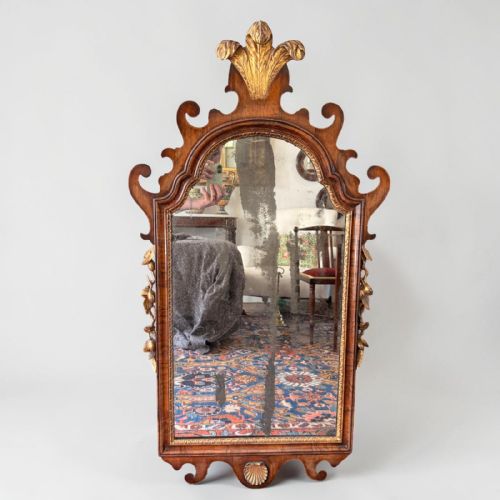
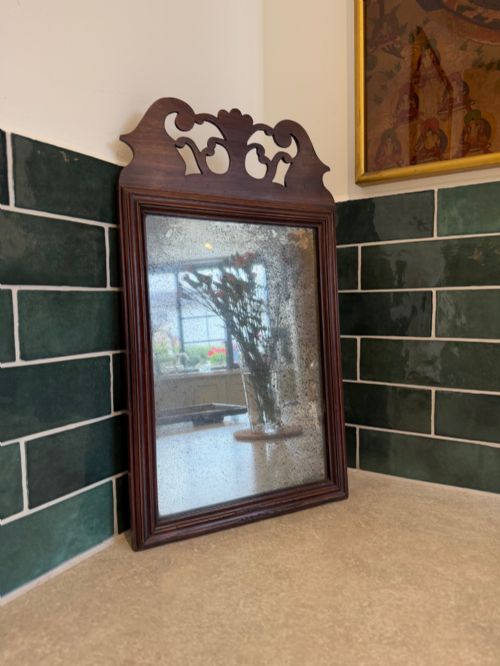
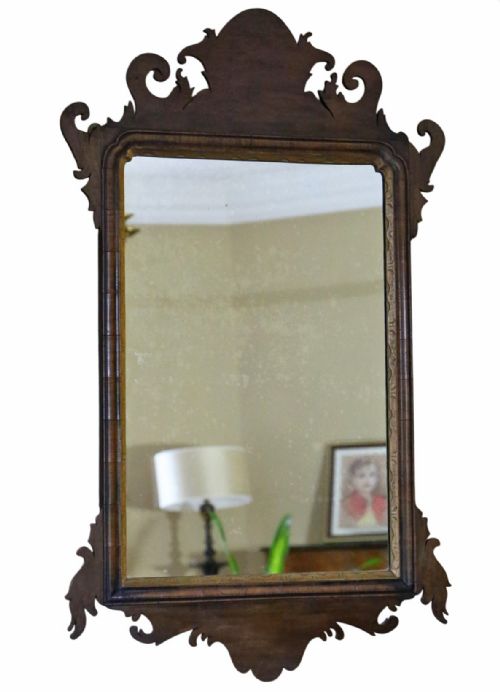
A georgian fret mirror is a wall-hanging glass plate set within a timber frame defined by piercing, scrolling fretwork outlines. These pieces span from authentic eighteenth-century examples to later revival interpretations produced across the nineteenth and early twentieth centuries.
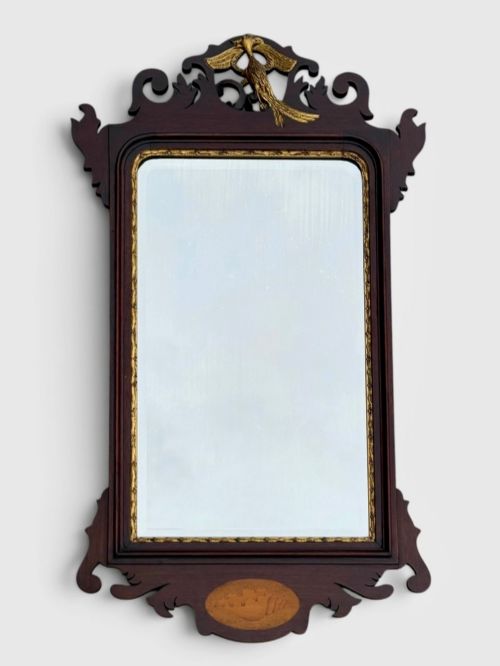
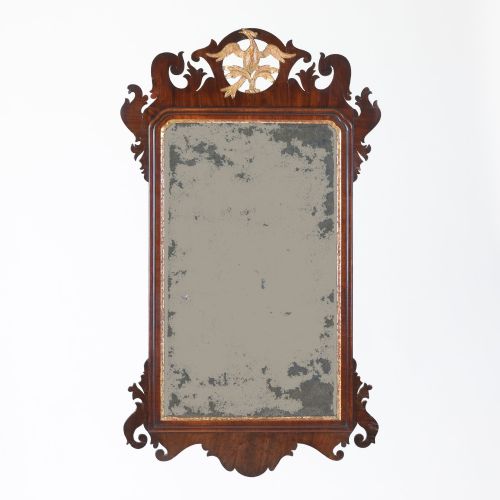
The prevailing form on this page pairs rich mahogany or figured walnut with silhouetted outlines and gilded accents, often culminating in a carved cresting at the apex. Many incorporate the iconic pierced silhouette of a Ho-Ho bird perched near the top of the frame.
While many examples originate from the 1700s, buyers frequently encounter Edwardian and interwar revivals that replicate the classic proportions and pierced borders of the original period. These later iterations maintain the traditional aesthetic while utilising walnut veneers or lighter mahogany tones.
How they were made
Cabinetmakers constructed these frames using solid mahogany or walnut, occasionally applying burr veneers to accent the primary surfaces with complex grain patterns. Fretwork sections were pierced and shaped by hand using fine saws to achieve intricate, symmetrical scrolling edges.
Giltwood elements and parcel-gilt details were achieved by applying thin layers of gold leaf over a prepared gesso base, particularly upon carved crestings and bird motifs. Mirror plates were traditionally hand-silvered and set directly into the rebated timber backing.
The inventory includes both wall-hanging and pier glass formats, paired with bevelled Vauxhall plates and hand-carved crestings.
What varies in quality
The sharpness of the fret-cut piercing defines the initial visual impact, where crisp, deep scrolls indicate superior craftsmanship against softer, more rounded edges. Figured timber selection also separates standard production from exceptional examples, with richly grained walnut veneers elevating the piece.
Originality of the glass plate and the intact survival of gilded crestings heavily influence the character of the object. Period pieces retaining their early mirror plates and undamaged carved birds represent the highest standard of preservation.
The Georgian Fret Mirror Glossary
- Fretwork
- Openwork ornamentation cut from thin timber using a fine saw. This technique creates the characteristic pierced borders seen along the outer edges of the frame.
- Ho-Ho bird
- A stylized Chinese phoenix commonly carved onto the scrolling cresting at the top of the mirror. It appears frequently on eighteenth-century and revival Chippendale designs.
- Parcel-gilt
- Partially gilded woodwork where gold leaf is applied only to specific carved details, such as the inner moulding or cresting. This technique contrasts the natural timber grain with bright metallic highlights.
- Vauxhall mirror
- An early mirror plate featuring a distinctive bevelled edge around the perimeter. These plates are associated with high-status eighteenth-century frames.
- Pier glass
- A tall mirror designed to hang on the wall space between two windows. These pieces often feature extended proportions and elaborate fret-cut crestings.
Georgian Fret Mirror: Frequently Asked Questions
What is a georgian fret mirror?
A georgian fret mirror is a wall mirror defined by a wooden frame with pierced, scroll-cut borders. Originating in the eighteenth century, these pieces are recognised by their intricate silhouette work and mahogany or walnut construction.
Makers frequently incorporated carved crestings at the top, often depicting birds or architectural pediments. The style spans both authentic period items and later revival interpretations from the Edwardian era.
How do I date a fret mirror?
Dating these pieces involves examining the timber species, construction methods, and the condition of the glass plate. Eighteenth-century examples often feature dense mahogany and old plates with slight oxidation, while revival pieces from the twentieth century display different backing materials.
Revival versions from the Edwardian period or the 1920s emulate earlier Chippendale proportions closely. Looking at the crispness of the fretwork and the type of fixings used provides further clues to the age of the frame.
Where should I hang a fret mirror?
These mirrors suit spaces where their vertical proportions and intricate silhouettes can be appreciated against a plain wall. Hallways, living rooms, and above mantelpieces serve as traditional locations that complement the reflective glass and timber frame.
Because many examples include delicate scrolling edges or projecting crestings, secure wall fixings are essential for support. Hanging them at eye level allows the detail of the fret-cut border to remain visible.
What is a Ho-Ho bird?
The Ho-Ho bird is a mythical Chinese phoenix motif frequently carved into the cresting of eighteenth-century mirrors. It stands with wings displayed atop the scrolling timber frame, adding height and symbolic decoration to the design.
This decorative feature was revived during later periods, appearing on Edwardian and interwar walnut and mahogany frames. Its presence is a hallmark of Chippendale-inspired fretwork composition.