



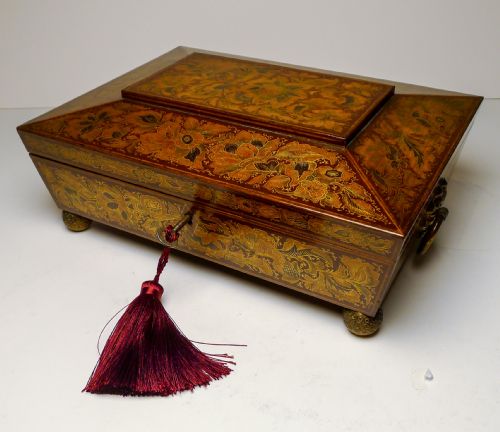


Georgian Floral Box
These georgian floral box pieces bring domestic craft into daily life through timber and paint, offering small treasures for a desk or table.
Georgian Floral Box
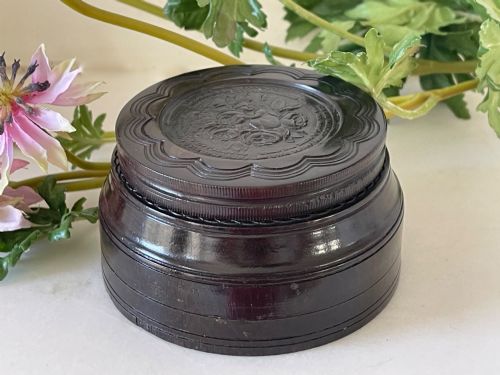
A georgian floral box encompasses tea caddies, snuff boxes, workboxes, and games boxes spanning the eighteenth century into the Victorian era. These pieces served practical household roles for storing leaf tea, snuff, sewing implements, or gaming cards. Buyers encounter items formed from wood, silver, and enamel, often shaped as hexagonal, oval, or rectangular vessels.
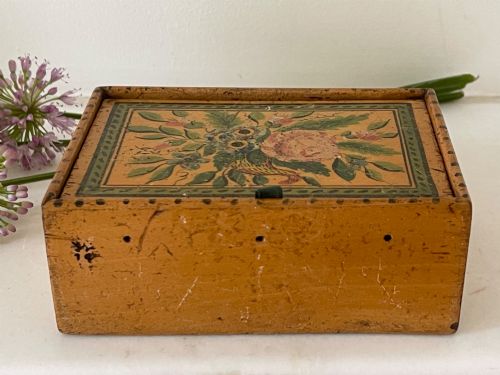
The selection on this page leans heavily toward tea caddies and games boxes finished with painted penwork, marquetry, and straw-work. Specimens emerge from periods including the Georgian and Regency eras, alongside nineteenth-century interpretations. Each object demonstrates domestic utility elevated by decorative surface ornament.
How They Were Made
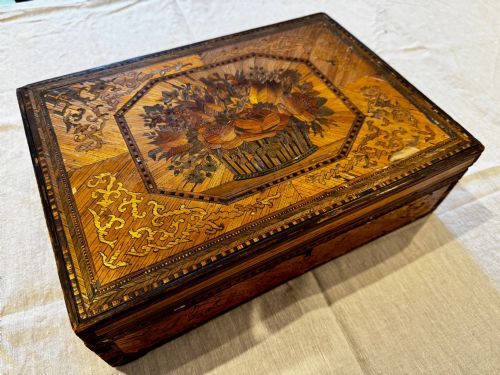
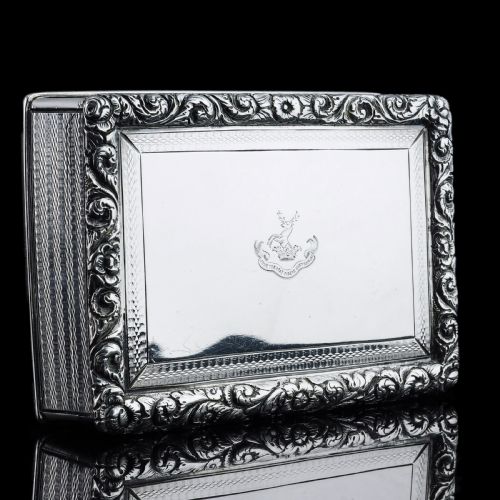
Maker workshops employed solid woods and veneers like harewood, mahogany, burr yew, and rosewood as foundational structures. Artisans enhanced these surfaces through marquetry inlay, hand-painted penwork, and varnished finishes. Silver components received chased floral borders, while enamel boxes integrated detailed painted scenes.
Specialised techniques such as straw-work and engine turning appear on prisoner-of-war boxes and snuff boxes respectively. Workshops applied ink, paint, and varnish to timber bases to render floral and geometric motifs across lids and panels.
Georgian Floral Box Retail Price Guide 2026
Typical asking prices for georgian floral box among the pieces listed under this phrase on Sellingantiques today, from the lower quarter to the upper quarter. They describe what is for sale here now, not the wider market.
What Varies in Quality
Quality rests in the precision of the surface decoration, from the crispness of hand-painted penwork to the exact alignment of wood veneers and marquetry. Superior examples display intricate floral detailing and intact finishes without heavy restoration.
Joseph Willmore·Coalport
The Georgian Floral Box Glossary
- Penwork
- A decoration technique using ink applied with a pen to wood surfaces to simulate inlay or create intricate floral and pictorial designs. This method defines many Regency games boxes.
- Marquetry
- The art of applying pieces of veneer to a structure to form decorative patterns and pictures. Makers utilised various woods to construct floral motifs.
- Harewood
- Sycamore wood stained grey, commonly utilised in high-end cabinet making and tea caddy production. It provides a distinct pale ground for inlay.
- Engine Turned
- A method of mechanical ornamentation used on metal surfaces to produce precise geometric patterns. This technique appears on metallic snuff boxes.
- Bonbonniere
- A small ornamental container designed to hold sweets or patches. These enamel pieces date to the eighteenth century.
Georgian Floral Box: Frequently Asked Questions
What were tea caddies used for?
Tea caddies served to store expensive loose leaf tea safely under lock and key in the dining room or parlour. Wealthy households kept blends secure from domestic staff and guests.
These boxes often featured internal compartments and fitted lids to maintain the aroma of the leaves. Their decorative exteriors ensured they sat suitably on prominent household furniture.
How do I identify a Regency box?
Regency boxes typically exhibit specific decorative traits like painted penwork, satinwood banding, and classical proportions dating from the early nineteenth century. Makers favoured bold mahogany and rosewood foundations.
Surface ornament often includes floral motifs, geometric borders, and straw-work panels. Hardware such as escutcheons and feet helps confirm the period.
What is Tunbridge ware?
Tunbridge ware involves small wooden objects decorated with mosaic patterns made from thousands of tiny tinted wood blocks. These items originated in Kent during the nineteenth century.
Craftsmen assembled geometric and floral designs to cover the entire exterior of boxes and reel holders. The resulting surface creates a distinct pictorial mosaic effect.
How should I clean an antique wooden box?
Antique wooden boxes require gentle dusting with a dry, soft cloth to protect vulnerable varnishes and delicate painted penwork surfaces. Moisture and modern chemical polishes damage historic finishes.
Maintaining stable room humidity prevents the timber and veneer from warping or cracking over time. Wax should be applied sparingly only when the wood appears dry.