

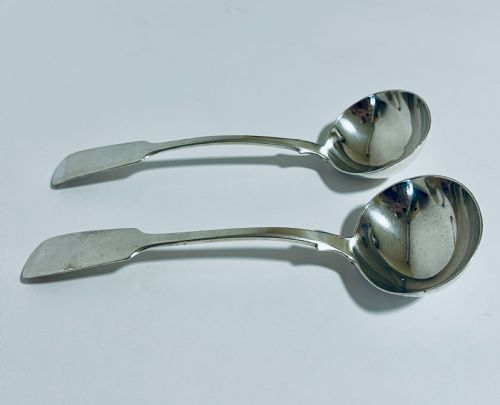


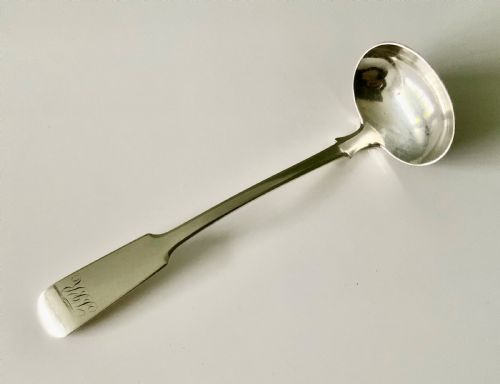
Georgian Fiddle Pattern Spoons
Georgian fiddle pattern spoons are classic dining silver combining robust stems with elegant shoulders, perfectly suited for both formal service and daily use.
Georgian Fiddle Pattern Spoons
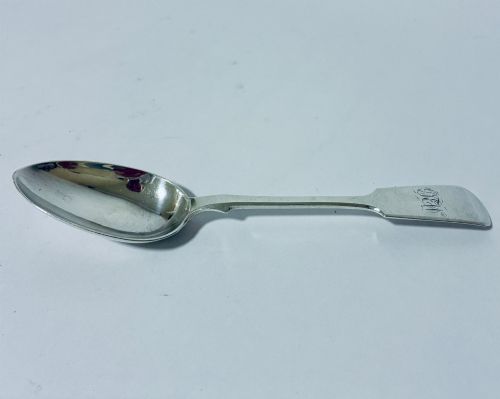
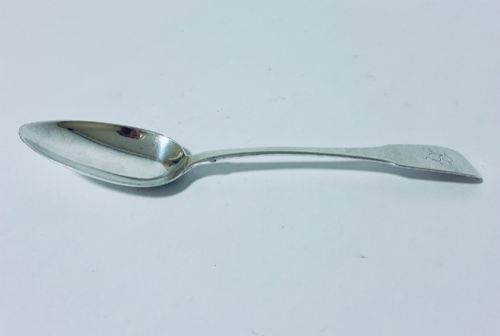
When you search for georgian fiddle pattern spoons, you encounter a distinct form of tableware defined by the distinctive shoulder profile tapering down the handle. These pieces span the Georgian, Regency, and early Victorian periods, encompassing both English metropolitan pieces and regional provincial work.
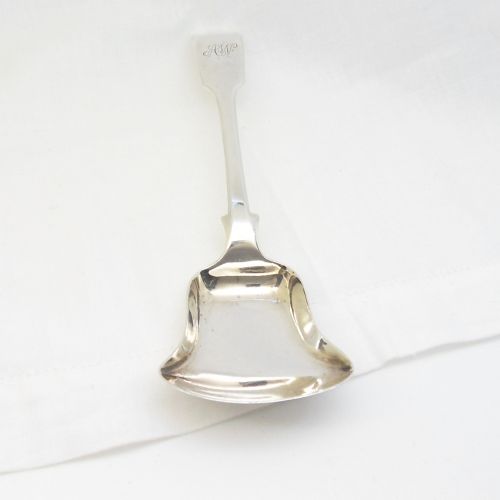
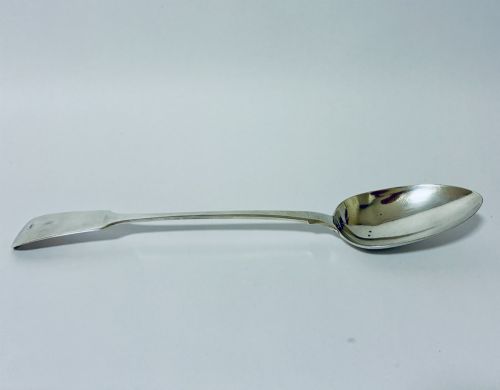
The selection ranges from large soup ladles and serving spoons to smaller caddy spoons, mustard spoons, and egg spoons. Provincial pieces from Scottish towns like Elgin, Inverness, Arbroath, and York appear alongside Dublin and London hallmarked examples.
Most items are fashioned as serving utensils or tablespoons, often carrying family crests engraved upon the terminal. Matched sets and individual pieces alike demonstrate the versatility of this enduring nineteenth-century shape.
How they were made
Silversmiths utilised solid sterling silver, hammering and shaping the metal to form the characteristic ridge and widened stem of the fiddle handle. Double struck decoration appears on specific pieces, providing raised borders along both sides of the stem.
Makers struck their punches directly into the silver, including town marks, duty marks, and maker initials such as John Walton or William Ferguson. Engraved crests were hand-carved afterwards by specialist heraldic engravers using sharp gravers.
Georgian Fiddle Pattern Spoons Retail Price Guide 2026
Typical asking prices for georgian fiddle pattern spoons among the pieces listed under this phrase on Sellingantiques today, from the lower quarter to the upper quarter. They describe what is for sale here now, not the wider market.
Several spoons preserve family crests, letting modern owners inherit centuries-old heraldry alongside their tea or toddy.
What varies in quality
The weight of the silver and the crispness of the fiddle shoulders dictate the distinction between standard production and exceptional work. Heavy gauge ladles and serving spoons retain their structural integrity better through centuries of use.
Provincial pieces often command attention due to regional maker marks and lesser-seen town stamps like Arbroath or Elgin. Clarity in hallmarks and the sharpness of hand-engraved family crests elevate individual examples.
John Walton·William Ferguson·Jamieson and Naughton·Edward Power
The Georgian Fiddle Pattern Spoons Glossary
- Fiddle pattern
- A flatware style characterised by a shoulder or "step" on the handle just above the stem, widening towards a squared terminal. This shape dominated British dining tables through the early nineteenth century.
- Caddy spoon
- A short spoon designed specifically for measuring loose tea leaves from a caddy into a teapot. These often feature decorative bowls and short fiddle stems.
- Provincial silver
- Silverware made and marked outside major assay office cities like London, often bearing local maker marks and town initials. Scottish provincial centres produced distinctive fiddle pattern items.
- Hallmark
- A series of stamped official marks indicating the metal standard, maker, assay office, and year of manufacture. British silver relies on these stamps to establish authenticity.
- Toddy ladle
- A small ladle with a bowl and a long handle, used historically for serving hot whisky or punch. Many Scottish examples feature fiddle pattern handles.
Georgian Fiddle Pattern Spoons: Frequently Asked Questions
How do I identify provincial spoons?
Provincial pieces carry maker marks and town stamps from areas outside London, such as York, Elgin, or Inverness. These regional marks differ from standard London assay stamps.
Many Scottish provincial spoons feature unique maker punches alongside local town identifiers.
What were caddy spoons used for?
Caddy spoons measured dry tea leaves from storage containers into the teapot during the nineteenth century. Their small bowls and short handles suited tea caddies.
These pieces often display decorative engraving or shaped bowls alongside fiddle pattern stems.
Can I use these spoons daily?
Solid silver items are durable enough for regular dining use if cleaned gently by hand. Many collectors use tablespoons and serving pieces for modern meals.
Avoid abrasive cleaners and dishwashers to preserve the antique hallmarks and engraved crests.