




Georgian Facet Cut Goblet
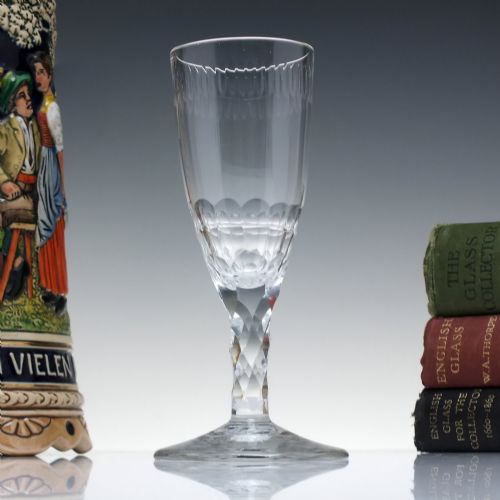
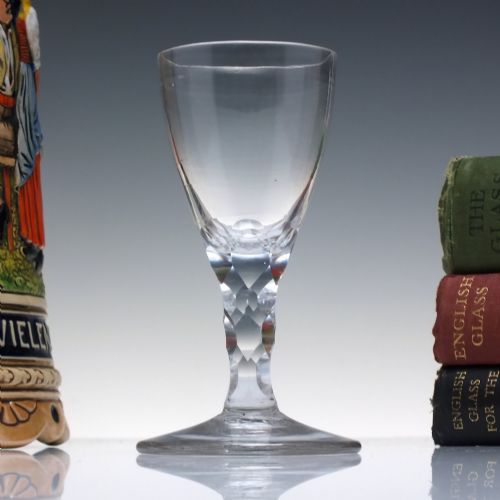
These Georgian facet cut goblets are bright lead crystal drinking vessels defined by hand-cut stems that catch the light.
Georgian Facet Cut Goblet
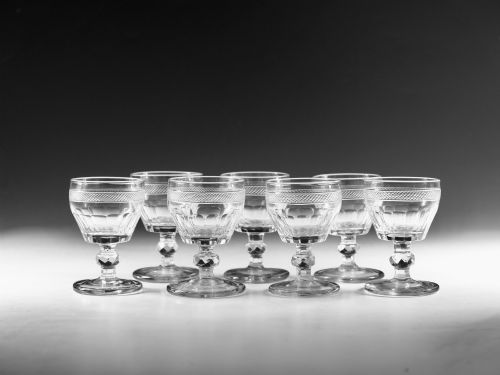
A georgian facet cut goblet is a drinking vessel typically featuring a faceted stem that supports a decorated or plain bowl above a wide foot base. When you search for this phrase, you find wine glasses, port glasses, and larger goblets originating from the eighteenth century and the regency period.
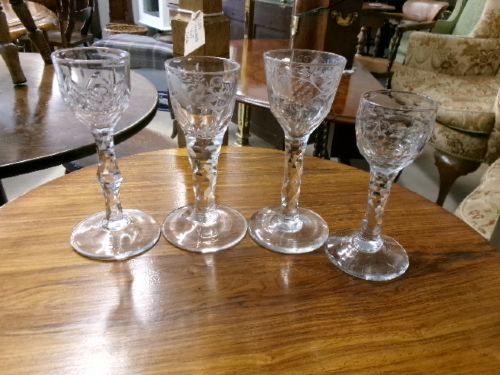
The pieces on this page are most frequently English lead glass items from around seventeen seventy to eighteen twenty, often presenting engraved bowls alongside the characteristic cut stems. Collectors encounter forms designed for wine and port, alongside examples bearing specific jacobite engravings.
How they were made
These vessels are formed from lead crystal and clear glass, utilising heavy lead content to allow for deep, sharp geometric cutting on the stems. Craftsmen shaped the molten metal by hand before applying wheel-cutting techniques to create the facets.
Decoration includes intricate engraving upon the bowls, and occasionally the application of gold leaf to accentuate the glass surface.
Georgian Facet Cut Goblet Retail Price Guide 2026
Typical asking prices for georgian facet cut goblet among the pieces listed under this phrase on Sellingantiques today, from the lower quarter to the upper quarter. They describe what is for sale here now, not the wider market.
Some eighteenth-century drinkers used facet cut stems to ensure a secure grip after several glasses of port.
What varies in quality
Quality rests upon the crispness of the facet cutting on the stem and the finesse of any engraving upon the bowl. Sharply defined geometric planes reflect light more brilliantly than softened, worn cutting.
The weight and clarity of the lead crystal, alongside the symmetry of the wide foot base, distinguish standard glassware from superior examples.
James Giles
The Georgian Facet Cut Goblet Glossary
- Facet cut
- A pattern of flat polished surfaces ground into the glass. This technique creates numerous reflective planes that enhance the brilliance of the crystal.
- Lead glass
- A type of glass containing lead oxide which increases weight, clarity, and the refractive index. It provides the ideal medium for deep cutting.
- Jacobite engraving
- Decorative motifs such as roses and oak leaves etched onto eighteenth-century glassware. These symbols served as secret political signs for supporters of the exiled stuart dynasty.
- Wide foot base
- The broad circular support at the bottom of the vessel. It provides stability to taller stemmed drinking glasses.
Georgian Facet Cut Goblet: Frequently Asked Questions
What is a georgian facet cut goblet?
A georgian facet cut goblet is an eighteenth-century or regency drinking vessel made from lead glass with geometric facets ground into the stem.
These pieces were made for wine and port, combining heavy crystal bases with engraved bowls.
How do I date these glasses?
Dating relies on matching the form of the bowl, the style of the stem cutting, and the character of the metal to known manufacturing periods.
Items from the seventeen seventies often feature specific diamond or hexagonal facet cutting on the stem.
What is jacobite engraving?
Jacobite engraving refers to symbolic imagery etched onto glass to show secret allegiance to the deposed stuart kings.
Common motifs include portrait heads, specific flowers, and insects found on wine glasses of the period.
How were these goblets used?
These vessels functioned as dining table tableware for serving wine, port, and sherry during formal meals.
The wide foot base helped prevent tipping during communal toasts.